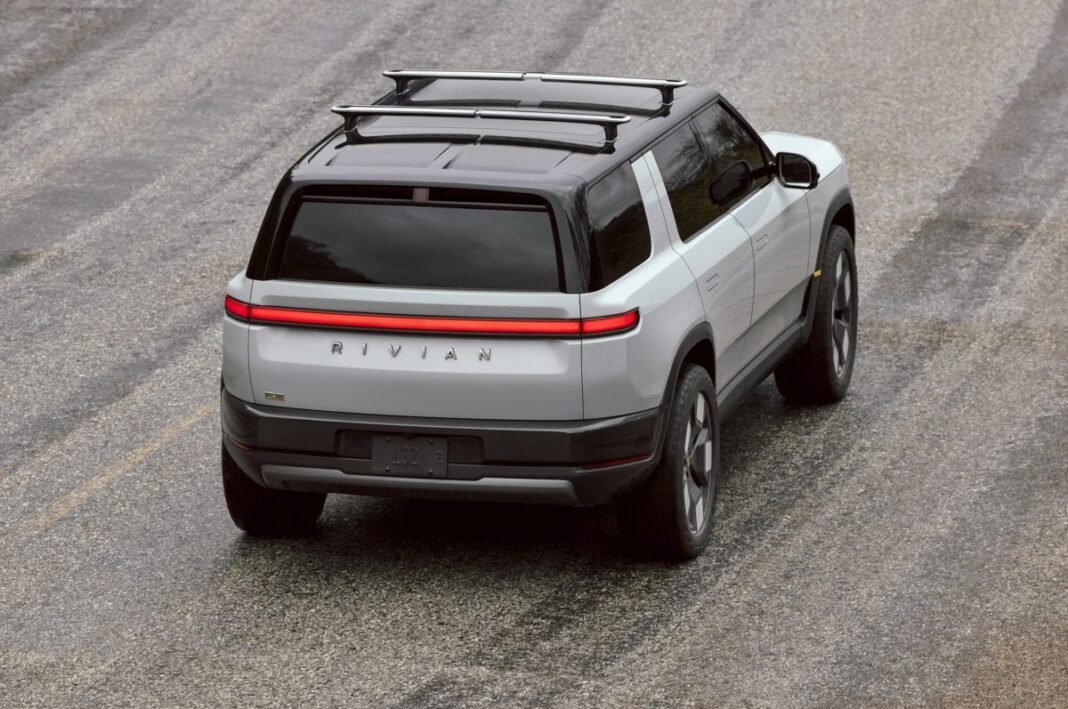
Rivian’s Bold Entry with the R2 SUV: Shaping the Future of Electric Vehicles
Swift Market Penetration in the U.S. EV Landscape
Rivian is preparing to introduce its R2 SUV at an unprecedented pace within the American electric vehicle market. Industry insights and company announcements indicate that Rivian intends to achieve rapid sales milestones, outpacing many rivals and establishing itself as a key contender in the expanding EV sector.
The Strategic Importance of the R2 Model for Rivian’s Growth
The launch of the R2 is crucial for Rivian’s sustainability and profitability moving forward. CEO RJ Scaringe has described this release as perhaps “the most impactful product” in their portfolio to date. Missing production or sales targets could raise investor concerns, especially given Rivian’s current heavy investments aimed at scaling mass-market manufacturing capabilities.
Anticipated Production and Sales Figures
Rivian forecasts selling between 20,000 and 25,000 units of the R2 during its first year on sale, with initial deliveries expected around June once production ramps up fully. Even if only achieving sales near 20,000 units, this would place it ahead of nearly all other electric vehicles priced below $60,000-except for Tesla’s Model Y.
Setting Aspiring Benchmarks: How quickly Can Rivian Capture Market Share?
Tesla’s Model Y set a formidable precedent by surpassing 20,000 units sold within roughly four months after its March 2020 debut. Similarly, Honda’s Prologue matched this pace shortly after launching in early 2024. Rivian aims to reach comparable figures within six months-a notable challenge given current market dynamics.
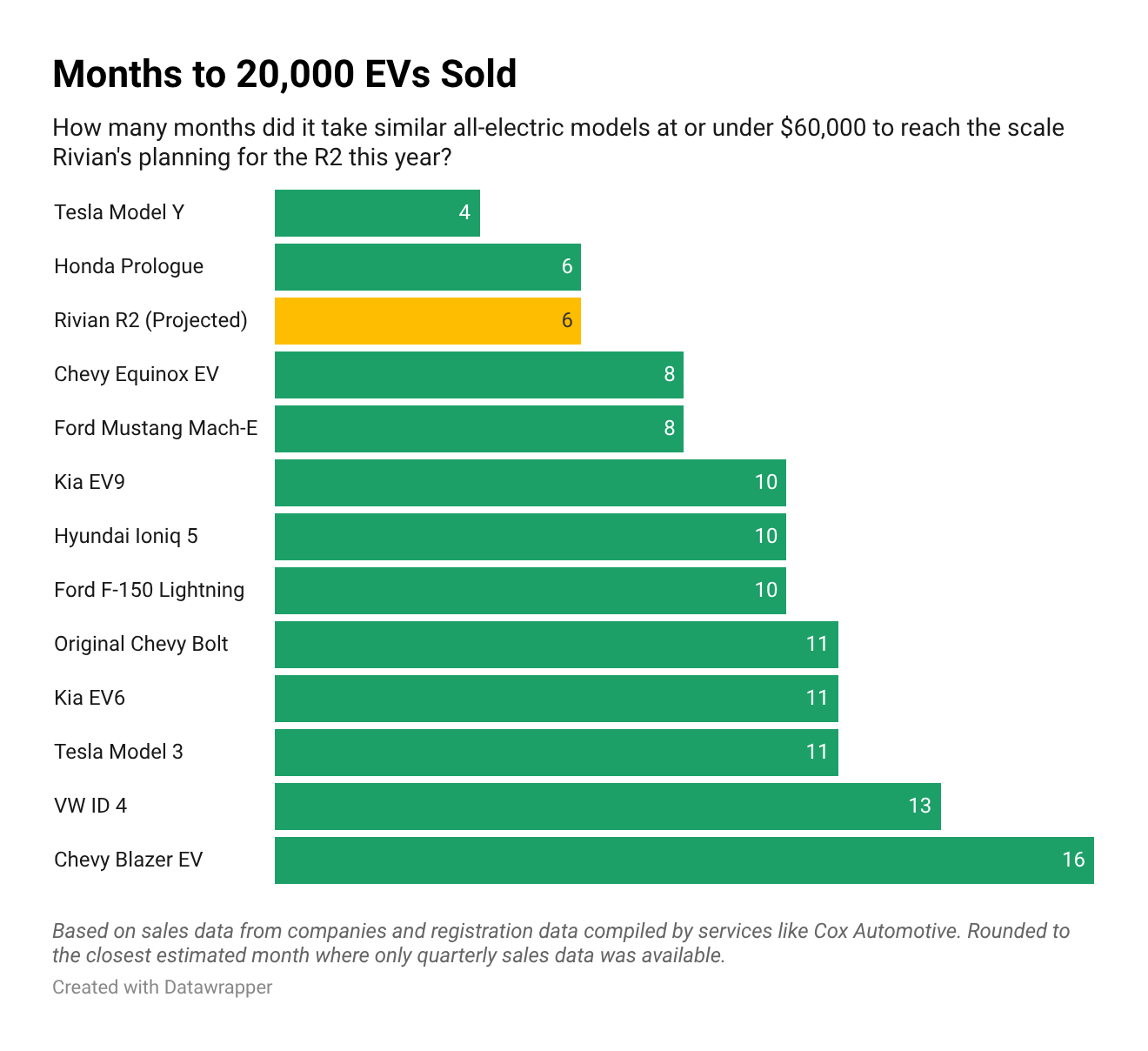
Other prominent EVs such as Chevrolet Equinox EV achieved 20,000 unit sales approximately eight months post-launch in 2024; Ford Mustang Mach-E required a similar timeframe following its introduction in 2021; while South Korean models like hyundai Ioniq 5 and Kia EV6 took close to ten or eleven months respectively.
Certain vehicles faced significant hurdles-Tesla Model 3 endured “production hell,” while Chevy Blazer EV was delayed by recalls-resulting in longer timelines before reaching comparable milestones.
Navigating Regulatory Challenges Amid Changing Incentives
The regulatory environment today presents distinct challenges compared to earlier launches. Many previous models benefited from a $7,500 federal tax credit for electric vehicles-a subsidy eliminated by Congress last September due to shifting political priorities. Additionally, recent tariff adjustments have increased costs throughout automotive supply chains impacting manufacturers including Rivian.
A Focused Approach on Affordability
RJ Scaringe views these obstacles as opportunities rather than setbacks. He highlights an underserved segment seeking affordable electric SUVs where consumer options remain limited. The base price target for the R2 hovers around $45,000-a strategic figure designed to attract wider adoption compared with pricier competitors dominating today’s market.
This pricing approach could stimulate demand growth; however initial releases will likely feature higher-trim dual-motor variants priced above entry-level until more affordable versions become available later on.
Status Update on Pricing clarity
Although detailed pricing information was expected at an event scheduled earlier this year,recent website updates removed explicit references stating “Starting at $45,000.” This change sparked speculation among analysts about timing or feasibility regarding lower-cost trims entering production soon enough-but Rivian remains committed publicly toward eventually delivering that base price without confirming exact timelines yet.
An Favorable Position Amid Delayed Competitor Launches
The absence until late this year of rival compact-to-mid-size electric SUVs from brands such as Volvo (EX60), BMW (iX3), or Mercedes-Benz (GLC) may provide Rivian with an early foothold during critical market entry phases according to industry experts who note strong consumer interest persists near these price points despite broader challenges facing U.S.-based EV adoption today.
- Simplified Production Processes: Engineers have streamlined assembly methods relative to larger models enabling faster scale-up necessary for ambitious volume targets;
- Broad Consumer appeal: Targeting affordability without compromising performance features typical within premium segments;
- Tactical Market Timing: Leveraging gaps created by delayed competitor availability nationwide;
Cautious Perspectives from Financial Analysts
Certain Wall Street analysts express reservations about how aggressively Rivian plans its rollout amid ongoing operational complexities inherent when ramping new models quickly while maintaining quality standards.D.A Davidson analyst Michael Shlisky recently downgraded his valuation citing concerns over high expectations tied directly into early-stage production volumes.
“Initial average transaction prices may trend closer toward $60K,” noted Barclays’ Dan Levy last year referencing manufacturing constraints prior to completion of their Georgia factory expansion planned beyond mid-2026.
A Pivotal Chapter Ahead For Affordable Electric Mobility Innovation
If triumphant under these multifaceted conditions-including evolving regulations plus competitive pressures-the launch of the R2 could represent not only a breakthrough moment for Rivian but also signal maturation trends across affordable electric SUVs nationwide amid one of history’s fastest transitions toward electrification globally today.