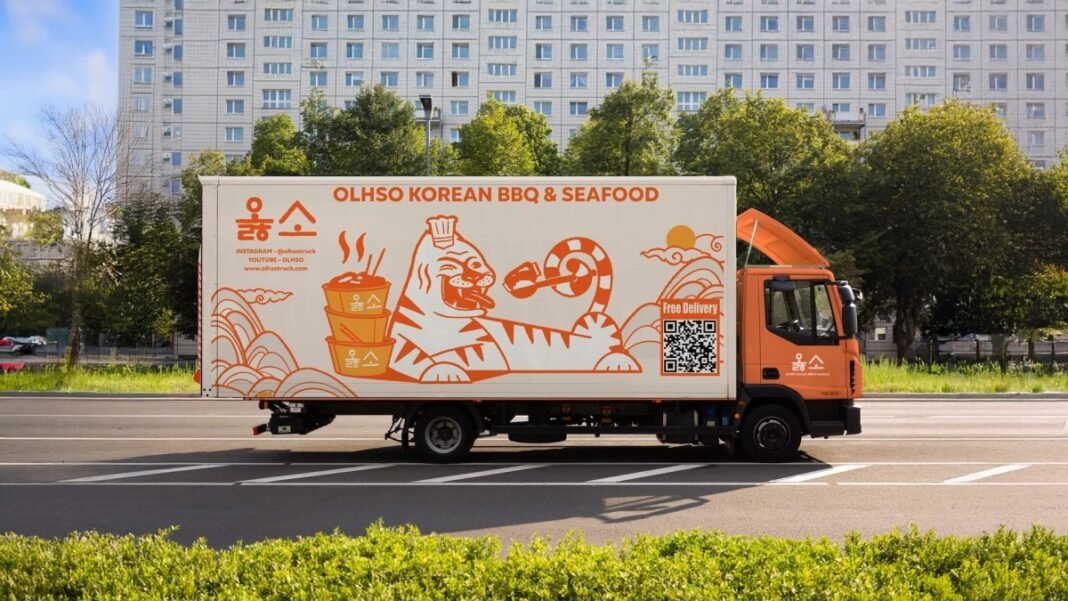
Transforming Mobile Dining with Autonomous Korean BBQ Technology
Blending Cutting-Edge Robotics with Authentic Korean Flavors
Shin Starr is redefining the mobile dining landscape by embedding sophisticated robotics into their culinary operations.However, the company recognizes that innovation alone doesn’t ensure customer satisfaction. Their OLHSO Korean BBQ food truck focuses on delivering freshly prepared, appetizing meals at competitive prices to meet real consumer needs.
Kish Shin, co-founder and CEO of Shin Starr, highlights that diners care more about meal quality and affordability than the complexity behind the technology. “our customers want great food at a fair price-not an engineering showcase,” he states.
A Culinary Leader Driving Authenticity and Quality
At the helm of Shin Starr’s kitchen is Han Sungil, a veteran chef who has managed over 18 restaurants throughout Korea before relocating to the U.S.Han supervises both OLHSO’s mobile unit and its physical location in San Mateo,ensuring every dish meets high standards for taste and authenticity.
the menu features specialties such as premium wagyu galbi and fiery tteokbokki, offering an elevated Korean BBQ experience designed for busy customers seeking convenience without compromising flavor.
The Autowok System: Freshly Cooked Meals En Route
Differentiating itself from ventures focused solely on autonomous delivery robots, Shin Starr combines human driving with AI-driven cooking automation inside their vehicle. Their proprietary Autowok system orchestrates cooking, serving, and cleaning processes seamlessly while on the move.
- Fresh ingredients are prepped by Chef Han then refrigerated onboard for optimal freshness.
- The Autowok transfers these components onto a conveyor belt leading to a rotating heated canister that cooks dishes evenly at wok-level temperatures during transit.
- This cylindrical cooker spins rapidly to ensure uniform heat distribution across all ingredients.
- Culinary timing is precisely controlled so meals finish cooking just as the truck arrives at its destination; packaging follows automatically afterward.
- The system performs self-cleaning cycles between orders to maintain hygiene without manual intervention.
“We time our cooking so dishes like wagyu beef start only when we’re close enough,” explains Kish Shin. “If your order takes eight minutes but we’re 15 minutes away, we wait until we’re seven minutes closer before beginning.”
An Innovative Kitchen Rolling Through City Streets

Tapping High-Traffic Venues: Airports as Pioneering Locations for Automated Dining
Navigating challenges faced by other robotic kitchen startups struggling with market adoption, Shin Starr targets airports due to their constant flow of travelers around-the-clock. Plans are underway to launch an unmanned OLHSO micro restaurant inside a major California airport-operating 24/7 without onsite staff presence.
This approach addresses a notable gap: nearly 10% of U.S. air passengers travel between 11 p.m.and 7 a.m., yet most airport eateries close overnight leaving limited options beyond vending machines or low-quality snacks during those hours-a problem exacerbated by rising late-night travel trends post-pandemic recovery statistics show increased demand for convenient fresh dining options during off-hours nationwide.
“When conventional restaurants shut down late at night,” says CMO Tord Olav Dønnum, “our automated micro restaurant provides freshly cooked gourmet meals rather of stale sandwiches or candy bars.”
A seasoned Executive Leading automated retail Innovation
The addition of Gower Smith as Chief Product Officer further strengthens this vision; Smith brings deep expertise from his leadership role at Swyft-developers of premium vending solutions deployed in airports and train stations across north america alongside brands like Best Buy and CVS Pharmacy.
This experience uniquely positions him to refine automated retail models where space constraints exist but customer expectations remain high for quality products delivered efficiently without inflating costs through human labor overheads or limiting availability due to staffing shortages common in hospitality sectors today.
Sleek Operations Designed for Fast-Paced Travel Hubs
The micro restaurant’s automation enables accurate forecasting of order completion times-a vital feature where travelers juggle tight schedules catching flights or connections daily.
While restocking ingredients requires occasional behind-the-scenes human support, routine service runs autonomously ensuring consistent reliability even during peak travel periods or overnight shifts when demand spikes unexpectedly due to flight delays or cancellations have increased globally over recent years according to aviation reports .
“Even though airports are our initial focus,” notes Smith,“we plan expansion into hotels catering late-arriving guests; hospitals requiring round-the-clock nourishment; college campuses bustling through all hours-anywhere people seek freshly prepared meals outside conventional dining times.”
A New Era in Food Service Delivery Models
- Bidding farewell to traditional staffing limitations;
- Diners gain access anytime they desire freshly cooked cuisine;
- Culinary robotics merge operational efficiency with authentic flavors;