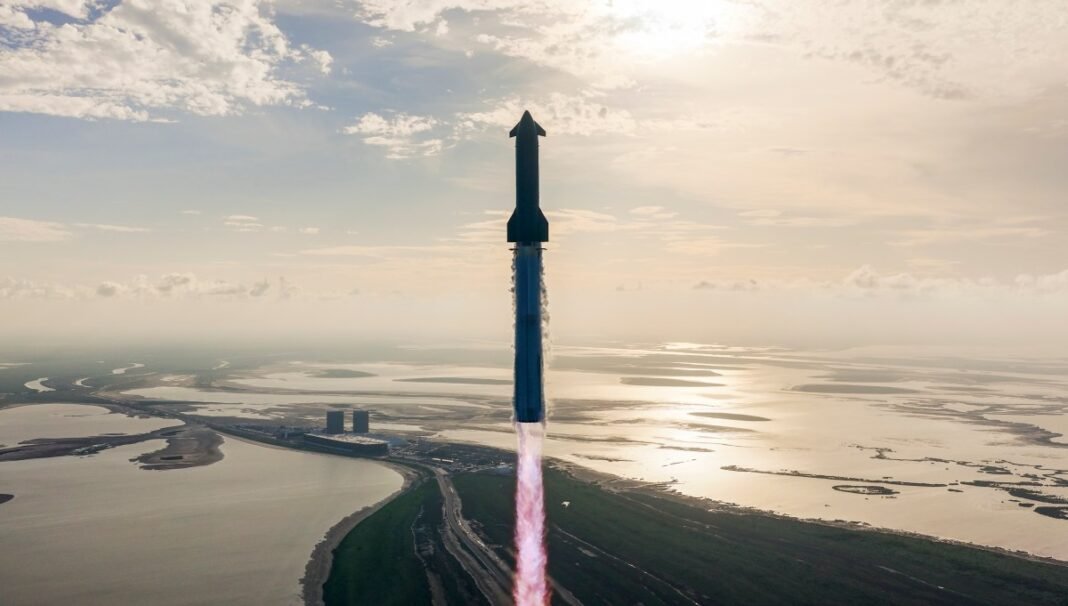
SpaceX’s Starship: Setting New Standards for Durability in space Exploration
Advancing Reusability and Fault Resilience in Modern Rockets
SpaceX’s Starship represents a revolutionary leap as a fully reusable launch vehicle designed to carry heavy payloads to Mars and support human colonization beyond Earth. Achieving large-scale reusability requires the spacecraft to endure various system failures without compromising entire missions, ensuring robust fault tolerance throughout its operations.
The recent tenth test flight pushed Starship’s systems deliberately to their operational extremes, providing critical insights into how the vehicle manages faults while preserving mission objectives. This rigorous testing phase is essential for future deployments involving commercial cargo launches, expanding the Starlink satellite constellation, and eventually transporting astronauts.
Breakthroughs in thermal Protection Systems for Repeated Atmospheric Entry
A notable engineering challenge lies in developing a heat shield that can withstand multiple high-speed reentries without degradation. The lower surface of Starship’s upper stage is covered with thousands of hexagonal ceramic-metallic tiles engineered to absorb and dissipate intense heat during descent through Earth’s atmosphere.
during this milestone flight, engineers experimented by removing select tiles and introducing new actively cooled tile prototypes. These tests gathered valuable data on thermal resilience under extreme conditions, aiming to optimize designs that enable rapid turnaround times between flights while maintaining safety standards.
The catastrophic Columbia shuttle disaster in 2003 underscored the dangers posed by compromised thermal protection when foam debris damaged wing tiles during launch-leading to fatal failure upon atmospheric reentry.
Informed by such past lessons, SpaceX meticulously evaluates how much damage Starship’s heat shield can tolerate before exceeding safe temperature limits. Mastery of this threshold is crucial for achieving routine landings with minimal refurbishment requirements.
Engine Redundancy: Ensuring Mission Continuity Amid Failures
The Super Heavy booster showcased its fault-tolerant propulsion capabilities by simulating an engine shutdown mid-landing burn. One central Raptor engine was intentionally deactivated while surrounding engines compensated flawlessly-a vital presentation proving that single-engine failures will not jeopardize recovery operations.
This redundancy is indispensable not only for Earth-based landings but also for deep-space voyages where engine reliability directly influences mission success rates and crew safety margins.
Perfecting In-Orbit Engine Restart Techniques
A standout achievement from this test was successfully reigniting a Raptor engine while already in orbit-a capability previously demonstrated only once before by SpaceX. Reliable engine restarts are critical for complex orbital maneuvers such as trajectory corrections, refueling far from Earth, or precise payload deployments during interplanetary travel phases.
Lunar Exploration Progress Fueled by NASA’s artemis Program Collaboration
the Artemis program heavily relies on technological advancements like those emerging from these tests-particularly durable heat shields capable of surviving lunar return journeys and dependable orbital relighting systems essential for astronaut safety. With over $4 billion allocated toward adapting Starship specifically for moon missions targeted around 2027, these developments mark key milestones toward sustainable lunar presence infrastructure.
NASA applies stringent risk management protocols tailored distinctly between crewed versus uncrewed flights; robotic cargo missions may accept higher risk thresholds whereas human-rated vehicles must satisfy rigorous safety criteria validated through exhaustive testing-even if it means addressing additional complexity due to larger rocket dimensions or system intricacies.
Toward Operational Excellence: Insights Driving Block 3 Enhancements
The data collected from Flight 10 will guide improvements planned for Block 3 iterations-including more powerful Raptor engines paired with upgraded control surfaces (flaps), advanced avionics suites, and refined guidance algorithms aimed at elevating reliability across all flight stages.
“The ultimate ambition remains bold: conducting over twenty launches within a single day,” reflecting Elon Musk’s vision of making space access as routine as modern air travel.”
A Vision Realized: Scaling Rapid Reuse into routine Practice
This unwavering commitment to fault tolerance combined with continuous hardware refinement signals steady progress toward revolutionizing spaceflight economics through rapid reuse strategies-possibly transforming humanity’s approach to solar system exploration over coming decades via frequent launches supporting Mars colonization alongside global satellite networks deployment efforts.