Rising Middle east Tensions: U.S. Approaches and Regional Consequences
U.S. Intentions Regarding Iranian Oil infrastructure
As the conflict in the Middle East extends beyond a month, U.S.policymakers are increasingly debating the possibility of gaining control over Iran’s vital oil facilities, notably Kharg Island, a crucial export terminal. This concept has been publicly supported by former President Donald Trump, who compared it to America’s prior involvement in Venezuela’s oil sector following political turmoil there.
Trump expressed strong support for securing Iranian oil assets despite resistance from some domestic critics he labeled as lacking understanding of the situation. He acknowledged that maintaining control would necessitate a prolonged military presence on Kharg Island due to Iran’s advanced missile and drone capabilities.
Military Escalation and Security Challenges in the Region
the Pentagon is reportedly preparing for an extended campaign involving ground forces near Iran, having deployed around 3,500 troops to adjacent areas while reinforcing operations with elite units such as the 82nd Airborne Division. Military analysts warn that any attempt to seize Kharg Island could face formidable defenses and provoke severe retaliation.
An invasion risks triggering counterattacks targeting essential infrastructure across Gulf nations-especially power plants and desalination facilities critical for water supply-potentially destabilizing this energy-rich corridor further.
Recent Incidents Underscore Regional Vulnerabilities
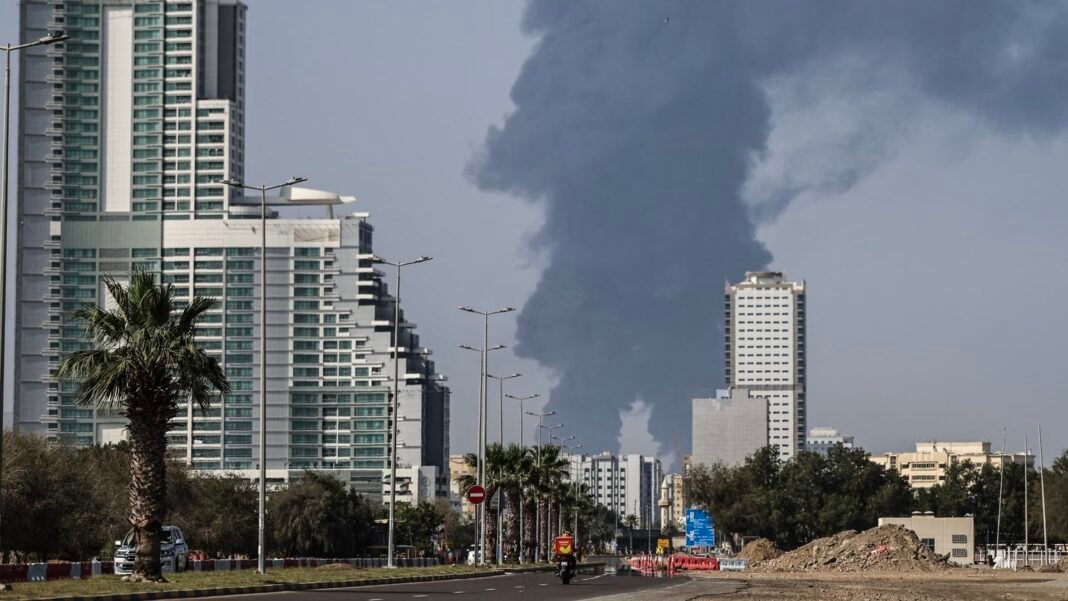
Kuwait recently suffered damage at a combined power generation and water desalination plant after an assault attributed to Iranian-backed forces; tragically, one worker was killed during this event. Emergency crews responded promptly to limit damage and maintain uninterrupted utility services amid heightened security protocols.
Global Energy Markets React Amid Heightened Geopolitical Uncertainty
The ongoing hostilities have caused significant fluctuations in global energy prices: Brent crude surged above $116 per barrel-a rise exceeding 3%-while West Texas Intermediate surpassed $102 per barrel during early Asian trading hours. These shifts reflect fears over potential supply interruptions near strategic maritime routes like the Strait of Hormuz.
The Expanding Role of Proxy Militias Intensifies Conflict Dynamics
The participation of Iran-aligned Houthi militants adds complexity as thay launched ballistic missile strikes against Israeli military targets-the first such offensive by Yemeni forces since hostilities escalated-indicating broader regional entanglement beyond direct U.S.-Iran confrontations.
Cautious Diplomatic Engagements Continue Behind Closed Doors
Despite escalating battlefield tensions,indirect talks between Washington and Tehran persist through intermediaries based in Pakistan. Although Iran officially denies direct negotiations with U.S representatives, reports indicate these backchannel discussions are cautiously advancing toward possible de-escalation measures.
A notable exmaple includes Tehran allowing roughly twenty oil tankers safe transit through the Strait of Hormuz-a gesture aimed at preserving some degree of operational respect amid ongoing conflict pressures.
Diverse Military Strategies Under Consideration by U.S. Command
The United States is weighing multiple options beyond immediate ground action-including sustained airstrikes or naval blockades-to pressure Iran while carefully assessing risks tied to prolonged occupation or expanded warfare affecting critical Gulf infrastructure networks.
“We remain likely within an early or middle phase rather than approaching resolution,” observed a senior security advisor familiar with Gulf stability challenges amidst current developments.”

Long-Term Implications for global Energy Stability
- Sustained Conflict Threats: Ongoing fighting endangers not only local economies but also international energy supplies reliant on steady Gulf exports amidst rising geopolitical risk levels reported by industry analysts reaching historic highs as 2020.
- Civilian Infrastructure at Risk: Attacks on desalination plants jeopardize access to clean water impacting millions across arid regions dependent on these facilities daily for survival and agriculture sustainability efforts expanding under climate change pressures worldwide.
- Broadening Proxy Warfare: The growing involvement across Yemen-Iran-Israel fronts complicates peace prospects significantly requiring coordinated multilateral diplomatic initiatives alongside calibrated military responses tailored toward de-escalation without further destabilization risks.
- Evolving Defense Postures: Balancing assertive tactics against measured restraint will shape both immediate outcomes and long-term regional stability trajectories influencing global markets profoundly given interconnected supply chains sensitive to disruptions along key transit points like Hormuz strait or Bab el-Mandeb passageways crucial for nearly 20% of world trade volume annually according recent maritime data reports from 2024 assessments conducted globally by self-reliant think tanks specializing in energy security analysis.”
A Pivotal Moment Demands Strategic Prudence Worldwide
This volatile period requires deft navigation as geopolitical maneuvers unfold rapidly within an habitat where energy security intertwines deeply with international diplomacy and defense strategies-highlighting how modern conflicts extend far beyond traditional battlefields into economic lifelines sustaining billions globally every day through complex interdependencies shaped increasingly by technological advancements alongside shifting alliances among major powers involved directly or indirectly throughout this region’s evolving crisis landscape today more than ever before.”