Federal Court Blocks $400 Million White House Ballroom Construction
Judicial Order Pauses East Wing Replacement Pending Congressional Approval
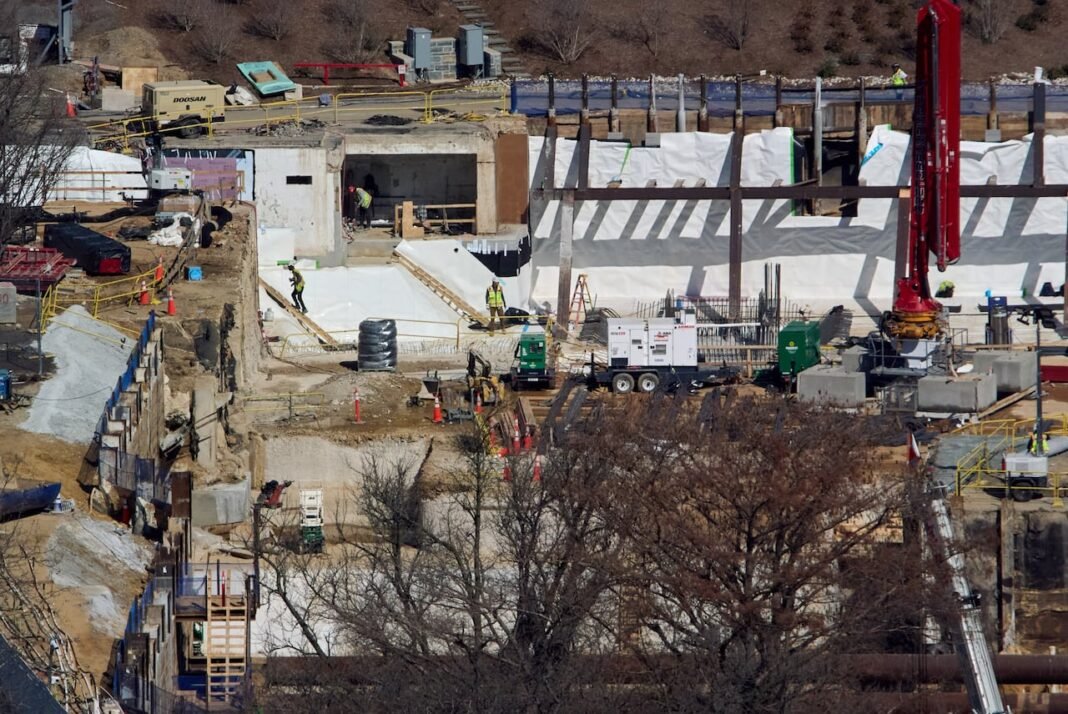
A federal court has mandated a suspension of the Trump administration’s $400 million project too build a new ballroom at the White House.This initiative, which involves reconstructing the demolished East Wing, cannot move forward without explicit authorization from Congress.
Legal Boundaries on Presidential Authority Over Historic Federal Properties
The injunction was issued by U.S. District Judge Richard Leon in Washington following a lawsuit filed by preservation advocates aiming to halt the construction. Judge Leon underscored that no statute grants the President sole discretion to make sweeping alterations to national landmarks absent legislative consent.
“The President is charged with safeguarding the White House for future occupants but does not possess ownership over it.”
Preservation Groups Applaud Court Ruling as Victory for National Heritage
The National Trust for Historic Preservation hailed this decision as a crucial defense of one of America’s most iconic sites. They warned that proceeding without thorough review risks causing permanent harm to an emblematic symbol of U.S. history and governance.
Temporary Halt Provides Window for Review Amid Expected Appeals
The judge allowed a 14-day grace period before fully enforcing the stop order, recognizing logistical complexities and anticipating an appeal from government officials. Indeed, within hours, an appeal was submitted to the U.S. Court of Appeals for the D.C. Circuit.
Security-Related Work Exempt From Construction Freeze
The court clarified that any construction necessary for maintaining White House security remains unaffected by this injunction. After confidential government briefings, Judge Leon steadfast halting non-security projects woudl not jeopardize national safety.
President Trump Criticizes Legal Obstruction Despite Private Funding Claims
In response, President Trump condemned his critics on social media platforms, emphasizing that private donations-including his personal contributions-funded this extensive renovation without taxpayer money involved. He questioned why legal challenges targeted what he described as privately financed improvements.
An In-Depth Look at Project scale and Procedural Controversies
This ballroom expansion aims to add roughly 90,000 square feet capable of accommodating nearly 1,000 guests-a scale unmatched in recent White House enhancements. Although plans were announced months prior with demolition slated by late 2025, key advisory bodies like the National Capital Planning Commission were initially bypassed; these panels now largely consist of presidential allies.

Court Proceedings Highlight Rising tensions Over Executive Power Limits
- An initial attempt by preservationists seeking immediate cessation failed due to insufficient legal basis but succeeded after strengthening their case through amended filings;
- Plaintiffs stress urgency as above-ground work is imminent; attorneys warn irreversible changes could occur soon;
- This litigation exemplifies broader debates about executive authority versus historic preservation laws designed to protect public heritage nationwide;
The Larger Debate: Stewardship Versus Ownership in Managing Public Landmarks
This dispute raises fundamental questions regarding how much control sitting presidents shoudl exercise over federally owned properties rich in historical significance-especially when multi-hundred-million-dollar projects funded privately permanently alter public heritage sites.
“This ruling reinforces that stewardship means obligation toward future generations rather than personal entitlement.”
A Timeline From Proclamation Through Legal Challenges and Public Discourse
- Summer Announcement: Plans revealed detailing grand ballroom addition funded through private donations including former President Trump’s own contributions;
- east Wing Demolition: Executed rapidly despite earlier assurances it would remain intact;
- Lawsuit Initiated: Preservation groups demand comprehensive independent reviews plus congressional approval;
- Court Injunction Issued: Temporary halt imposed pending further judicial scrutiny;
- < strong > Appeal Filed:< / strong > Administration contests ruling seeking swift reversal.< / li >
< h2 > Implications For Future Renovations Of Historically Protected Federal sites < / h2 >
< p > As future administrations contemplate modifications within historically notable federal properties , this case establishes precedent emphasizing strict compliance with procedural requirements alongside respect for cultural legacies . It signals growing oversight around large-scale projects even when financed outside taxpayer funds .Recent studies indicate historic site renovations across America have increased more than 30 % since 2020 , intensifying demands for obvious governance.< / p >
< h3 > Insights From Other Landmark Preservation Conflicts Nationwide < / h3 >
< p > Comparable disputes have emerged elsewhere – such as Chicago’s Union station modernization which balanced commercial growth against architectural conservation ; or Florida’s Vizcaya Museum restoration faced rigorous regulatory scrutiny ensuring historical authenticity while upgrading visitor facilities. These examples demonstrate complex negotiations among progress , preservation , funding sources , and public accountability .