



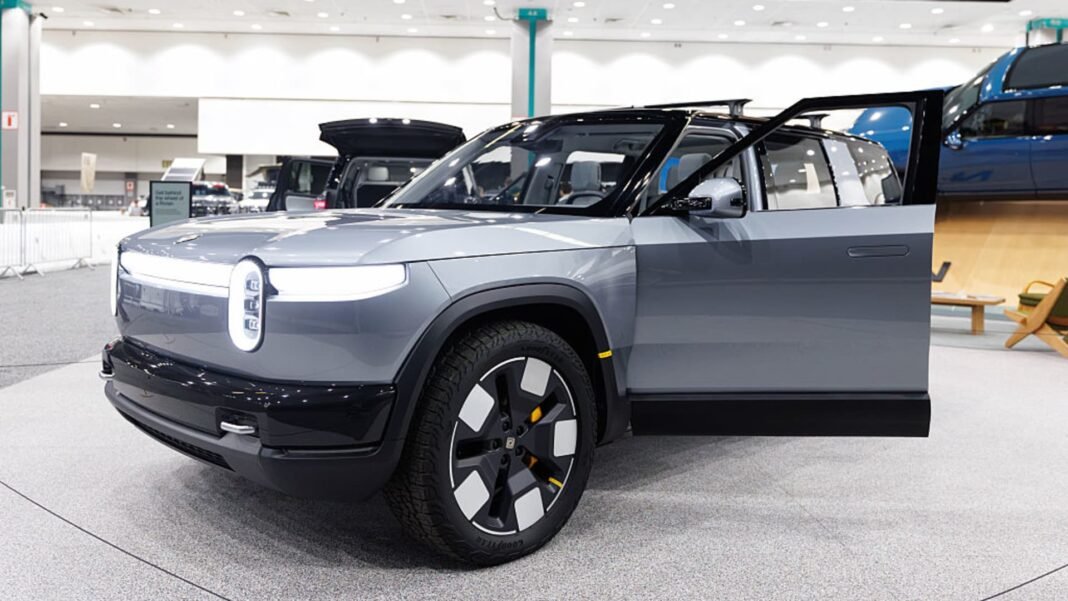
Uber and Rivian Announce $1.25 Billion Collaboration to deploy Robotaxi Fleet by 2031
Transforming Urban Mobility with Autonomous Electric Vehicles
Uber Technologies is committing up to $1.25 billion in Rivian Automotive, a leading electric vehicle manufacturer, to jointly develop and launch a fleet of up to 50,000 robotaxis across North America and Europe by 2031. This partnership represents a major leap forward in integrating autonomous electric vehicles into everyday ride-hailing services.
Investment Breakdown and Vehicle Rollout Plan
The initial phase involves Uber or its affiliated fleet operators acquiring 10,000 self-driving versions of Rivian’s forthcoming R2 electric SUV, with an option to purchase an additional 40,000 units starting in 2030.The first investment tranche of $300 million will be made following regulatory clearance and will convert into roughly 19.55 million shares of Rivian stock.
Further funding rounds are contingent on achieving key growth milestones over the next decade. Alongside vehicle purchases,Uber will also pay licensing fees for access to Rivian’s proprietary autonomous driving software platform.
Exclusive deployment across Key Cities
The R2 robotaxis are slated for exclusive operation on Uber’s ride-hailing and delivery networks within approximately 25 metropolitan areas spanning the United States, Canada, and Europe. Initial service launches are planned for San Francisco and Miami as early as 2028.
The Strategic Value Driving This Partnership
“We fully endorse Rivian’s vertically integrated strategy that combines vehicle engineering with advanced computing hardware and software development while maintaining U.S.-based manufacturing,” stated Uber CEO Dara Khosrowshahi. He highlighted how this extensive approach paired with extensive data from consumer vehicles positions them strongly to achieve their ambitious deployment goals.
Rivian’s Cutting-Edge Autonomous Technology
Rivian CEO RJ Scaringe emphasized that breakthroughs in artificial intelligence combined with high-performance semiconductor chips form the backbone of their confidence in successfully scaling robotaxi operations where others have encountered challenges. their proprietary RAP1 (rivian Autonomy Processor) alongside sophisticated multi-modal perception systems provides a solid technological foundation for rapid advancement over the coming years.
“Our growing data ecosystem coupled with our state-of-the-art inference platform fuels our excitement about accelerating autonomy capabilities,” Scaringe remarked during recent AI innovation events.
The Growing Competitive Landscape of Robotaxi Services
This collaboration emerges amid heightened activity within the autonomous vehicle industry as companies vie for what analysts forecast could become a multitrillion-dollar market chance throughout this decade.
Even though earlier attempts-including some by Uber-have faced hurdles scaling large-scale robotaxi fleets, recent technological progress has renewed optimism about achieving widespread commercial success this time around.

A Network of Strategic Alliances Enhancing Autonomous Mobility
This agreement complements other meaningful partnerships involving Uber such as collaborations with Lucid Motors on electric vehicles; Amazon-backed Zoox focusing on self-driving technology; Stellantis contributing automotive expertise; and Nvidia supplying advanced computing platforms-all working together toward expanding commercial driverless fleets worldwide.
The Future Impact on Urban transportation Patterns
The arrival of affordable electric robotaxis like rivian’s R2 promises to reshape urban transit ecosystems by lowering carbon emissions while offering seamless convenience through fully automated rideshare options accessible via smartphone apps-perhaps transforming daily commutes for millions globally over the next decade.


