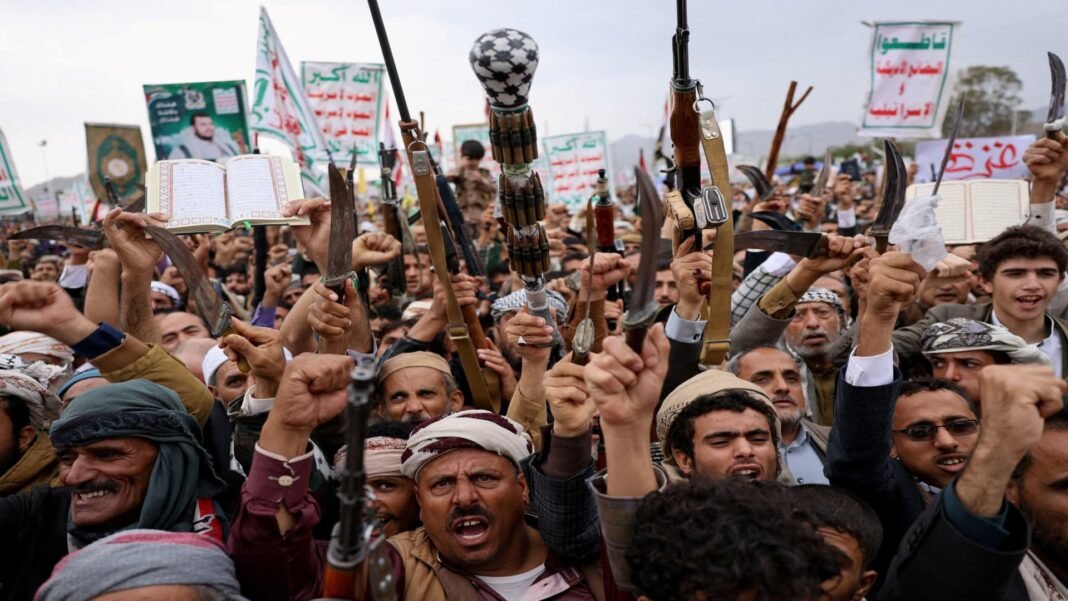
Houthis Launch Missile Attack on Israel,Escalating Regional Conflict
The Houthi movement in Yemen has directly targeted Israeli military sites with ballistic missiles,marking their inaugural direct engagement in the ongoing U.S.-Israeli confrontation involving Iran. This Tehran-supported faction declared the strike as a demonstration of solidarity with Iranian and Hezbollah forces operating in Lebanon.
Heightened risks to Vital Global Shipping Lanes
Security analysts caution that the Houthis may seek to disrupt maritime navigation through the Bab el-Mandeb strait, a strategic passage linking the Arabian Peninsula and the Horn of Africa. This narrow waterway is essential for vessels accessing the Red sea and continuing through the Suez Canal, wich currently handles about 12% of worldwide seaborne oil transport and roughly 8% of global liquefied natural gas shipments as recorded in mid-2024.
Recent drone strikes at key ports such as Salalah in Oman have raised alarms after damaging port facilities and causing minor injuries among dockworkers. Although shipping leader CMA CGM reported no direct impact on its fleet or cargo,it temporarily halted operations at Salalah pending thorough security evaluations.
Oil Market Volatility Amid Regional Instability
The Strait of Hormuz remains effectively sealed under Iranian control, cutting off nearly 20% of global crude oil exports that previously passed through this corridor. Consequently, benchmark prices surged sharply: West Texas Intermediate crude climbed over 5%, closing near $100 per barrel-the highest level since early 2020-while Brent crude rose more than 4%, surpassing $112 per barrel.
Despite diplomatic attempts including a brief extension granted by U.S. officials for talks with Iran regarding access to critical waterways, concerns persist over potential supply chain disruptions across Middle Eastern energy routes.
U.S. Military Strengthens Presence Amid Rising Tensions
The United States has reinforced its regional deployment by dispatching approximately 3,500 Marines aboard USS Tripoli. these forces were redirected from exercises near Taiwan following orders issued two weeks prior amid escalating hostilities.
This amphibious assault group enhances rapid response capabilities within Central Command’s jurisdiction by bringing transport aircraft, strike fighters, and amphibious vehicles designed for swift operational deployment. Additional naval units carrying another Marine expeditionary force are en route from San Diego to bolster these efforts further.
Saudi Arabia Boosts Oil exports via Alternative Routes
Aiming to circumvent vulnerable chokepoints like Hormuz amid growing threats or closures, Saudi Arabia is maximizing output through its east-West pipeline at full capacity-approximately seven million barrels daily-bypassing risky maritime passages entirely. Exports from Yanbu port have reached around five million barrels per day alongside notable shipments of refined petroleum products ranging between 700,000 and 900,000 barrels daily.
Casualties Among U.S Forces Increase Due to Iranian Attacks
Iranian missile assaults targeting Prince Sultan Air Base near Riyadh have resulted in injuries among American personnel stationed there; reports indicate over twenty-five wounded during multiple attacks within one week-including severe injuries sustained during an intense barrage involving six ballistic missiles combined with nearly thirty drones last friday evening.
Diplomatic Initiatives Face Obstacles Amid Persistent Violence
- A coalition consisting of Saudi Arabia,Turkey,Egypt,and Pakistan has launched high-level diplomatic discussions aimed at reducing regional tensions through peace talks scheduled in Islamabad;
- iran remains doubtful about these efforts due to perceived contradictory actions by opposing parties;
- A ceasefire proposal put forth by Washington includes nuclear restrictions on Iran alongside reopening strategic waterways but was rejected by Tehran which countered with demands emphasizing recognition of national sovereignty;
Civilian Casualties Mount Across Multiple Countries
- The death toll exceeds thousands: Iran alone reports more than 1,900 fatalities while Israel counts close to twenty casualties;
- Lebanon suffers heavy losses exceeding one thousand deaths amid Israeli military incursions into southern territories;
- Iraqi security forces experience significant casualties linked to militias aligned with Iranian interests;
- Civil infrastructure damage spans tens of thousands of buildings throughout Iran affecting hospitals and residences housing hundreds of thousands;
Intensified Strikes target Key Iranian Nuclear Facilities
The Israeli Defense Forces recently concentrated air raids on vital nuclear complexes deep inside Tehran’s vicinity including missile production sites along with uranium enrichment plants located westward near Yazd Province. These operations caused considerable setbacks without triggering radioactive leaks or civilian casualties according to official statements from Iranian authorities who vowed retaliatory measures ahead.
Pivotal Agreement Allows Humanitarian Aid Passage Through Strait Of Hormuz
An vital breakthrough occurred when Iran agreed-following United Nations mediation-to permit humanitarian aid deliveries plus agricultural exports transiting via the strategically crucial strait Of Hormuz waterway responsible for roughly one-fifth worldwide oil shipments plus nearly thirty percent fertilizer trade globally.
This development provides some relief amid fears that prolonged blockades could severely disrupt global food production chains due to shortages impacting fertilizer availability essential for crop yields across multiple continents.