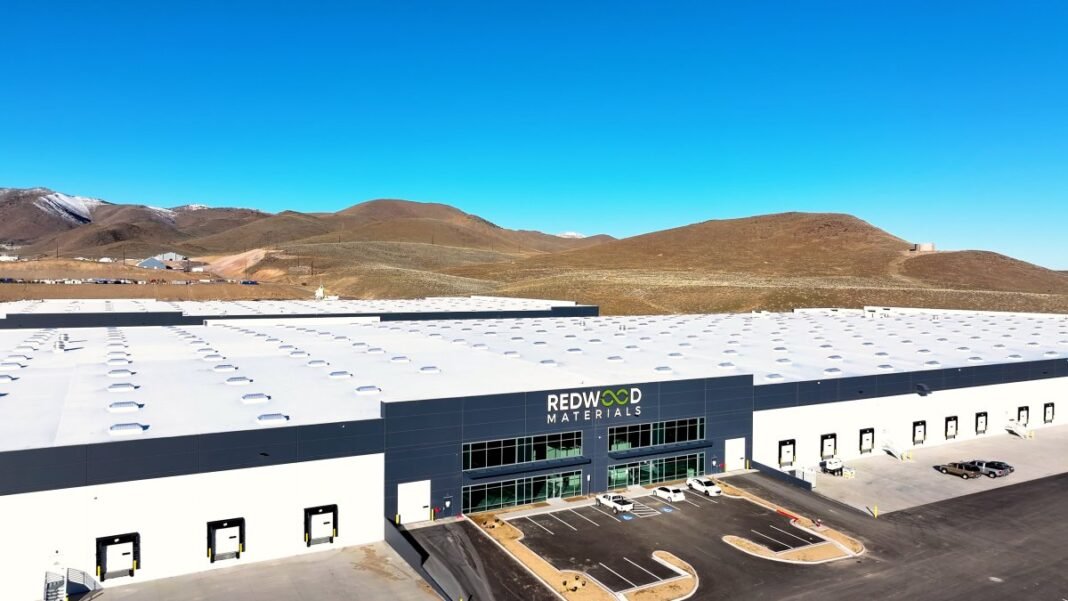
Redwood Materials Implements Workforce Cuts Despite Recent Capital Influx
Company Background and Operational Shifts
Based in Nevada, Redwood Materials focuses on battery recycling and cathode manufacturing, employing roughly 1,200 people. recently, the company announced a reduction of about 5% of its workforce, affecting several dozen roles. Established in 2017 by former Tesla CTO JB Straubel, Redwood initially specialized in recovering critical metals like lithium, cobalt, and nickel from discarded electric vehicle (EV) batteries, consumer electronics waste, and manufacturing scraps.
diversification into Battery Component Production and Energy Storage
In addition to its core recycling activities,Redwood has broadened its scope to include cathode production-an essential element in battery cells-and has begun repurposing used EV batteries for energy storage solutions. This strategic pivot addresses the soaring demand for reliable power storage driven by the rapid expansion of AI data centers globally. By mid-2025, Redwood had amassed over one gigawatt-hour of second-life batteries dedicated to these applications.
Recent Financial Achievements Amid Workforce Adjustments
The company raised $350 million during a Series E funding round in October 2025 that boosted its valuation to approximately $6 billion. Despite this considerable financial backing aimed at scaling their energy storage initiatives, redwood is enacting staff reductions as part of broader operational realignments. No official details have been released regarding the specific reasons behind these layoffs.
The Growing Significance of Battery Recycling in Today’s Economy
The global transition toward sustainable technologies has heightened the urgency for efficient recovery methods for battery materials. With lithium-ion battery demand projected to increase annually by more than 20% through 2030-driven largely by EV adoption and renewable energy integration-companies like Redwood are pivotal in closing supply chain loops while minimizing environmental harm.
Unlocking Value Through Second-Life Battery Applications
Extending the lifecycle of used EV batteries offers both economic advantages and environmental relief by reducing dependence on virgin material extraction.For instance, large-scale projects utilizing refurbished batteries provide grid stabilization or emergency backup power at lower costs compared to new installations-a trend gaining momentum worldwide as seen with recent deployments supporting renewable grids across North America.
- Cobalt: Recovered from spent cells to lessen reliance on mining operations frequently enough linked with ethical challenges.
- Lithium: Recycled lithium helps satisfy surging demand without accelerating resource depletion concerns.
- Nickel: Reclaimed nickel supports production of high-energy-density batteries essential for next-generation electric vehicles.
Navigating Growth While Enhancing Operational Efficiency
this juncture represents a critical phase for Redwood Materials as it balances rapid expansion with internal efficiency improvements amid shifting market conditions. The workforce reduction aligns with industry-wide patterns where clean technology firms recalibrate staffing after major funding rounds to streamline operations while pursuing aspiring growth objectives within an increasingly competitive landscape.
“As electrification accelerates globally,” industry analysts observe,“recycling innovators must evolve quickly-not only scaling capacity but also refining business strategies-to maintain forward momentum.”

Sustainability Impact Beyond Financial Performance
The environmental benefits extend well beyond corporate metrics; effective recycling can reduce landfill waste by up to 95% compared with traditional disposal methods while cutting greenhouse gas emissions associated with primary metal extraction processes by nearly 60%. These efforts are increasingly crucial as governments worldwide enforce stricter electronic waste regulations and promote circular economy frameworks within industrial sectors.