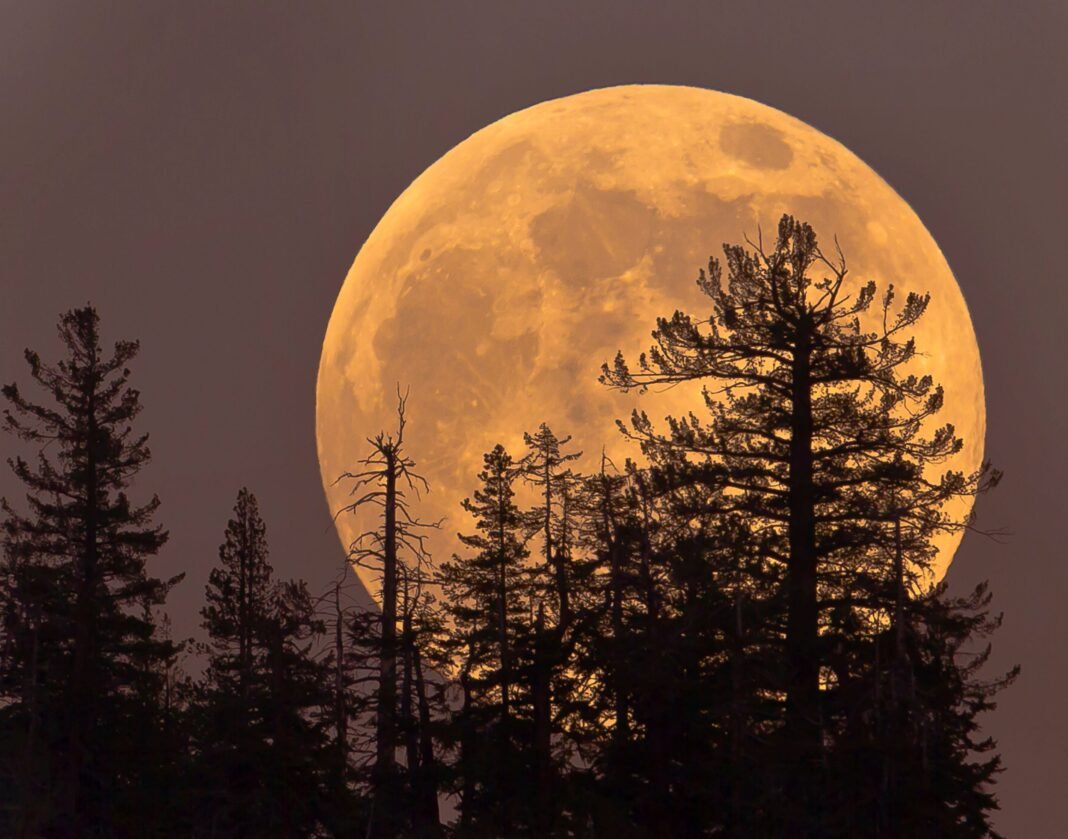
Witness the majestic December Cold Supermoon
On the evening of December 4, 2025, stargazers will have the chance to observe a breathtaking lunar event: the cold supermoon. This full moon not only closes out the year but also appears larger and brighter than usual due to its close approach to Earth. Dubbed the “cold moon” because it coincides with some of winter’s chilliest nights,this supermoon offers a breathtaking finale to 2025’s celestial displays.
What Defines a Supermoon?
A supermoon happens when a full moon occurs near perigee-the closest point in its elliptical orbit around Earth.The distance between our planet and its natural satellite varies from about 407,000 kilometers at apogee (the farthest point) down to roughly 357,000 kilometers at perigee. When this proximity aligns with fullness, we witness an increase in both apparent size and brightness.
This December’s supermoon will be nearly 357,000 kilometers away from Earth-one of the nearest full moons recorded in recent years.While observers might notice up to an 8% enlargement compared to an average full moon’s diameter, its brightness can intensify by as much as 16%, making it noticeably more luminous against the night sky.
The Meaning Behind “Cold Moon”
The name “cold moon” reflects typical early December weather patterns characterized by dropping temperatures and frosty evenings across much of the Northern Hemisphere.This particular full moon is also distinguished by its elevated position in the sky due to seasonal solar angles during winter months.
As we approach winter solstice on December 21-the shortest day and longest night-the sun remains low on our horizon while this cold supermoon climbs high above us. Its lofty altitude enhances visibility and adds dramatic flair for those gazing upward during these long nights.
Lunar Rhythms Near Winter Solstice
This cold supermoon appears roughly two weeks before winter solstice but does not coincide exactly with that date’s lunar phase peak. The first full moon after solstice will occur on January 3, 2026-and notably-it too qualifies as a supermoon. This marks four consecutive months featuring supermoons spanning late autumn into early winter-a rare sequence extending into next year.
How To best Observe This end-of-Year Lunar Spectacle
- optimal Timing: The moment of peak fullness is around 6:14 pm Eastern Time on December 4th; however,watching near moonrise often produces striking visual effects known as lunar illusions where our brain perceives an enlarged disk close to horizons.
- Ideal Viewing Spots: Choose open areas such as hilltops or wide fields facing east without obstructions like tall buildings or dense foliage for unobstructed views of the rising moonscape.
- meteorological Factors: Clear skies are crucial since clouds can wholly block sightlines; consulting local weather forecasts beforehand improves chances for accomplished observation sessions.
“Despite centuries of study, lunar illusion remains one of astronomy’s intriguing mysteries-making rising moons appear dramatically larger than when overhead.”
An Invitation Beneath Winter’s Radiance
This cold supermoon offers more than just an astronomical event-it beckons us outdoors during crisp evenings for moments filled with awe beneath shimmering silver light. Whether you’re passionate about astronomy or simply appreciate nature’s monthly rhythms reflected above,the cold supermoon promises a memorable conclusion before welcoming another new year under starry skies.