



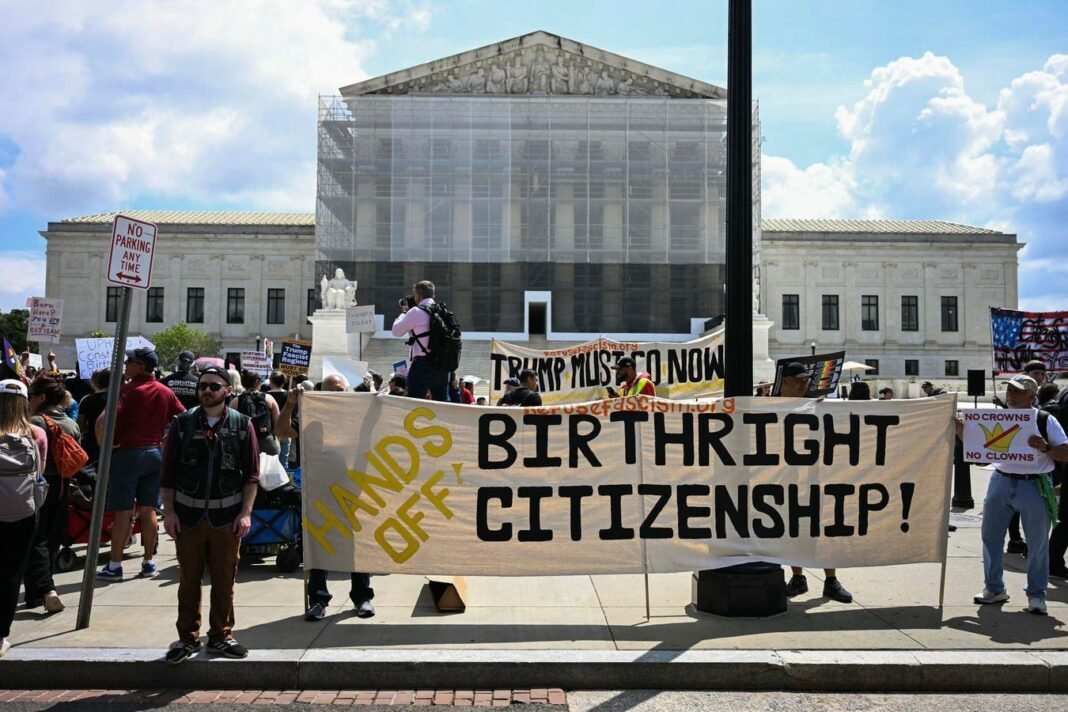
Supreme Court to Examine Executive order Challenging Birthright Citizenship
The United States Supreme Court is preparing to assess the legality of an executive order issued by former President Donald Trump that seeks to end birthright citizenship. This ruling has the potential to overturn a longstanding legal doctrine that grants automatic citizenship to anyone born within U.S.territory,a principle upheld for over 200 years.
Historical and Constitutional Foundations
Earlier this year, President Trump signed an executive order aimed at terminating the practice of granting citizenship based solely on birthplace.However, this directive has faced numerous legal challenges questioning its constitutionality and implementation.
The central constitutional debate centers on the 14th Amendment,which clearly states: “All persons born or naturalized in the united States,and subject to the jurisdiction thereof,are citizens of the united States and of the state wherein they reside.” This provision has been pivotal in establishing birthright citizenship as a essential American right.
Details on Supreme Court Review
The Supreme Court has agreed to hear arguments concerning this contentious executive order. Although no specific date for oral arguments has been set yet, legal experts expect hearings within several months with a decision likely by mid-year.
Consequences for Immigration Trends and Population Dynamics
If judicial or legislative actions successfully revoke birthright citizenship protections, approximately 255,000 infants born annually in the U.S. who currently receive automatic citizenship would be affected. Thes estimates are based on recent data from migration research institutions tracking demographic changes.
Forecasts suggest that without birthright guarantees, unauthorized immigrant populations could nearly double-from around 2.7 million projected by 2045 up to almost 5.4 million by 2075-considerably reshaping demographic landscapes over coming decades.
modern Implications: Citizenship Laws in Context
This issue reflects broader global trends where nations have revisited nationality laws amid shifting migration patterns and political pressures. For example, australias reforms during the late 1990s altered how children born overseas but with Australian parents were recognized-a comparable case demonstrating how nationality policies adapt alongside societal evolution.
“This matter transcends mere legal interpretation; it touches upon identity and belonging,” remarked one constitutional expert discussing how such decisions resonate deeply within communities across America.
The Future Outlook: Citizenship Rights Under Scrutiny
- The Supreme court’s ruling will determine whether presidential powers can redefine constitutional rights tied explicitly to birthplace-based nationality status.
- A decision negating birthright citizenship may trigger new legislation or policy initiatives addressing immigration complexities affecting children born domestically without formal citizen status.
- Civic organizations stress that any reforms must balance humanitarian considerations with national security priorities when shaping future immigration frameworks.
This landmark case highlights ongoing conflicts between shifting political objectives and enduring constitutional values defining American identity-illustrating how lawmaking remains deeply connected with evolving social principles today.


