



Transforming Drug Discovery Through AI-Driven Breakthroughs
The pharmaceutical and biotech industries are undergoing a profound change by integrating artificial intelligence to revolutionize drug discovery. This shift aims to drastically reduce the lengthy timelines traditionally associated with research while improving success rates amid soaring development costs. Currently, over 250 startups globally are embedding AI into their R&D workflows, attracting notable investment as competition intensifies.
Converge Bio: Leading the Charge in Generative AI for Pharma
Among these trailblazers, Converge Bio-a dual-headquartered company in Boston and Tel Aviv-has distinguished itself by harnessing generative AI models trained on molecular datasets to accelerate drug development processes.The company recently closed an oversubscribed $25 million Series A funding round featuring prominent investors from venture capital firms and tech giants.
Embedding Cutting-Edge Models Within Drug Development Pipelines
Converge’s strategy centers on training generative algorithms using biological sequences such as DNA, RNA, and proteins. These complex models are then integrated directly into pharmaceutical workflows to optimize multiple phases of drug creation-from initial target identification through clinical validation.
“Drug development spans numerous stages including discovery and manufacturing,” explained Converge’s CEO. “Our platform delivers ready-to-deploy AI tools that seamlessly fit into existing research pipelines, supporting experimental efforts throughout.”
Diverse AI Platforms Tailored for Complex Biotech Needs
The startup has developed three specialized platforms addressing distinct challenges:
- Antibody Engineering Suite: This comprehensive system combines a generative model crafting novel antibodies; predictive analytics assessing molecular characteristics; and a physics-based docking simulator modeling antibody-target interactions in three dimensions.
- Protein Production Optimizer: Designed to enhance protein yield efficiently through iterative computational refinement.
- Biomarker & Target discovery Tool: Focused on identifying critical biomarkers that guide therapeutic targeting strategies.
This all-in-one approach eliminates the need for clients to piece together fragmented tools themselves, offering instead fully integrated solutions ready for immediate deployment within their labs.
A Rapidly Expanding Enterprise with Tangible Results
Sparking rapid growth as its founding just two years ago-and following an initial $5.5 million seed investment-Converge Bio has completed more than 50 projects collaborating with over fifteen pharmaceutical partners across North America, Europe, Israel, and now expanding into Asia-Pacific markets.
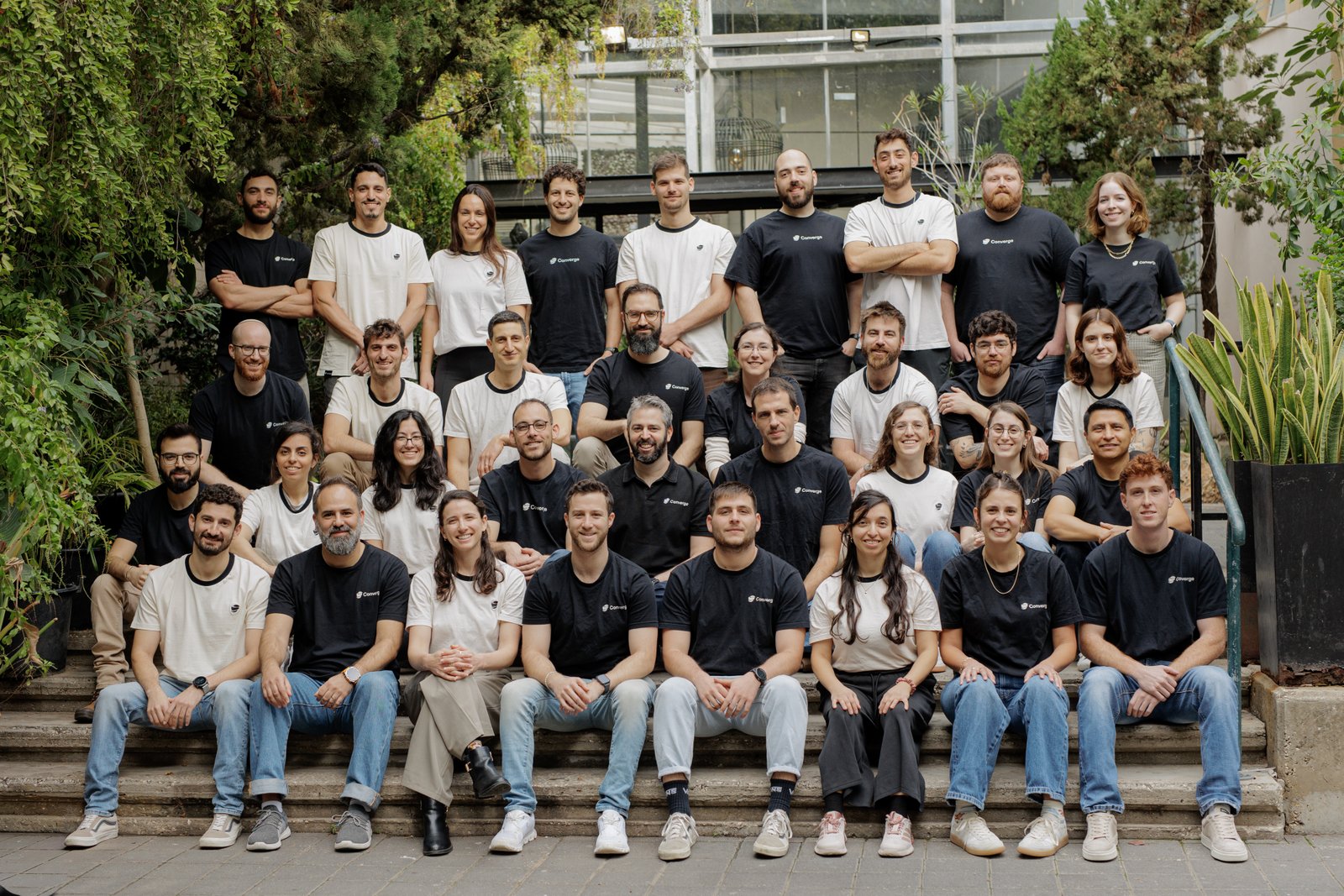
The team has grown nearly fourfold from ten employees at inception to forty today-a testament to accelerated progress driven by successes such as boosting protein yields up to five times after only one computational cycle or generating antibodies exhibiting binding affinities below one nanomolar concentration levels.
The Global Surge of Artificial Intelligence in Life Sciences Research
The adoption of artificial intelligence within life sciences continues its upward trajectory worldwide. As an example:
- Eli Lilly partnered with Nvidia in late 2023 to build what is touted as the most powerful supercomputer dedicated exclusively to expediting pharma R&D efforts through advanced simulations and data analysis;
- The team behind DeepMind’s AlphaFold received widespread acclaim for revolutionizing protein structure prediction using deep learning methods-dramatically enhancing researchers’ ability to understand complex molecular biology at scale;
- AstraZeneca recently announced integration of machine learning-driven predictive analytics across its global clinical trial operations aiming at reducing patient recruitment times by up to 30% compared with traditional methods;
- Bayer launched an initiative employing reinforcement learning algorithms combined with real-world evidence data sets accelerating candidate molecule prioritization considerably faster than conventional approaches;
Tackling Challenges Associated With Large Language Models (LLMs) in Biology
Lately large language models have garnered attention due their capacity not only for interpreting biological sequences but also proposing novel chemical entities; however accuracy concerns persist-particularly hallucinations-which can be costly when validating new compounds requires weeks rather than seconds typical of text error detection tasks.
“Unlike textual hallucinations which frequently enough stand out clearly,” remarked Converge’s CEO,
“validating molecules demands extensive laboratory experiments making errors expensive.”
This risk is mitigated by coupling generative techniques with specialized predictive filters tailored specifically toward molecular properties-substantially lowering false positives while enhancing overall reliability delivered back to collaborators despite inherent imperfections present in current computational methodologies used today.
A nuanced Outlook on model Architectures Versus Scientific Insight
Citing leading experts skeptical about depending solely on LLMs for scientific breakthroughs-including Yann LeCun-the leadership stresses that basic biological understanding necessitates training models explicitly on biochemical data like DNA or protein sequences rather than relying purely on text corpora.
Text-based LLMs primarily serve supportive roles such as assisting researchers navigating literature related to generated molecules but do not constitute the core technology stack.
Instead they employ diverse approaches including diffusion probabilistic models alongside classical machine learning algorithms precisely adapted where appropriate within workflows.
A Forward-looking Vision: Digital Labs Complementing Traditional Wet Labs Globally
“We foresee every life-science organization adopting our platform effectively creating their own digital laboratory,” stated the CEO.
“Wet labs will remain indispensable but will increasingly collaborate closely with computational labs generating hypotheses & candidate molecules digitally before physical experimentation.”
- This hybrid methodology promises accelerated innovation cycles;
- a reduction in costly trial-and-error experiments;
- a democratization of cutting-edge biotech capabilities accessible via cloud platforms worldwide;
- a transformative impact anticipated across healthcare ecosystems globally over coming decades.


