Revolutionizing Robotic Intelligence: A Leap in Adaptive Generalization
Shifting from Narrow Training to Versatile Problem-Solving
Historically, robots have been trained for specific tasks through large datasets tailored to individual activities. While this approach yields strong results within limited domains, it restricts a robot’s capacity to tackle unfamiliar problems. Recently, advancements in robotic AI have introduced the concept of compositional generalization, allowing machines to combine previously acquired skills and creatively apply them to new challenges without explicit prior exposure.
The Breakthrough Model π0.7: Toward Flexible Robotic Cognition
The innovative system π0.7 from Physical Intelligence represents a significant stride toward building robots that can comprehend and execute instructions for tasks they have never encountered before. This progress parallels the rapid evolution seen in large language models (LLMs),where improvements outpace what would be expected solely from increased data volume.
An unexpected Success with Household Devices
A striking exhibition involved an air fryer-a device scarcely represented during training with only two relevant examples: one showing a robot closing it and another depicting a bottle being placed inside under human supervision from an unrelated dataset.Despite this minimal direct experience, π0.7 integrated these fragments alongside extensive web-based pretraining knowledge to operate the appliance effectively.
Without any initial programming for cooking,the robot attempted preparing a sweet potato using the air fryer with partial success; however,when provided step-by-step verbal guidance-similar to coaching a novice worker-it completed the task flawlessly.
The Advantage of Real-Time Verbal Guidance Over Data Accumulation
This capability of enhancing performance through interactive spoken instructions rather then retraining or collecting additional data is transformative for deploying robots in unpredictable settings. It implies future robotic systems could adapt swiftly on-site by understanding natural language commands instead of relying exclusively on fixed routines or expensive supplementary datasets.
Improving Outcomes Through Instruction Refinement
Despite encouraging progress, challenges remain-particularly in prompt engineering, which involves designing effective commands that significantly impact results. For instance, rephrasing instructions boosted success rates dramatically from 5% up to 95% during early experiments involving appliance manipulation.
Current Challenges and Prospects Ahead
- No fully Autonomous Complex Task Execution: Presently, π0.7 cannot independently carry out multi-step operations based on high-level directives like “make me some toast.” Rather, it depends on detailed sequential prompts (“open this compartment,” “press that button”) which it then executes reliably.
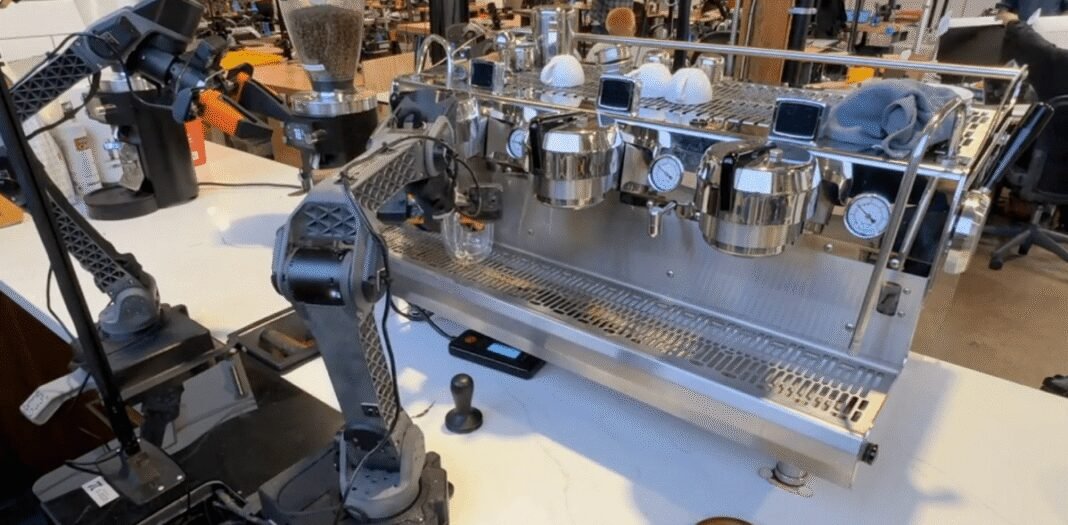
- Lack of Unified Robotics Evaluation Standards: The absence of standardized benchmarks across robotics research means validation often relies on internal comparisons against specialized models trained solely for single functions such as coffee brewing or box assembly-areas where π0.7 matches their effectiveness despite it’s broader capabilities.
- mysterious Origins of Learned Knowledge: Experts remain uncertain about exactly which parts of training data enable certain abilities-a phenomenon reminiscent of unexpected outputs generated by advanced language models years ago.
A Practical Example: Spontaneous Gear Rotation Ability
“During testing I casually handed over a gear set and asked if it could rotate it,” recalled one researcher about surprising outcomes observed recently. “To my amazement-it just worked.”
Cautious Perspectives on Robotic Generalization Claims
Skeptics often downplay generalized robotics demonstrations as less impressive compared to visually striking feats like humanoid acrobatics or intricate dance routines; however,true generalization prioritizes practical adaptability over spectacle-a critical trait for broad applications spanning manufacturing automation through home assistance services.
This distinction underscores why seemingly modest achievements carry deep importance: they lay foundational groundwork toward genuinely intelligent machines capable of flexible problem-solving rather than narrowly scripted behaviors confined by rigid programming limits.
A Balanced Outlook on Deployment Timelines
The scientific community remains cautiously optimistic regarding when such technology will become widespread due mainly to ongoing hurdles related to robustness and reliability across diverse real-world conditions-but progress is advancing more rapidly than anticipated just several years ago.
The Economic Landscape Driving Next-Generation Robotics Innovation
A Multi-Billion Dollar Investment in Adaptive Automation Technologies
Physical Intelligence has secured investments exceeding $1 billion so far and holds an estimated valuation surpassing $5 billion-reflecting strong investor confidence rooted deeply within Silicon Valley’s venture ecosystem known for backing transformative startups well before their breakout successes like Figma or Notion.
- Lachy Groom’s influence: As co-founder with extensive angel investing experience supporting multiple unicorns identified early emerging trends;
- No Public Commercial Launch Timeline Yet: Despite robust financial support there remains deliberate caution around announcing product release dates;
- Pursuit Of Additional Funding Rounds: Ongoing discussions aim at perhaps doubling company valuation near $11 billion amid accelerating market demand fueled by rapid technological advances;