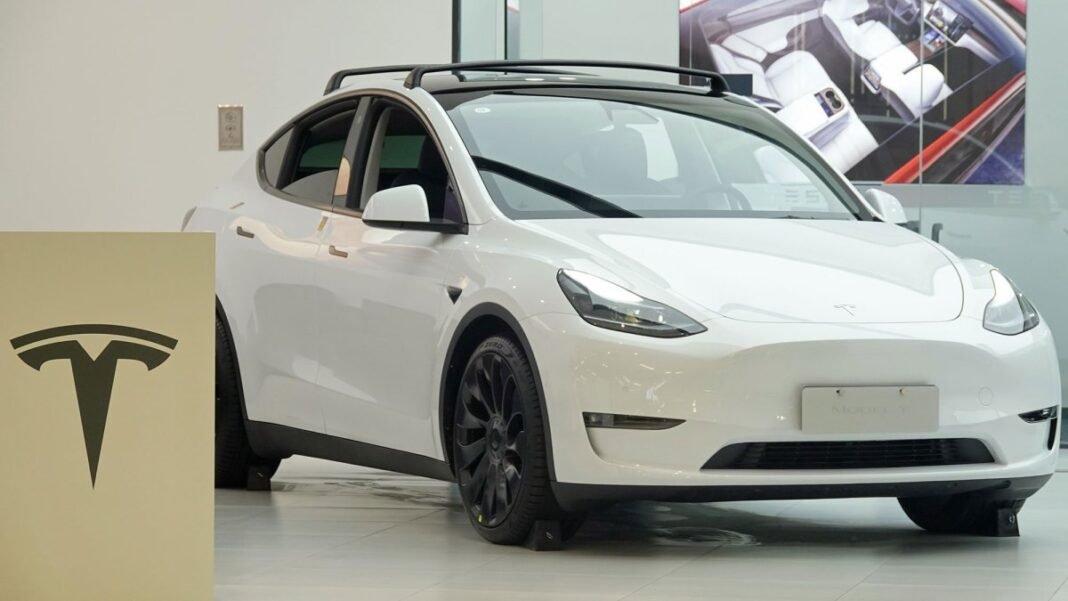
Challenges in Tesla’s Hardware Upgrades for Full Self-Driving Ambitions
Essential Hardware Enhancements for Next-Gen Autonomy
Elon Musk recently announced that a notable number of Tesla vehicles will require vital hardware updates to support the upcoming version of the Full Self-Driving (FSD) software,designed to operate without human intervention. This marks a departure from earlier claims suggesting that teslas equipped with “Hardware 3” would be fully capable of running future FSD releases without any physical modifications.
Legal and Consumer Implications of required Upgrades
This shift raises potential legal challenges,as many Tesla owners purchased their cars under the impression that advanced autonomous driving features would be delivered primarily through software improvements. The need for expensive hardware replacements could lead to disputes over consumer expectations and product commitments.
The Extent and Nature of Necessary Updates
Musk detailed during a recent earnings call that vehicles with third-generation driver-assistance systems must receive upgraded onboard computers and enhanced camera arrays to handle more complex FSD functionalities. To manage this large-scale retrofit efficiently, Tesla is exploring the creation of localized “micro-factories” in major cities rather than relying solely on traditional service centers, which may struggle with high demand.
“Relying only on service centers for these upgrades is slow and inefficient,” Musk explained. “We need dedicated production-like facilities focused exclusively on this process.”
A history of Conflicting Messages Regarding Hardware 3 Capabilities
Owners who bought Teslas between 2019 and 2023 equipped with Hardware 3 have long sought clarity about whether their vehicles could support promised advanced FSD features. Despite numerous inquiries, clear answers were scarce until Musk confirmed in early 2025 that Hardware 3 lacks sufficient processing power for fully unsupervised driving.
“The reality is we must upgrade the computers in those who purchased Full Self-Driving with Hardware 3,” Musk acknowledged. “It won’t be simple or painless but it’s essential.”
Divergent Statements from Tesla Leadership
This admission contrasts sharply with remarks made just six months earlier by CFO Vaibhav Taneja, who expressed hopefulness about achieving advanced FSD capabilities on existing hardware: “we haven’t completely ruled out HW3,” he stated in October 2025. Though, recent clarifications confirm while incremental software enhancements will continue for current owners, genuine autonomous driving requires new equipment installations.
The Technical Constraints Holding Back Current Systems
Musk was clear: “Hardware 3 does not have adequate processing speed or sensor quality needed for unsupervised Full Self-Driving.”
The massive Scale and Logistics Behind Vehicle Retrofits
Tesla faces an unprecedented operational challenge upgrading millions of cars worldwide-an undertaking comparable to rare large-scale shifts seen historically within automotive manufacturing sectors. For viewpoint, global electric vehicle sales surpassed 10 million units by early 2024 alone, highlighting how critical efficient upgrade strategies are both logistically and financially.
- Micro-factory initiative: By decentralizing production into urban hubs near customers, Tesla aims to significantly cut wait times compared to conventional dealership or service center approaches.
- User experience considerations: Owners should expect some downtime during retrofits along with possible costs depending on warranty terms or purchase agreements tied to FSD packages.
- Sustainability challenges: This scenario underscores broader industry struggles ensuring hardware remains future-proof amid rapid AI-driven advancements powering autonomous technologies globally.
A Broader Perspective on Autonomous Vehicle Progression
Tesla’s situation exemplifies how ambitious promises around self-driving technology frequently enough confront real-world technical limitations. Other automakers investing heavily in autonomy face similar hurdles; some adopt modular designs enabling easier sensor swaps or rely more heavily on cloud-based AI updates without full hardware replacements-but even these methods encounter obstacles when core computing power becomes outdated due to exponential growth in algorithmic demands.
“Achieving truly driverless cars remains a complex journey,” experts observe-“hardware progress must advance not just incrementally but exponentially.”
The Path Forward: What Lies Ahead for Tesla Drivers?
Tesla will continue delivering incremental software updates enhancing driver assistance via over-the-air downloads compatible with current systems; however, genuine hands-free autonomy depends upon completing extensive physical upgrades first.
The company now faces balancing customer expectations against technological realities while managing this transition responsibly-a critical factor shaping public trust around one of today’s most discussed innovations: full self-driving capability powered by refined AI tightly integrated within automotive platforms.