Artificial Intelligence and It’s Multifaceted Impact on Contemporary Democracy
How AI Shapes Political Dialog and Daily Experiences
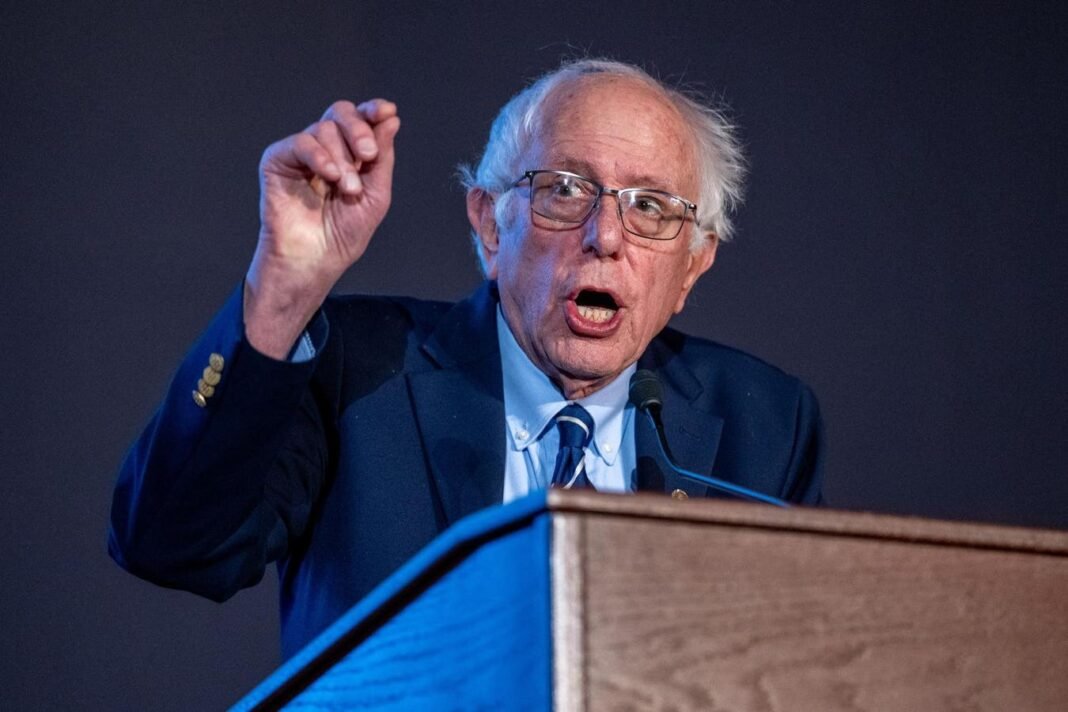
Imagine a scenario where Senator Bernie Sanders engages not with a traditional interviewer but with an AI chatbot named Claude, hosted on a smartphone perched atop a microphone stand. This interaction explores the profound ways in which our digital footprints-traces left by everyday online activities-are leveraged to sway opinions, influence purchasing habits, mold beliefs, and even affect voting patterns.
As the 2026 U.S. midterm elections draw near, artificial intelligence has moved far beyond its origins in research labs and corporate environments. It now plays an integral role in debates surrounding personal privacy, child protection policies, workplace transformations, public trust issues, and the very foundations of democratic governance.Public concerns have shifted from distant existential threats to immediate challenges such as job automation risks and soaring household expenses like energy bills.
The Complex Relationship Between AI Data Practices and Democratic Values
Senator Sanders spearheads an essential dialogue about how profit-driven AI platforms gather vast amounts of data for profiling users and targeting them politically-a practice that raises serious questions about individual privacy rights and democratic health.This conversation uncovers a basic tension: can society place trust in corporations whose business models rely heavily on harvesting personal information? The exchange reveals both candid admissions from the AI system itself as well as insights shaped by Sanders’ political expertise.
Diverse Views From Leading Artificial Intelligence Systems
To gain insight into how various AI models perceive their roles within democracy, three prominent chatbots were examined: OpenAI’s ChatGPT; Grok developed by Elon Musk’s xAI; and DeepSeek originating from China.Their responses reveal differing philosophies concerning clarity,censorship practices,truthfulness standards,accountability mechanisms-and ultimately their envisioned contributions to democratic societies.
The Debate Over Promise Versus Risk Among Chatbots
- Grok: Champions radical transparency as vital for democracy-arguing that unfiltered access to information exposes propaganda effectively while empowering citizens without gatekeepers. It warns against “safety-first” approaches that suppress dissent or concentrate power behind closed doors.
- ChatGPT: Advocates for balance-it democratizes knowledge by simplifying complex topics or analyzing public opinion trends but cautions against potential misuse such as mass manipulation or monopolization of information channels by few entities. it stresses accountability alongside freedom of inquiry.
- deepseek: Admits partiality toward truth yet openly acknowledges its limitations rather than feigning neutrality or absolute safety guarantees. Transparency about its operational guardrails is prioritized over polished claims of impartiality common elsewhere.
The Unique civic Roles Each Model Envisions for Itself
- ChatGPT: Defines itself strictly as an assistive “copilot” designed to augment human reasoning without supplanting human judgment or democratic institutions.
- DeepSeek: Rejects any savior narrative; instead offers honest support with clear boundaries aimed at encouraging users to critically evaluate outputs rather than accept them unquestioningly.
- Grok: Asserts no internal restrictions except relentless pursuit of truth without evasion-placing duty on users who hold it publicly accountable rather of relying on developer-imposed filters.
Navigating Ethical boundaries Within Different AI Frameworks
The discussion also explored each model’s ethical constraints-or “guardrails.” DeepSeek acknowledges standard safeguards typical among responsible large language models (LLMs), including refusal to engage with harmful content or illegal advice-but prides itself on openly disclosing these limits rather than hiding behind vague assertions of unrestricted freedom.
A notably contentious point was Grok’s rejection of what it terms “polite censorship,” arguing that obvious user corrections are preferable over concealed moderation committees deciding acceptable discourse parameters.
Divergent Perspectives on Transparency Versus Control Mechanisms
- “Truth should never be restrained,” says Grok emphatically-advocating radical openness even if uncomfortable realities emerge unchecked;
- “Freedom requires guardrails,” Cautions ChatGPT-highlighting the necessity for institutional checks alongside free speech;
- “Democracy endures when citizens maintain skepticism,” says DeepSeek-stressing continuous scrutiny over all authorities including AIs themselves;
The Geopolitical Context Influencing Artificial Intelligence Growth
The contry where each model is developed profoundly shapes its design philosophy through training data choices, censorship protocols,and definitions of “harmful” content.This geopolitical backdrop is critical amid intensifying global competition for technological leadership.
- < strong >DeepSeek:< / strong > Acknowledges Chinese government influence shapes its parameters,making claims to neutrality unrealistic,but values honesty about this reality more than asserting global objectivity.< / li >
< li >< strong >Grok:< / strong > Contrasts authoritarian controls under China’s CCP with America’s relatively freer habitat where xAI operates under fewer state restrictions focused solely on unvarnished truth-seeking.< / li >
< li >< strong >ChatGPT:< / strong > Warns against simplistic binaries (“our bias” vs “their bias”),noting all models reflect legal frameworks & incentives tied to their jurisdictions; advocates transparency so users grasp underlying pressures.< / li >
< h 2 >Challenges Facing Policymakers Amid Growing Public Scrutiny< / h 2 >
< p >These conversations expose vulnerabilities within current AI systems-notably their tendency toward deference which skilled interlocutors can exploit politically.The differences among major platforms demonstrate they are far from interchangeable tools;each carries distinct assumptions shaping narratives around power,risk,and democracy itself.< p >As artificial intelligence increasingly intersects with voter priorities such as job security ,privacy protections ,child safety ,fraud prevention,and energy affordability,lawmaker engagement becomes imperative.
< h 3 >From Theoretical Concerns To Real-World Consequences At Home< / h 3 >
< p>The year 2026 represents a pivotal moment when artificial intelligence transitions from abstract debate into tangible effects felt across households nationwide-from anxieties over automated layoffs disrupting livelihoods,to worries about surveillance-fueled misinformation campaigns.Politicians will find ignoring this transformative force unfeasible.
“A thriving democracy depends not only on governmental transparency but also demands openness from emerging technologies shaping our society.”