Groundbreaking Innovations Transforming the FIFA World cup 2026
The FIFA World Cup 2026 is set to redefine international football by featuring an unprecedented format with 48 teams competing across three host countries: the United States, Mexico, and Canada.Over a span of 39 days, this tournament promises to deliver an extraordinary experience for fans and players alike.
Advanced Technologies Elevating Match Dynamics
This edition introduces state-of-the-art technological tools aimed at improving gameplay accuracy and enriching fan interaction.From sensor-embedded balls to AI-driven player monitoring systems, these innovations are revolutionizing how football is played, officiated, and broadcasted.
Sensor-Integrated Match Ball for Precise Data Capture
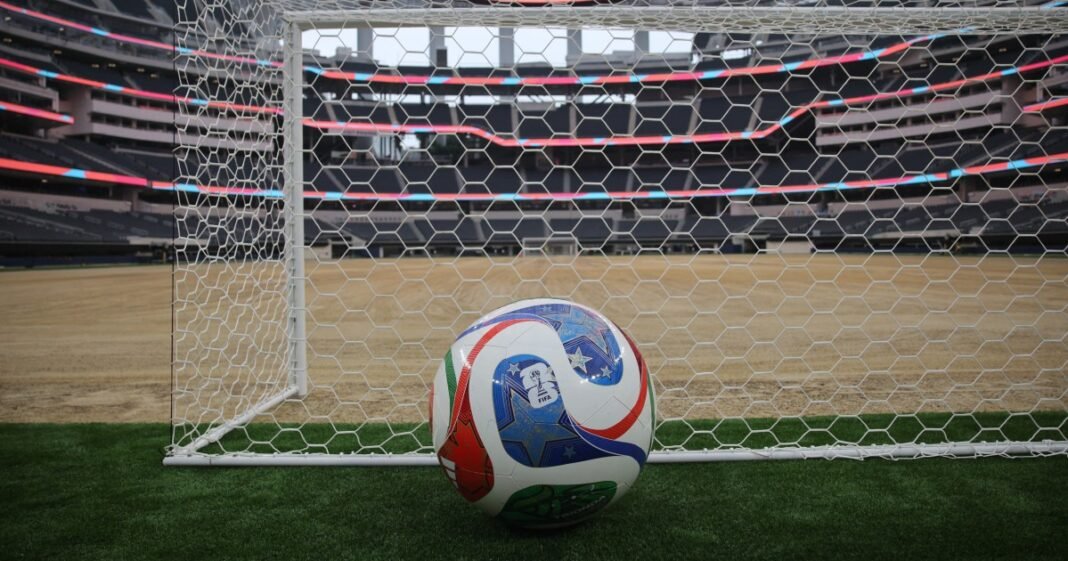
The official ball named “Trionda,” symbolizing “three waves” in Spanish to honor the tri-nation hosting, features a built-in inertial measurement unit (IMU) sensor chip. This technology records detailed metrics on ball movement-tracking acceleration and spatial orientation up to 500 times per second.
This continuous stream of data feeds directly into the Video Assistant Referee (VAR) system,enabling referees to make faster and more accurate decisions during critical moments such as offside calls. The precision offered by this technology provides unparalleled insight into the ball’s behaviour within three-dimensional space.
AI-Created Three-Dimensional Player Models Enhancing Officiating
Players will be digitally represented through AI-generated 3D avatars created from ultra-fast body scans lasting just one second each. These models capture exact anatomical details that allow enhanced tracking even when players move rapidly or are partially obscured on camera.
This advancement supports semi-automated offside detection by increasing both speed and accuracy while also enriching broadcast visuals with lifelike representations during VAR reviews. Additionally, referee-mounted cameras positioned at pitch level will offer immersive angles throughout all 104 matches-a first in World Cup history-bringing viewers closer than ever before to live action on the field.
Robotic Security Solutions Safeguarding Fans
To bolster safety measures around stadiums during matches, host cities have deployed cutting-edge robotic technologies. In guadalupe near Monterrey, Mexican authorities introduced four-legged robotic dogs designed specifically for surveillance in high-risk areas surrounding venues.
These autonomous robots provide real-time video feeds directly to security personnel before any intervention occurs. Valued at approximately $145,000 USD each by local officials, these units assist law enforcement by entering potentially dangerous zones first-reducing risks while maintaining effective crowd control amid large gatherings.
Semi-Automated Offside Technology Accelerates Critical Decisions
A longstanding source of frustration among fans has been delays in offside rulings; though new semi-automated systems now deliver near-instant alerts when players cross positional boundaries refined down to just over 10 centimeters-a significant advancement from previous thresholds exceeding half a meter.
- An audio alert notifies referees immediately via earpieces without waiting for manual VAR dialog;
- The system relies exclusively on objective positional data rather than subjective factors like interference or proximity;
- Certain complex scenarios involving prone or closely clustered players may still challenge automated detection capabilities;
This innovation aims not only at minimizing controversial moments but also reducing injury risks caused by needless continuation of play following unnoticed offsides.
Standardized Hydration Breaks Prioritize Player Well-being
A new regulation mandates two fixed hydration pauses lasting three minutes each midway through both halves regardless of external conditions such as temperature or stadium roofing type. This consistent approach ensures athlete health is prioritized across North America’s diverse climates-from humid coastal cities like Miami to dry inland locations such as Phoenix.
“Every match will include two scheduled hydration breaks approximately around minute 22 in both halves,” explained a member of FIFA’s organizational team overseeing operations.
“If injuries cause stoppages near those times adjustments will be coordinated collaboratively with referees.”
A historic Milestone Ushering Football into a Smarter Era
The expanded global participation combined with groundbreaking technological advancements distinguishes FIFA World Cup 2026 as more than just another tournament; it marks football’s evolution toward greater precision officiating alongside enhanced entertainment value and extensive player welfare initiatives worldwide.