how Over-the-air Software Updates Are Transforming the Automotive Industry
Remote Vehicle Maintenance: The New Standard
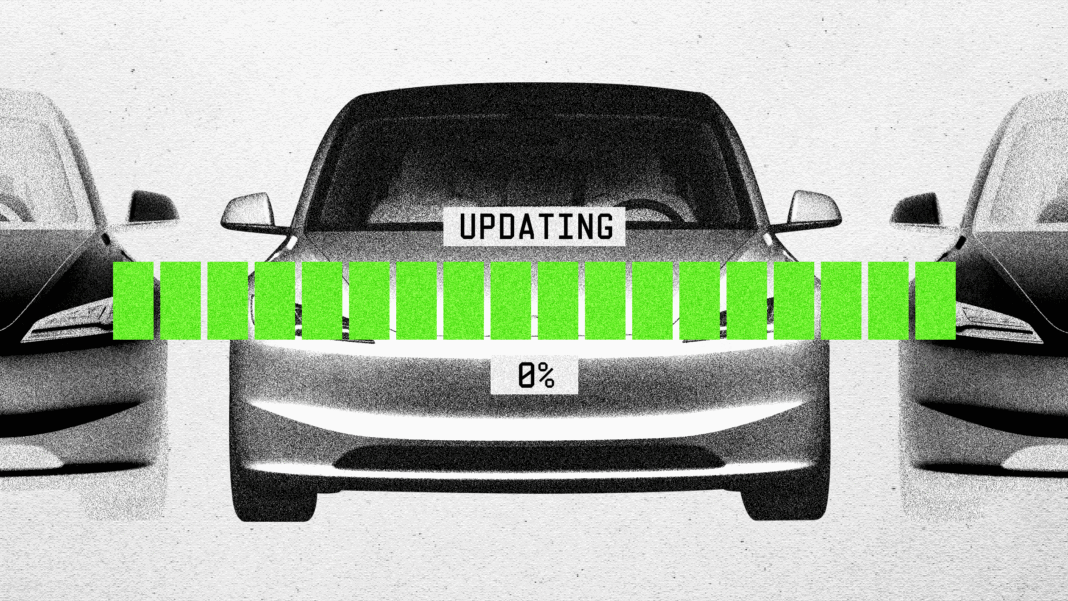
The advent of over-the-air (OTA) software updates has revolutionized vehicle maintenance by enabling remote enhancements, much like updates on smartphones and computers. While many traditional car manufacturers have invested heavily in this technology, Tesla remains unmatched in the speed and frequency of its OTA deployments.As pioneering OTA capabilities in 2012, Tesla has rolled out numerous updates within short timeframes, whereas many legacy automakers still limit such upgrades to annual intervals.
Transitioning from Hardware-Driven to Software-Centric Vehicles
In the past, automotive software was largely fixed at production and rarely updated throughout a vehicle’s lifespan.However, emerging digital-first companies such as Rivian, Lucid Motors, Polestar, BYD, Xpeng, and Xiaomi have shifted this mindset by placing software at the core of their vehicles’ functionality rather than treating it as an afterthought.
Interestingly enough, General Motors introduced OTA technology through its OnStar system two years before Tesla but primarily used it for minor infotainment tweaks. In contrast, modern EV makers leverage OTAs for substantial improvements including extending battery range or boosting acceleration performance.
Innovative Features Delivered Wirelessly
- Tesla enables drivers to personalize their experience with features like customizable horn sounds activated remotely.
- Rivian improves ride quality by adjusting suspension settings via software updates without physical intervention.
- Polestar allows owners to unlock their cars using smartphone apps enhanced through OTA upgrades.
The Expanding Role of Automotive Software Platforms
The complexity and scale of automotive software are growing rapidly-software content in vehicles has increased roughly 40% annually since 2021.In the United States alone today there are approximately 69 million cars equipped with OTA update capabilities. This shift toward software-defined vehicles (SDVs) is reshaping global automotive industry dynamics profoundly.
A snapshot of Market Leaders Versus Slow Adopters
Tesla continues to lead according to various industry benchmarks measuring SDV progress. Chinese EV manufacturers Nio and Xiaomi follow closely behind as formidable challengers pushing innovation forward. Meanwhile legacy brands such as Nissan, Toyota, Mazda, and Jaguar land Rover lag due to slower adoption rates of advanced OTA functionalities.
Savings Through remote Repairs: Cutting Recall Costs with OTAs
An effective OTA strategy can drastically reduce recall-related expenses while improving customer convenience by eliminating unnecessary dealership visits. In 2024 alone more than 13 million vehicles worldwide were recalled due to software defects-a number that surged over one-third compared with previous years’ figures.
The average cost per recall traditionally hovers around $500 per vehicle; though wireless update delivery also incurs costs-as an exmaple suppliers estimate about $66 per gigabyte transmitted per car-which must be weighed against savings from fewer physical repairs or replacements.
Larger Firmware Updates: Unlocking Deeper Enhancements for EVs
Larger-scale firmware-over-the-air (FOTA) packages enable meaningful modifications such as powertrain recalibration or battery management optimization but require robust connectivity infrastructure alongside ample onboard computing resources reserved for future growth:
- The Lucid Gravity SUV integrates a high-performance Nvidia Orin-X processor coupled with extensive storage capacity far exceeding current operating system requirements-ensuring room for continuous evolution via OTAs over time.
Evolving Revenue Models: Monetizing Features Through Subscriptions
Beyond maintenance advantages automakers increasingly generate recurring income streams from subscription-based features unlocked remotely via OTAs:
- Tesla offers “Acceleration Boost” packages that instantly enhance performance post-purchase without hardware changes;
- A monthly “premium connectivity” plan provides streaming services plus real-time security camera access;
- An advanced driver assistance suite branded Full Self Driving (FSD) is available under subscription despite ongoing debates about its actual capabilities versus marketing claims.
User Resistance Toward Subscription Fees
This monetization approach faces pushback; BMW encountered backlash when attempting paid activation fees on pre-installed heated seats leading them to withdraw plans amid negative consumer reactions-a cautionary example highlighting challenges balancing innovation with customer expectations around ownership rights versus service models.
User Privacy Concerns & Risks Linked With Remote Control Capabilities
An often overlooked aspect is that OTAs facilitate two-way data exchange-not only downloading new code but also uploading user behavior data back to manufacturers for analysis or machine learning purposes.Tesla’s Shadow Mode exemplifies this practice by collecting detailed driving patterns as 2016 used extensively as training inputs toward autonomous driving development.This data collection operates under owner consent embedded within purchase agreements yet raises privacy concerns among consumers aware their cars continuously transmit facts beyond basic diagnostics.
Additionally risks exist regarding potential “bricking,” where manufacturers remotely disable or downgrade functions post-sale-as occurred when Xiaomi temporarily reduced horsepower output on its SU7 supercar pending driver skill verification following public demand restoration.This incident highlights tensions between manufacturer control versus buyer expectations concerning purchased product capabilities.
Tesla itself reflects silicon Valley startup culture traits including rapid iteration cycles sometimes clashing with safety priorities initially criticized until subsequent fixes were deployed via OTA patches addressing braking issues flagged during independent testing.
Consumer advocates stress treating safety-critical code changes seriously given inherent risks posed by multi-ton moving machines compared against conventional computer systems requiring less stringent validation protocols.In fact regulatory bodies mandated recalls targeting specific automated functions after identifying unsafe behaviors despite company denials emphasizing nuanced operational logic behind detected anomalies.
The AI-Driven Future of Connected Vehicles
The integration of artificial intelligence into automobiles signals a major shift away from distributed electronic control units (ECUs)-which often number over one hundred-to centralized computing architectures designed specifically for improved safety and efficiency.
As a notable example Rivian drastically reduced ECU count between model generations aiming at streamlined hardware/software synergy.
Emerging platforms like Arm’s Zena Compute Subsystems incorporate dedicated security enclaves alongside neural network accelerators engineered explicitly against cyber threats while supporting complex AI workloads essential for next-generation driver assistance systems.
Volvo recently partnered with Google Gemini AI technology reflecting growing trends blending cloud intelligence directly into vehicular ecosystems.
Meanwhile conversational agents powered by sophisticated chatbots are becoming common among Chinese drivers interacting naturally through voice assistants integrated into infotainment systems.
Tesla continues pushing boundaries deploying xAI’s Grok chatbot despite occasional controversies surrounding generated content illustrating both promise and pitfalls inherent in merging AI conversational tools within mobility contexts.
Navigating Legacy Systems Versus Agile Innovation
Mainstream automakers face entrenched challenges stemming from decades-old frameworks like AUTOSAR developed jointly across German OEMs aimed at standardizing electronic architectures but criticized today as cumbersome legacy codebases hindering agile development cycles required in fast-moving tech environments.
Ford CEO Jim Farley highlights difficulties coordinating disparate supplier-written modules complicating even minor feature adjustments without external approvals prompting moves toward consolidating core technologies internally fostering faster innovation loops akin to Silicon Valley practices pioneered successfully elsewhere.
simplifying Update Delivery: Leveraging Smartphones Instead?
Certain startups propose alternative models avoiding constant cellular connectivity embedded inside vehicles altogether opting instead for owner smartphones acting as conduits transferring downloaded patches manually onto cars offline-exemplified by Michigan-based Slate Auto producing minimalist electric trucks focused purely on essential functions minimizing complexity while retaining upgradeability.
Unlike consumer electronics motor vehicles remain subject to rigorous international standards such as ISO 26262 mandating exhaustive validation processes prior deployment slowing rollout speed relative even recent tech sectors accustomed rapidly iterated releases raising questions about balancing innovation velocity versus uncompromising safety assurances.
Former Tesla engineer Florian Rohde notes cultural resistance within established auto firms reluctant relinquishing hierarchical controls impeding swift decision-making contrasting sharply against small empowered teams enabling Tesla’s initial success integrating hardware-software co-design tightly aligned around continuous improvement philosophies typical among DevOps practitioners unfamiliar historically inside automotive engineering domains.
While competition intensifies globally especially fueled by China’s dual heritage companies Huawei and Xiaomi leveraging smartphone expertise entering EV markets aggressively challenging incumbents,Tesla currently maintains leadership outside China largely as it uniquely combines electric propulsion mastery plus thorough SDV architecture supported end-to-end backend infrastructure along extensive charging networks together-a rare convergence few rivals fully match yet .