Indirect Ceasefire Negotiations Begin in Egypt Amid Gaza Conflict
Efforts to halt the ongoing violence in gaza have taken a new turn as indirect ceasefire talks between Israel and Hamas commence in Egypt. These discussions are based on a detailed 20-point ceasefire proposal originally outlined by Donald Trump, aiming to bring an end to hostilities that have devastated the region.
Delegations Convene for Critical Dialog
The Hamas delegation,led by Khalil al-Hayya,has arrived in Sharm el-Sheikh to engage in negotiations centered on establishing ceasefire terms,orchestrating Israeli troop withdrawals,and arranging prisoner exchanges. Meanwhile, Israel’s negotiation team under Ron Dermer is expected shortly to join these crucial conversations designed to de-escalate tensions.
Escalating Violence Casts Shadow Over Talks
Despite ongoing Israeli airstrikes causing dozens of Palestinian casualties recently-including at least 35 fatalities-the possibility of a ceasefire is gaining traction. Israeli Prime Minister Benjamin Netanyahu has expressed cautious optimism about reaching an agreement soon regarding the release of hostages held by Hamas. The U.S. President highlighted rapid progress on social media platforms, emphasizing that technical teams would reconvene promptly to finalize outstanding details.
“The negotiations are advancing quickly and productively,” stated President Trump. “We expect the initial phase to conclude this week; I urge all parties involved to act swiftly.”
The Human cost: Civilians Bear the Brunt of Conflict
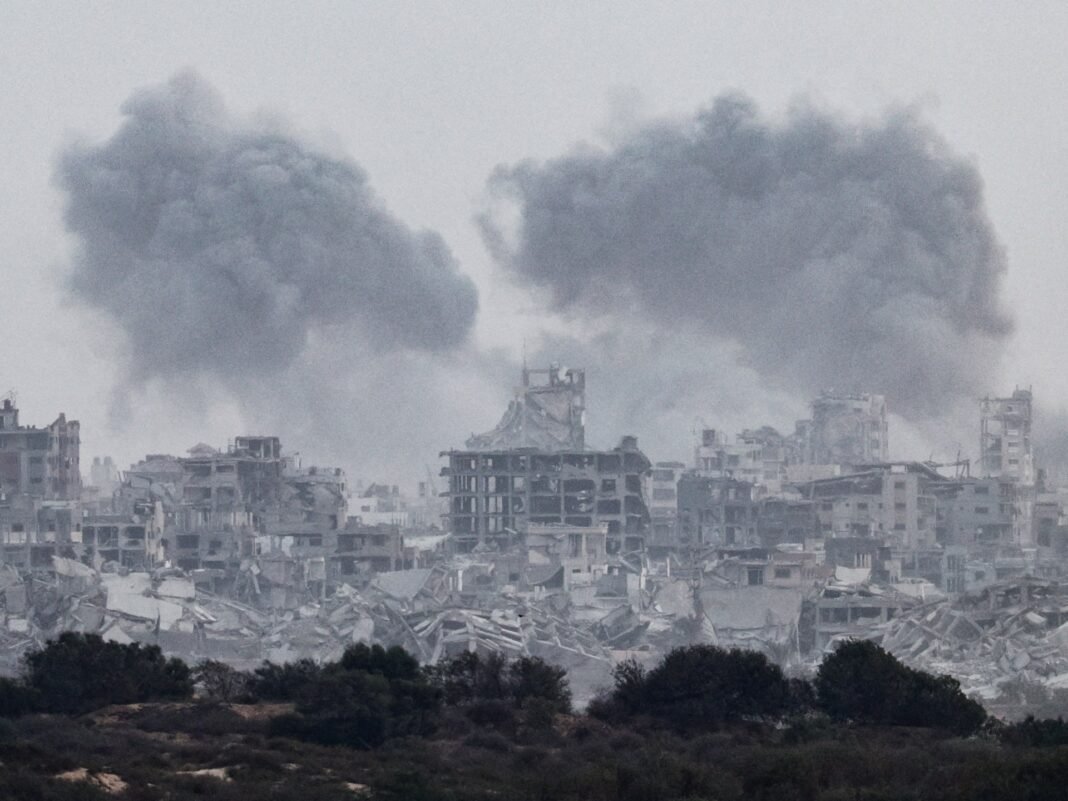
The humanitarian crisis continues unabated across Gaza city and its environs where displaced families seek shelter amid relentless bombardments. Recent data reveals that over 12,000 individuals-equivalent to nearly 4,000 families-have vanished from official records during escalating clashes over the past three years. Tragically, more then 1,500 infants under one year old have perished alongside numerous healthcare workers and journalists caught within conflict zones.
A reporter near central Gaza described how residents hoped for nighttime calm but were instead met with renewed shelling targeting both civilian shelters and urban infrastructure amid recent ground offensives.
Calls for Ceasefire Before Hostage Exchanges Intensify
U.S. Secretary of State Marco Rubio emphasized that halting military operations is essential before any hostage release can be effectively carried out: “It’s impractical for hostage negotiations to succeed while active warfare continues.” This viewpoint reflects widespread international concern about balancing security priorities with urgent humanitarian needs during these delicate talks.
Main Elements of Trump’s Ceasefire Blueprint
- Hamas Obligations: Immediate release of all Israeli captives as a gesture toward building trust between parties.
- Israeli Military Pullback: Redeployment behind pre-conflict boundaries known as the “yellow line” established last August within Gaza territory.
- Dismantling Armed Groups: Steps aimed at disarming militant factions inside Gaza while maintaining oversight over strategic areas according to statements from Israeli defense officials.
This framework faces challenges due partly to differing interpretations; some Israeli leaders insist on retaining control over key zones despite agreeing formally on troop withdrawals stipulated by the plan’s terms.
Broad Arab Coalition Endorses Hamas Ahead of Talks
A coalition including foreign ministers from Egypt, Jordan, Indonesia, Pakistan, Qatar, Saudi Arabia, Turkey (Turkiye), and United Arab Emirates issued a joint statement supporting elements within trump’s proposal such as prisoner releases while urging Israel toward an immediate bombing halt prior to further negotiation phases.
“We commend President Trump’s commitment toward regional stability,” their declaration read. “We welcome Hamas’ willingness to temporarily transfer governance responsibilities into an autonomous technocratic body.”
Izzat al-Risheq representing Hamas described this endorsement as critical support enhancing prospects for sustainable peace agreements while calling upon greater Arab-Islamic unity against what he termed aggression inflicting severe suffering upon Palestinians striving for sovereignty centered around Jerusalem as their capital city.
Diplomatic Momentum Builds With U.S Envoys Engaged
The White House has deployed senior envoys Jared Kushner and Steve Witkoff directly into Cairo’s diplomatic arena aiming at facilitating breakthroughs between deeply entrenched parties after decades-long conflict dynamics. The U.S management signals readiness for immediate ceasefire activation once preliminary conditions concerning troop redeployment are fulfilled by both sides involved.
(Note: Removed extra breaks).
Questions remain about critical sticking points such as full demilitarization demands placed upon hamas versus Israel’s security concerns related primarily border control mechanisms.President Trump indicated some adaptability might still exist within his original framework despite broad consensus so far: “While most agree already,” he noted cautiously about possible adjustments needed before finalizing terms.
This evolving negotiation process reflects complex geopolitical realities shaping one of today’s most enduring conflicts-with millions watching closely whether these indirect talks will finally pave way toward lasting calm or prolong uncertainty amidst persistent violence.