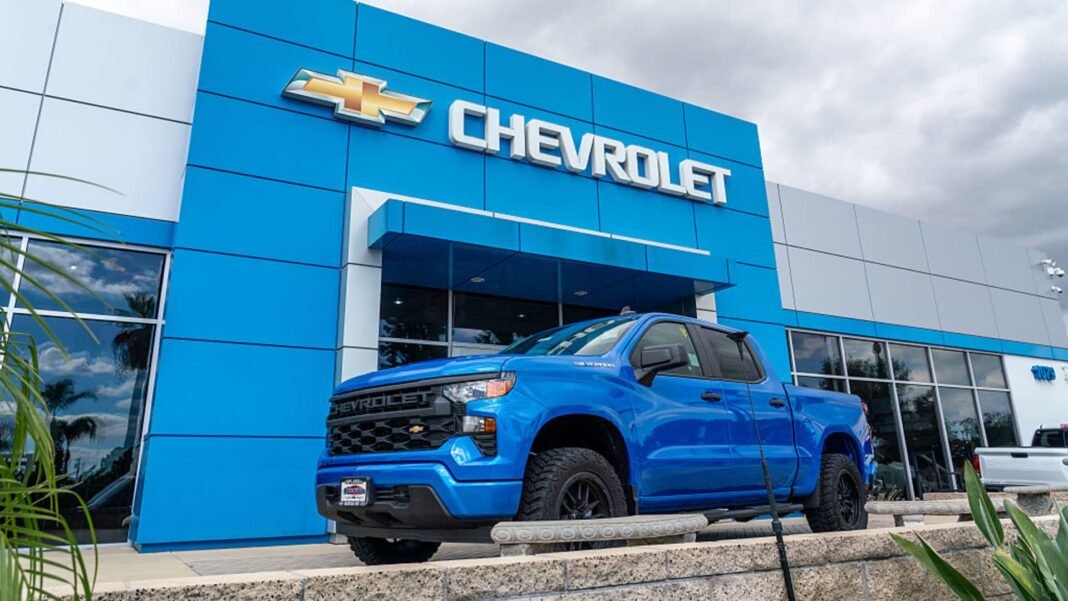
Challenges Loom for General Motors Ahead of Q3 Earnings Announcement
General Motors Co.is set to unveil its financial results for the third quarter amid a complex landscape impacting the automotive industry. The company faces multiple pressures including shifting regulatory frameworks, tariff escalations, rising inflationary expenses, and ongoing supply chain bottlenecks.
Wall Street Expectations for GM’s Upcoming Quarter
Market analysts predict that general Motors will report adjusted earnings per share (EPS) near $2.31, with total revenues around $45.27 billion.These figures indicate a revenue contraction of roughly 7% compared to the same period last year and an anticipated 22% decline in adjusted EPS.
Reviewing Last Year’s Third Quarter Results
In Q3 2024, GM posted revenues totaling $48.76 billion and net income attributable to shareholders reached $3 billion. Adjusted earnings before interest and taxes (EBIT) were recorded at $4.1 billion during that timeframe.
The Influence of Revised Electric Vehicle Initiatives on Financials
This quarter’s performance is expected to reflect GM’s recent strategic recalibration concerning its electric vehicle (EV) programs. The automaker disclosed a special charge amounting to $1.6 billion related to scaling back certain EV projects-comprising approximately $1.2 billion in noncash write-downs alongside about $400 million in cash expenditures.
Even though this charge will be excluded from adjusted earnings calculations, it is indeed likely to dampen overall profitability for the quarter.
The Persistent Impact of Tariffs and Inflationary Pressures
The automotive sector continues grappling with elevated costs due to tariffs on imported parts and vehicles, which have significantly increased manufacturing expenses over recent years.
- CFO Commentary: Paul Jacobson noted that tariff-related costs are expected to rise slightly this quarter compared with prior periods.
- Total Tariff Exposure: GM anticipates these expenses coudl reach between $4 billion and $5 billion throughout 2025, with approximately 30% offset through pricing adjustments or operational efficiencies.
Diverse Risks Identified by industry Analysts Affecting Performance
A variety of market experts have highlighted additional risks beyond tariffs that may influence GM’s quarterly outcomes:
- Production Volume Fluctuations: Variability in truck manufacturing output could affect profit margins due to changing demand across diffrent models.
- Evolving Trim Level Preferences: Shifts in consumer choices toward various vehicle configurations might impact profitability depending on associated cost structures per trim level.
- warranty Cost Trends: Increasing warranty claims remain a critical factor requiring vigilant management as they can erode net income if left unchecked.
An Updated Financial Forecast for Fiscal Year 2025
Prior to releasing its quarterly results, General Motors revised its full-year outlook factoring in tariff effects among other considerations:
- Earnings Before Interest & Taxes (EBIT): A projected range between $10 billion and $12.5 billion.
- Adjusted Earnings Per Share: An estimated span from $8.25 up to $10 per share.
- Total Net income Attributable To Stockholders: A forecasted figure ranging from $7.7 billion through $9.5 billion.
- Adjusted Automotive Free Cash Flow: A target bracket set at approximately $7.5 billion to $10 billion for the year.
The Road Ahead Amid Industry Change
The automotive sector continues evolving rapidly as electrification accelerates globally; however, challenges such as geopolitical tensions affecting trade policies persistently complicate operations for legacy manufacturers like General Motors.
For instance, similar companies navigating these headwinds include Ford Motor Company which recently reported supply chain disruptions delaying new model launches by several months-highlighting how widespread these issues remain across the industry.
Despite obstacles ahead, strategic adjustments focusing on efficiency improvements combined with innovation investments position GM cautiously optimistic about sustaining competitiveness throughout this transitional phase.