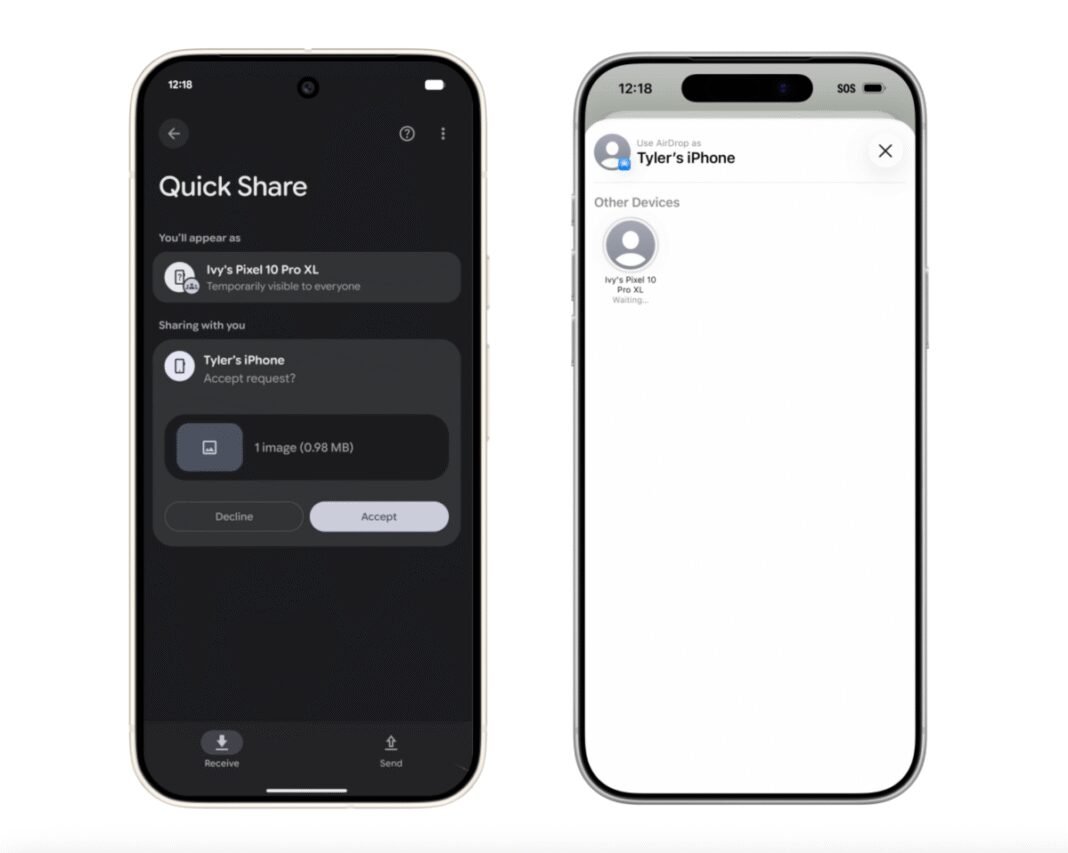
Google Enhances Quick Share with Cross-Platform Compatibility for Apple Devices
Seamless File Transfers Between Android and Apple Ecosystems
In an unexpected yet highly beneficial update, google has upgraded its Quick Share feature to support file sharing with Apple’s AirDrop system. This enhancement enables users to effortlessly exchange photos,videos,and documents between Android devices and iPhones,iPads,or macOS computers. Initially available on the Pixel 10 series,this capability is set to extend to a broader range of Android smartphones in the near future.
How the New Cross-Device Sharing Works
The integration requires iPhone users to activate airdrop’s “Everyone for 10 minutes” setting, making their device temporarily discoverable by nearby Pixel phones using Quick Share. Once enabled, Pixel owners can identify compatible apple devices within their sharing interface and initiate transfers directly.
This approach ensures that data moves through a direct peer-to-peer connection without routing through external servers or being logged anywhere-prioritizing user privacy and security throughout the process.
Bidirectional Sharing: A Two-Way Street
The update supports two-way communication; not only can Pixels send files to Apple devices but also receive content from them. For incoming transfers from an iPhone or MacBook, Pixel phones must be set as discoverable within Quick Share settings.
Security Measures at the Forefront
google emphasizes that robust security protocols underpin this new functionality. Independent experts have vetted these safeguards to ensure data protection during every transfer session.Users are encouraged to verify device names before confirming file exchanges as an additional layer of safety.
“This is just our initial step toward frictionless cross-platform sharing,” Google stated. “We look forward to collaborating with Apple further so that ‘contacts Only’ mode becomes available in future updates.”
A Glimpse into Future Developments
This collaboration marks a meaningful stride toward bridging compatibility gaps between major mobile operating systems-a demand increasingly voiced by consumers worldwide who juggle multiple devices daily. Following previous initiatives like RCS messaging enhancements and unknown tracker alerts on Android phones, Google continues advancing interoperability features that simplify digital interactions across platforms.
A Real-World Example: Simplifying Family Photo sharing
Imagine a family gathering where some members use iPhones while others rely on various Android models.previously cumbersome methods such as emailing photos or uploading them onto cloud services could delay sharing moments instantly captured together. With this new Quick Share-AirDrop synergy active on compatible devices like Pixel 10s and recent macs or iPhones running updated software versions (iOS 17+), exchanging memories becomes instantaneous without extra apps or complex setups.
User Experience Tips for Smooth Operation
- Enable Discoverability: Temporarily switch your device visibility settings when initiating transfers across platforms.
- name Confirmation: Always confirm recipient device names displayed onscreen before sending sensitive files.
- keeps Devices Updated: Ensure both sender’s and receiver’s gadgets run current OS versions supporting these features for optimal performance.
- Avoid Public Networks: Use private environments when transferring confidential information despite peer-to-peer encryption safeguards.
The Road Ahead: Expanding Compatibility Beyond Pixels?
The rollout currently targets Google’s flagship hardware but hints at broader adoption among other manufacturers adopting similar standards soon-potentially transforming how millions share content daily irrespective of brand loyalty or ecosystem constraints.
The Significance of Direct Peer-to-peer Connections in Data Privacy
This method contrasts sharply with cloud-based intermediaries commonly used today which often raise concerns about unauthorized access or data retention policies by third parties involved in transmission chains.
By eliminating server involvement entirely during file exchanges between Android’s Quick Share and Apple’s airdrop-enabled products, users gain greater control over their personal information flow while enjoying faster transfer speeds thanks to local wireless technologies such as Bluetooth Low Energy (BLE) combined with Wi-Fi Direct protocols now optimized for cross-platform use cases worldwide-including regions where internet connectivity remains inconsistent but local wireless signals are reliable alternatives for quick data movement among nearby devices alike.
Recent studies show peer-to-peer connections reduce latency by up to 40% compared against traditional cloud uploads/downloads under typical household conditions involving mixed-device environments.*
*based on independent network performance tests conducted across urban households using dual-band Wi-Fi routers supporting BLE/Wi-Fi Direct standards (2024).