Anthropic’s Meteoric Growth in the AI Industry
In the rapidly evolving world of artificial intelligence, Anthropic is swiftly establishing itself as a dominant force. The company is poised to outpace its nearest competitor by securing a funding round that could value it close to $950 billion, surpassing OpenAI’s recent valuation of $854 billion. This remarkable growth mirrors a notable shift in enterprise preferences, with market analytics revealing that Anthropic’s Claude platform has expanded its share among business clients fourfold since mid-2025.
Reimagining Claude: From Conversational AI to Developer Ally
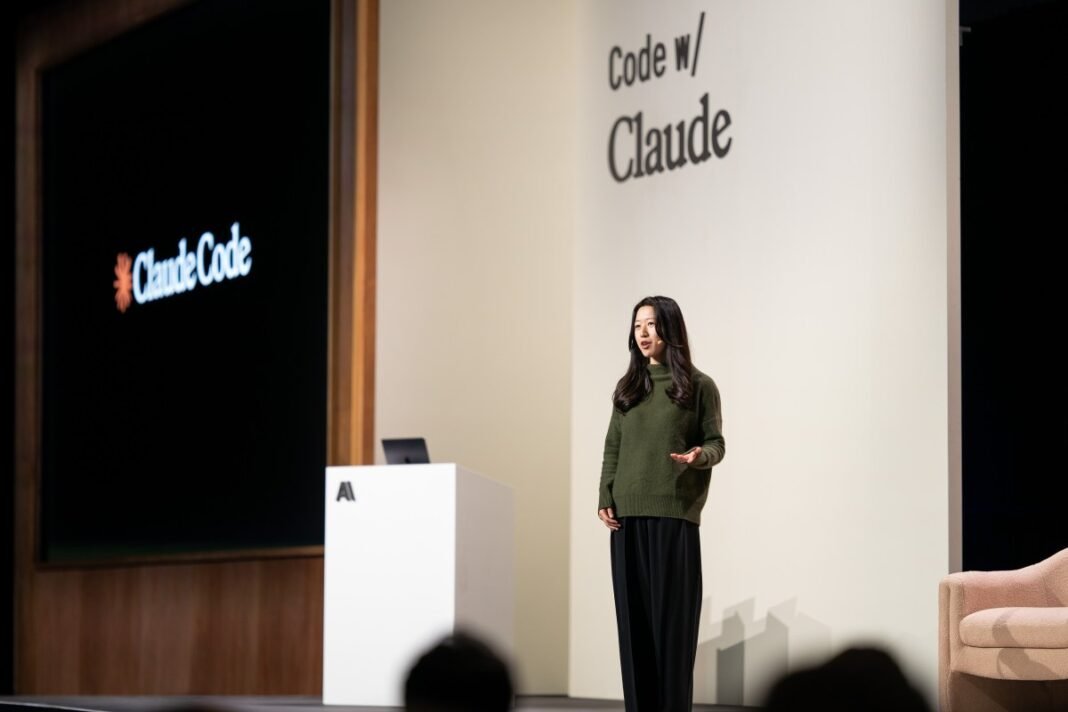
A key driver behind Anthropic’s success is Cat Wu, who oversees product growth for Claude Code adn Cowork. As joining in August 2024, wu has been instrumental in transforming Claude from a basic chatbot into an advanced coding assistant and productivity enhancer. Collaborating closely with Boris Cherny-the mastermind behind Claude Code-the pair have been described as “innovative collaborators” propelling forward-thinking solutions within Anthropic’s engineering teams.
A Forward-looking Approach beyond Rivalry
When discussing competitive pressures, Wu highlights their strategy of prioritizing innovation over reactionary moves against competitors.She warns that focusing too much on rivals can lead to stagnation given the breakneck speed of AI advancements; rather, their mission centers on anticipating exponential technological leaps and proactively pushing boundaries.
Maintaining Rapid Innovation Cycles
Anthropic demonstrated notable momentum by launching six new models last year and nearly matching that output so far this year-a tempo they intend to sustain moving forward. According to Wu, incremental improvements in model performance enable frequent releases tailored for varied user demands while maintaining rigorous safety protocols. As an example,their glasswing project introduced Mythos-an AI specialized in cybersecurity-deployed selectively with partners like Amazon and microsoft. This cautious rollout underscores the company’s commitment to responsible use amid concerns about potential misuse of vulnerability detection technologies.
The emerging Landscape of Human-AI Synergy at Work
the future workplace will likely feature professionals overseeing networks of smart agents capable of autonomously managing routine tasks. However, Wu emphasizes that effective oversight requires deep domain knowledge; managers must grasp both job specifics and agent functionalities-including troubleshooting errors or ambiguous commands-to maximize efficiency.
This transformation may diminish demand for entry-level positions traditionally focused on repetitive work but primarily aims at boosting individual productivity by automating mundane activities such as email handling or basic customer service tasks-liberating employees to concentrate on creative problem-solving and strategic initiatives.
The Next Evolution: Anticipatory AI Assistance
The forthcoming stage involves shifting from reactive responses toward proactive support where AI systems identify automation opportunities based on user behavior patterns and project contexts without explicit instructions. This advancement promises more intuitive workflows capable of simplifying complex operations autonomously-ushering an era where technology anticipates users’ needs before they arise.