Violence Erupts in Belfast Following Knife Attack Involving Sudanese Refugee
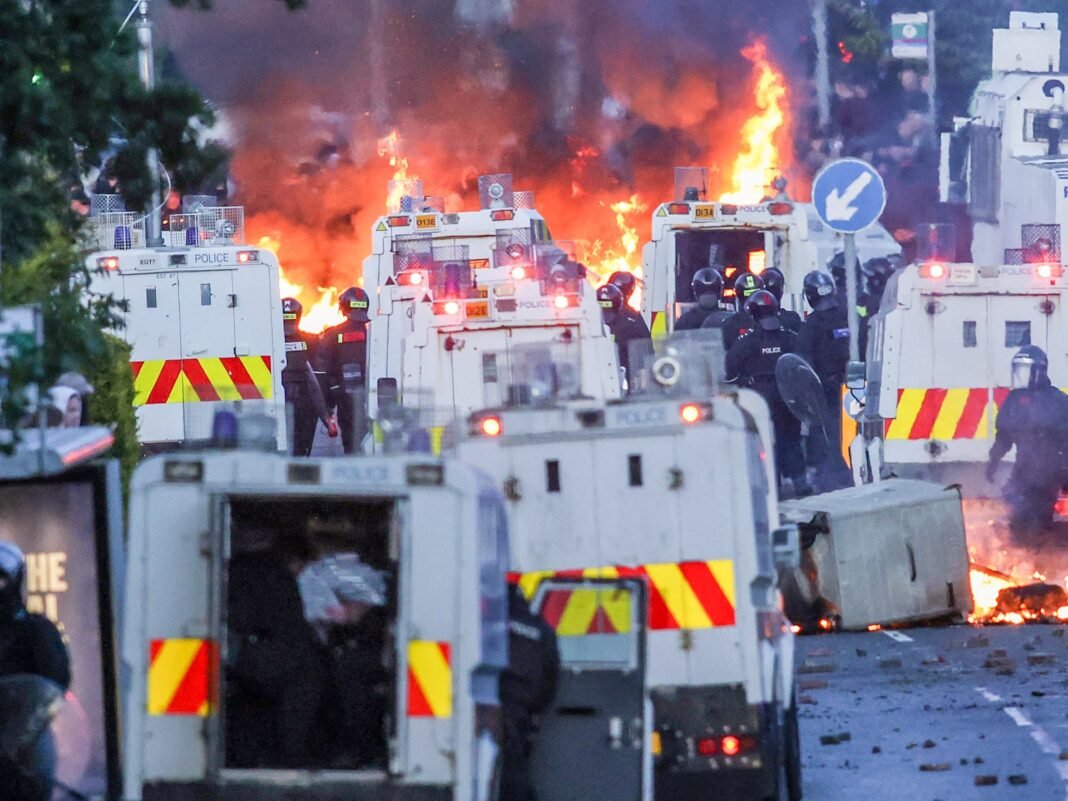
Belfast,Northern Ireland,witnessed a surge of unrest as authorities deployed water cannons to disperse far-right protesters during a second consecutive night of turmoil triggered by a stabbing incident involving a Sudanese asylum seeker.
Intensified clashes and Law Enforcement Measures
The disturbances escalated when demonstrators threw stones and bottles at police officers. Multiple street fires broke out amid the chaos, prompting law enforcement to utilize water cannon technology to regain control.Despite these interventions, Tuesday’s violence was markedly more severe: hundreds of masked individuals forcibly evicted families from their homes while setting vehicles ablaze across several neighborhoods.
A Call for Peace from the Victim’s Family
The family of Stephen Ogilvie-the stabbing victim who suffered critical injuries including the loss of an eye-issued an appeal for calm and unity. They stressed that many migrants play vital roles within society and cautioned against allowing this tragedy to deepen divisions or fuel hatred. Ogilvie remains in stable condition after sustaining serious wounds to his neck and face.
Judicial Proceedings Against the Suspect
The accused assailant,30-year-old Sudanese national Hadi Alodid,appeared in court facing charges including attempted murder.He was remanded into custody with his next hearing scheduled for early July.
Social Media Amplifies Tensions Amid Riots
videos capturing the stabbing rapidly circulated online on Tuesday, sparking calls for violent retaliation across social media platforms. During ensuing riots, emergency responders aided families fleeing burning homes while numerous cars-and even buses-were set on fire beyond recognition.
The Human Impact: Targeting Minorities Amid Rising hostilities
- A UK government official reported that at least 27 people were rendered homeless after attackers systematically targeted foreign nationals door-to-door in Belfast neighborhoods.
- A local resident recounted helplessly watching his home engulfed by flames despite pleading with arsonists who disregarded property rights entirely.
- Civil leaders highlighted that many victims belonged to Black communities disproportionately affected by aggression during these events.
Tensions Mirror Broader National challenges
This outbreak coincides with heightened unease across the UK following recent incidents such as a fatal stabbing in Southampton where racial tensions were inflamed by false ethnicity-related allegations. Public discourse has increasingly centered on immigration policies amid fears over social cohesion; some prominent figures have amplified narratives blaming migration for rising violence nationwide.
Far-Right Provocations Met With Official Condemnations
Northern Ireland’s police chief confirmed deploying an additional 200 officers ahead of planned protests encouraged by far-right activists seeking further unrest. He condemned rioters’ actions as self-destructive assaults targeting not only ethnic minorities but also undermining societal stability-including vulnerable families with infants evacuated during attacks described as senseless vandalism against community harmony.
Political Leaders speak Out Against Violence and Online Incitement
- The UK Prime Minister denounced forced evictions caused by mob violence as “shocking” and wholly unacceptable while acknowledging serious questions raised by the initial knife attack;
- A senior Labor Party figure criticized social media platforms’ failure to curb hate speech that exacerbates tensions;
- The United Nations human rights chief condemned online dehumanization campaigns contributing directly to outbreaks like those seen both in Northern Ireland and elsewhere within Britain;
- An urgent appeal was made urging digital companies worldwide to enhance measures preventing hate-driven content capable of inciting real-world harm;
Migratory Trends Within Ancient Context Heighten Unease
Northern Ireland has traditionally experienced low immigration levels due partly to decades-long sectarian conflict between catholic Irish nationalists advocating reunification with Ireland versus Protestant loyalists favoring continued union with Britain supported by military presence. Though,recent years have seen increased migration flows accompanied by growing anti-immigrant sentiment-not only locally but extending into parts of neighboring Republic of Ireland communities-further complicating efforts toward peaceful coexistence within this historically divided region.