Quantum Computing’s Evolution: Building a Scalable Industry for the Future
The quantum computing landscape is rapidly transitioning from experimental prototypes to a mature industrial framework.This shift is highlighted by GlobalFoundries’ establishment of its Quantum Technology Solutions division,supported by a $375 million CHIPS R&D grant from the U.S. Department of Commerce. Their aspiring goal is to become the leading provider of quantum processors across various quantum computing platforms.
Bridging the Gap Between Research and Large-Scale Manufacturing
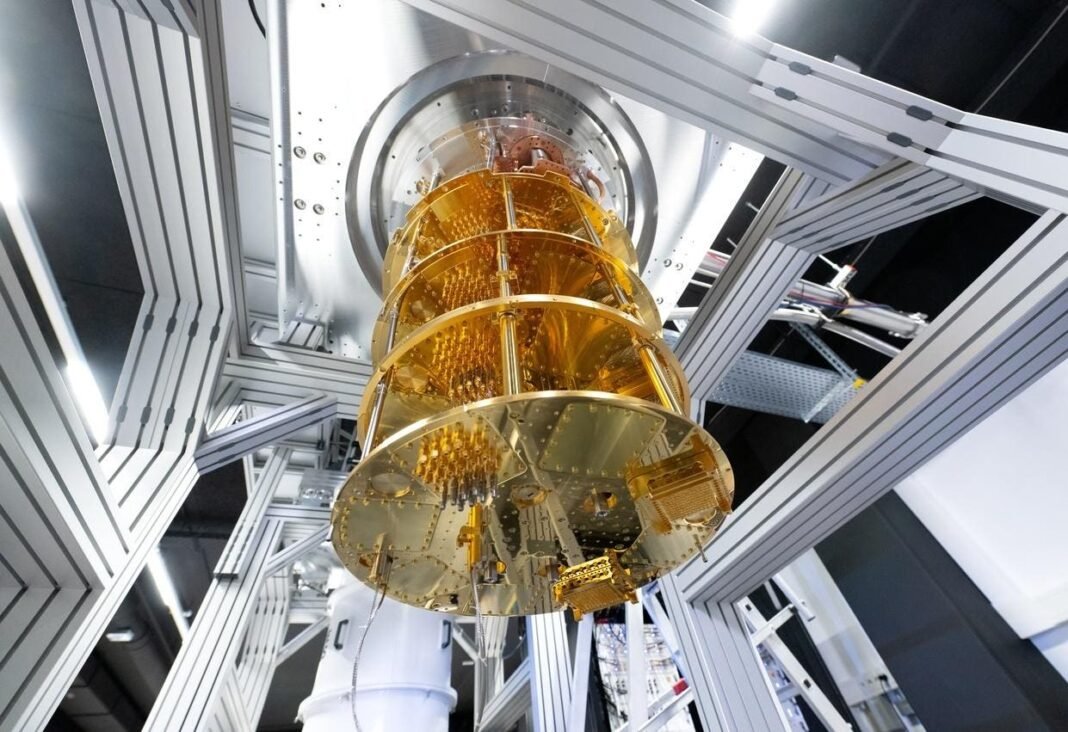
In its early days, quantum computing resembled a collection of isolated scientific experiments rather than an integrated industry. Individual labs developed their own qubits, control mechanisms, and cooling systems-each uniquely designed and manually assembled by specialized engineers. This scenario parallels classical computing’s infancy over half a century ago when semiconductor chips were produced in limited quantities without standardized manufacturing processes.
Although these handcrafted approaches have driven important breakthroughs, they fall short in scalability. To make quantum computers widely accessible beyond niche research environments requires industrial-scale production capabilities-a challenge that GlobalFoundries aims to overcome with advanced manufacturing infrastructure.
A Unified Supply Chain Supporting Multiple Quantum Technologies
The new division at GlobalFoundries collaborates with key innovators across diverse qubit technologies: photonics (represented by companies like PsiQuantum), trapped ions (such as Quantinuum), silicon spin qubits (including Diraq and Quantum Motion), alongside Equal1’s developments. Major technology firms like Google Quantum AI, Microsoft, and Nvidia also endorse this collaborative effort.
This broad-based support signals more than just capacity for one type of technology; it marks the rise of an integrated supply chain capable of simultaneously supporting multiple qubit modalities on standardized 300mm wafer fabrication lines-mirroring how semiconductor foundries revolutionized chip production decades ago.
Establishing Foundations for Mass Production
The historical separation between innovation in design and mass manufacturing has been instrumental in creating trillion-dollar industries-the semiconductor sector being a prime exmaple. By offering dedicated foundry services tailored for quantum processors along with compatible control electronics and interconnects across different qubit types, GlobalFoundries is constructing essential infrastructure that will enable widespread commercial adoption.
Tackling Key manufacturing Challenges at Scale
Nicholas Sergeant leads efforts within GlobalFoundries’ Quantum Technology Solutions unit to address three primary obstacles hindering progress beyond prototype phases:
- Yield & Reliability: Ensuring consistent device performance at millikelvin temperatures demands ultra-precise process controls achievable only through cutting-edge 300mm wafer tooling currently deployed in their fabrication facilities.
- Sophisticated Packaging: integrating quantum processing units (QPUs) with control chips and photonic components requires advanced 3D heterogeneous packaging techniques that maintain signal integrity while ensuring manufacturability under cryogenic conditions.
- Accelerated Development Cycles: Moving products from laboratory concepts to market-ready solutions involves rapid prototyping combined with scalable production methods that significantly shorten innovation timelines.
Navigating Industrial Scale Versus Laboratory Demonstrations
the divide between lab demonstrations-frequently enough featuring hundreds of logical qubits-and industrial ambitions targeting millions remains ample but surmountable through focused manufacturing excellence initiatives. The objective is reliable high-volume output without sacrificing device fidelity or operational stability critical for real-world applications such as cryptography or complex simulations.
Aiming Toward Practical Utility-Scale Quantum Machines
The evolution seen in classical CPUs and GPUs shaping today’s high-performance computing naturally extends into architectures incorporating quantum processor units (qpus). Experts forecast exponential increases in qubit counts over the next three to five years as utility-scale machines become viable due to advances pioneered by companies like GlobalFoundries using innovative fabrication techniques.
A Strategic National Endeavor With wide-Ranging Impact
this $375 million government-backed investment reflects not only economic aspirations but also national security priorities tied to maintaining global leadership in emerging technologies. Establishing trusted domestic manufacturing hubs-in locations such as New york and Vermont-is vital amid growing geopolitical competition surrounding next-generation computational supremacy worldwide.
- An instructive comparison can be drawn with late 20th-century semiconductor dominance when countries investing heavily in chip fabrication secured technological advantages influencing defense capabilities and global markets alike;
Diverse Qubit Platforms Under One Infrastructure: Mitigating Technological Risks
The strategy supporting superconducting circuits alongside trapped ion arrays, photonic networks, topological states, and spin-based devices embodies adaptability rather than reliance on any single approach prematurely. Core enabling technologies-including cryogenic CMOS electronics paired with innovative packaging platforms-serve multiple modalities concurrently-a pragmatic method ensuring resilience regardless which technology ultimately prevails commercially.
Ecosystem Collaboration Accelerates Industry Maturation
This initiative enjoys strong backing from major industry stakeholders who recognize bridging research prototypes into scalable products remains one of today’s most significant bottlenecks-not only technologically but economically-in global quantum development pipelines.
“Building robust domestic supply chains capable of reliably producing millions-of-qubit devices will define competitive advantage moving forward,” emphasizes Nicholas sergeant.
The Path Forward: Scaling Without Compromising Quality or Innovation Speed
- Tight process controls minimize noise levels crucial at near absolute zero operating temperatures;
- sophisticated integration methods enable seamless assembly combining diverse components into unified modules;
- A long-term commitment toward partnerships fosters iterative refinement accelerating commercialization cycles faster than ever before;