Exploring the 2026 Strawberry Moon: A Summer Sky Spectacle
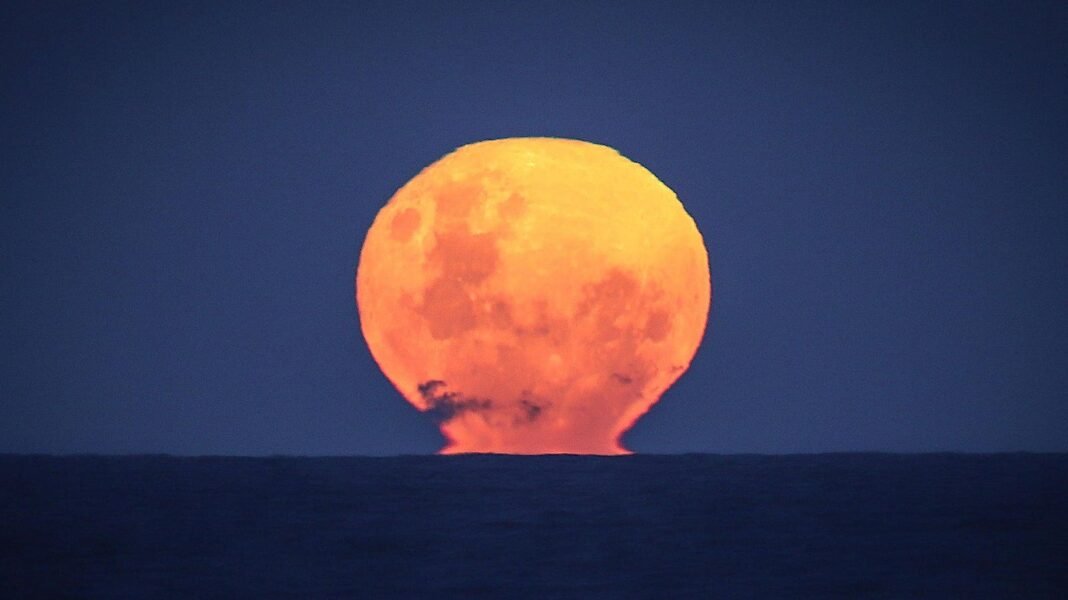
On Monday,June 29,2026,observers throughout the Northern Hemisphere will be treated to the full display of the Strawberry Moon. This event not only signals summer’s first full moon but also features one of the year’s smallest and lowest-hanging lunar appearances. Contrary to popular belief, its name derives from customary North American harvest timings when strawberries reach peak ripeness-not from any change in its color.
What Sets June’s Full Moon Apart?
The Strawberry Moon will achieve complete fullness at exactly 7:58 p.m.EDT on June 29; however, many viewers in North America won’t see it above the horizon at that moment. Occurring just a day after apogee-the point where the moon is farthest from Earth-this full moon qualifies as a micromoon. Such moons appear approximately 12-14% smaller and less luminous than average due to their increased distance.
This contrasts with earlier supermoons in 2026-on January 3, November 24, and december 24-when our satellite appeared notably larger because it was near perigee (its closest approach). Following this event,July’s Buck Moon on July 29 promises brighter and higher summer lunar displays.
Best Spots and Times for Viewing
The prime moment to catch this lunar marvel is during its rise at dusk on June 29th. For optimal viewing conditions, seek elevated locations or open areas such as beaches or hilltops with clear views toward the southeastern horizon. The “blue hour,” when daylight fades yet colors linger in twilight skies, enhances visual contrast for an unforgettable sight.
- Chicago: Sunset occurs around 8:19 p.m. CDT; expect moonrise near 8:37 p.m. CDT.
- San Francisco: Sunset happens close to 8:32 p.m. PDT; moonrise follows roughly at 8:50 p.m.PDT.
The night before offers an early but brighter moonrise while by late July these times shift later into deeper darkness as summer progresses.
The Science Behind Its Low Horizon Path
this year’s Strawberry Moon appears unusually low above the horizon because it opposes a sun that recently reached its highest point during the summer solstice on June 21-the longest day of sunlight for many northern regions away from equatorial zones. Since full moons always lie opposite our star relative to Earth’s rotation axis, their paths mirror solar elevation angles inverted vertically across nighttime skies.
This alignment causes June’s full moon trajectory to stay closer along southeastern horizons through much of the night instead of climbing high overhead like winter or spring moons do-resulting in warmer tones such as amber or soft orange caused by atmospheric scattering through thicker layers near ground level.
Lunar Cycles and Their Cultural Importance
The calendar year 2026 includes thirteen total full moons-a outcome of lunar months averaging about eleven days shorter than solar months-which occasionally leads to extra “blue” moons or additional monthly occurrences beyond twelve typical cycles annually.
The term “Strawberry Moon” originates from indigenous agricultural traditions linked closely with seasonal fruit harvesting rather than any actual color change frequently enough mistakenly assumed.
Other historical names include Green Corn Moon and Hot Moon depending on regional climate influences affecting crop readiness during late spring into early summer worldwide.
“Observing a low-hanging micromoon like this highlights how dynamic our celestial companion truly is-its apparent size shifting nightly purely due to orbital mechanics.”
A Contemporary Illustration from Recent Events
A comparable micromoon was observed over Lake Tahoe in mid-June 2023 when photographers documented subtle differences between apparent diameters compared with supermoon phases occurring weeks apart-demonstrating how minor variations dramatically affect visual perception despite identical illumination levels reported scientifically each month worldwide today thanks to advanced astronomical tracking technologies embraced by both amateurs and professionals alike.