



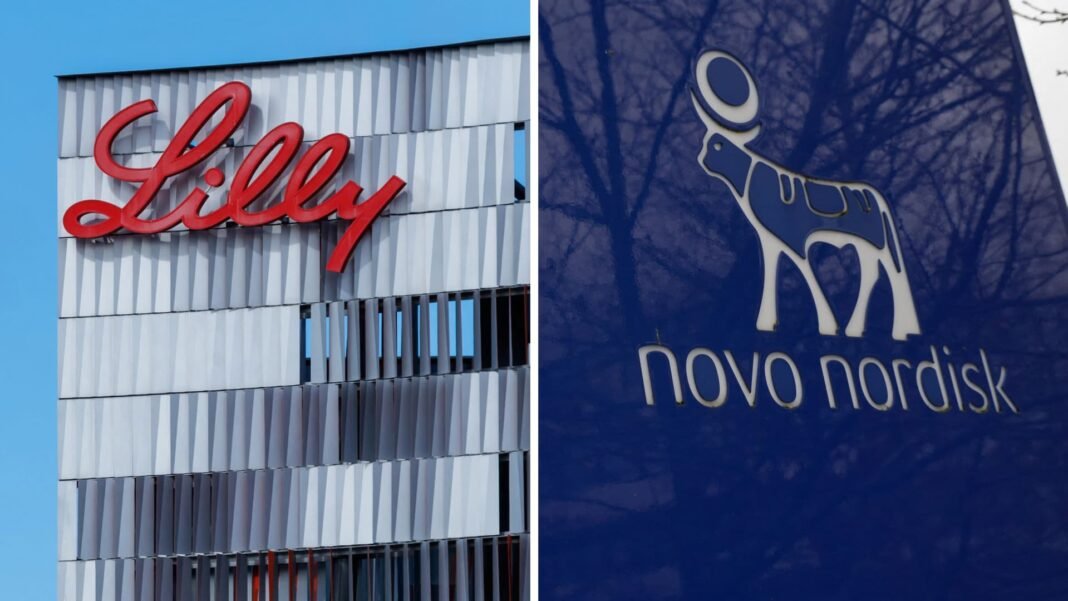
Obesity Medication Market: A Competitive Landscape Between Two Industry Leaders
divergent Sales Outlooks Amidst Pricing Challenges
The rivalry between Eli Lilly adn Novo Nordisk in the rapidly expanding obesity drug market is becoming increasingly fierce, as both firms grapple with falling medication prices in the United States. Despite this shared hurdle, their forecasts for 2026 diverge sharply. While Novo Nordisk anticipates a decline in revenue, Eli Lilly projects ample growth.
LillyS confidence stems from its cutting-edge injectable therapies combined with early investment in direct-to-consumer outreach,enabling it to capture a growing portion of the market relative to Novo Nordisk. Although Novo was instrumental in bringing these treatments into mainstream use, Lilly has gained significant traction and appears set to widen its lead throughout the coming year.
Market Forces Shaping Future Revenue Streams
Eli Lilly recently announced expected sales for 2026 ranging between $80 billion and $83 billion-surpassing analyst predictions by approximately 7%.This suggests an annual growth rate near 25%. In contrast, Novo Nordisk forecasts a sales contraction of 5% to 13%, driven by price reductions across key regions such as the U.S., alongside patent expirations impacting markets like China, Brazil, and Canada.
Both companies are adjusting strategies amid global pricing reforms designed to lower obesity drug costs. These initiatives reduce per-unit earnings but aim to increase overall prescription volumes over time.
How Pricing Agreements Are Expanding Patient Access
Recent “most favored nation” agreements have resulted in significant negotiated price cuts with government payers. For instance, Medicare will begin covering obesity medications no later than July this year-opening treatment access for roughly 40 million additional beneficiaries within the United States alone.
Lilly’s Strategic Advantages: Innovation and Patent Longevity
Eli Lilly’s leading products Zepbound (targeting obesity) and Mounjaro (for diabetes) continue driving robust demand worldwide. The company also plans to introduce orforglipron-an oral GLP-1 receptor agonist-in Q2 pending regulatory approval. This oral option marks a notable advancement due to its user-friendly profile compared with existing injectable therapies.
Tirzepatide-the active ingredient behind both Zepbound and Mounjaro-has demonstrated superior weight loss efficacy compared with semaglutide (Novo’s primary compound), according to recent head-to-head clinical trials conducted last year. Prescribing patterns reflect growing preference among healthcare providers seeking highly effective metabolic treatments.
Additionally, Eli Lilly benefits from extended patent protection on tirzepatide through at least the late 2030s across major markets-a critical edge that shields it from generic competition longer than Novo faces abroad where patents are nearing expiration.
Prescription Trends Highlight Market Shifts
“The widening disparity in market share between these two companies became clear last year,” industry experts observed after analyzing prescription data showing increased adoption of Lilly’s drugs relative to competitors.”
The Emerging Battle Over Oral Obesity Therapies

Novo Nordisk led early entry into oral GLP-1 medications targeting obesity; within three weeks post-launch their pill achieved nearly 50,000 weekly prescriptions-a strong indicator of initial patient demand.
The spotlight now turns toward how Eli Lilly’s forthcoming orforglipron will perform onc released later this year amid rising interest for convenient treatment options without complex governance requirements.
User Convenience Versus Established Brand Loyalty
- Novo’s Wegovy Pill: Requires patients limit water intake during dosing (no more than four ounces) followed by waiting thirty minutes before eating or drinking anything else daily due to peptide-based formulation constraints;
- Lilly’s Orforglipron: A small-molecule agent absorbed efficiently without dietary restrictions-offering greater flexibility likely appealing broadly across diverse patient groups globally;
This distinction could prove decisive as ease-of-use increasingly influences adherence rates among individuals managing chronic conditions such as obesity and diabetes worldwide.
Executive Insights on Upcoming Competition
“We remain confident our weight-loss pill offers unmatched effectiveness,” stated Novo CEO Mike Doustdar while acknowledging emerging rival products.
“It will be fascinating observing how these therapies compete directly.”
Tapping Into Untapped Potential Within Obesity Treatment Markets
The CEO of Eli Lilly emphasized that currently about 20 million-25 million people use medications produced by either company but highlighted millions more remain untreated despite qualifying medically-indicating vast room for expansion within this therapeutic area alone.
“The total addressable population affected by obesity is immense,” he noted.
“With rising awareness coupled with improved insurance coverage including Medicare expansions underway-we anticipate significant volume growth ahead.”
A Transformative Era for Weight Management Solutions
- The global prevalence of adult overweight or obesity has steadily climbed over recent decades; current WHO estimates indicate nearly one-third (~30%) of adults worldwide fall into these categories;
- This trend underscores an urgent need for accessible effective interventions beyond lifestyle modifications alone;
- The pharmaceutical breakthroughs pioneered by both companies represent essential tools shaping future standards-of-care around metabolic health management;


