



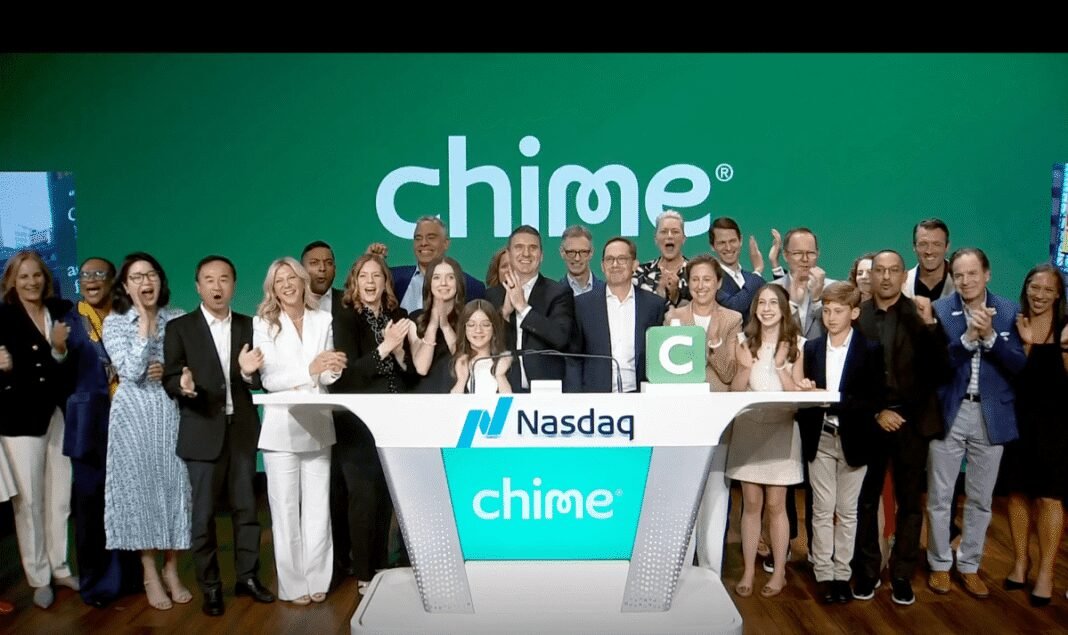
Chime’s Rise: From Early Struggles to a $12 Billion Market Debut
Overcoming Initial Setbacks to make a Strong IPO Impact
Neobank chime captured significant attention with its recent initial public offering, successfully raising $864 million by pricing shares at $27 each-exceeding the anticipated range of $24 to $26. This launch valued the company near $9.8 billion at market open.
Despite this figure being well below Chime’s last private valuation of roughly $25 billion, the stock displayed notable volatility on its first trading day.Shares climbed as high as $42 during intraday sessions, pushing the market capitalization close to $14.5 billion before settling around $37 per share and closing near a valuation of approximately $12 billion. This dynamic debut highlighted strong enthusiasm from retail investors despite falling short of prior peaks.
Financial Growth Driving Investor Optimism
The surge in investor confidence is largely linked to Chime’s impressive financial trajectory. The company reported revenue growth from about $1.3 billion in 2023 to an expected $1.7 billion in 2024. Concurrently, losses shrank dramatically-from a hefty $203 million deficit in 2023 down to an estimated $25 million loss projected for 2024.
A milestone was reached when Chime turned profitable in Q1 2025, posting net income near $13 million on revenues exceeding $519 million. However, executives caution that ongoing investments aimed at scaling operations may temper consistent profitability moving forward.
The Early Years: Navigating Challenges and Regulatory Barriers
No startup journey is without hurdles; for Chime, these included workforce reductions and regulatory scrutiny that shaped its formative years. In late 2022, cost-cutting measures led to layoffs affecting over ten percent of employees.
A significant regulatory obstacle emerged in 2021 when authorities barred Chime from marketing itself explicitly as a “bank,” reflecting broader challenges fintech companies face within tightly regulated financial sectors worldwide.
Narrow Escape Before Series B Funding Secured Survival
The most precarious phase occurred prior to securing Series B financing when survival was uncertain.Co-founder Ryan King recalls pitching their vision more than one hundred times between late 2015 and early 2016 without success-facing repeated rejections despite their conviction about revolutionizing banking for working-class Americans through fee-free services funded mainly by interchange fees.
This business model incorporated innovative features such as eliminating overdraft fees and offering credit-building tools like secured credit cards designed specifically for users seeking empowerment rather than profit extraction via penalties or hidden charges.
A Single Investor’s Leap That Changed Trajectory
The turning point came thanks to Lauren Kolodny (then with Aspect Ventures), who took a chance on the founders’ vision by leading an essential extension round worth approximately $9 million. This investment proved pivotal-it was their only term sheet after widespread rejection across Silicon Valley venture capital circles skeptical about disrupting entrenched banking systems with modest early growth metrics.
“She truly believed not just in our business plan but also our passion and determination,” king reflected on Kolodny’s support that ultimately kept them afloat during those critical moments.”
From Seed Capital To Multi-Billion Dollar Backing
This seed extension brought total funding raised up to around $21 million initially; thereafter private fundraising surged dramatically-estimates indicate nearly $2.65 billion raised before going public-with major investors like Iconiq Capital joining later rounds due to growing confidence in Chime’s potential trajectory.
an Investment Yielding Exceptional Returns Over Time
Koldony’s entry price reportedly hovered just under thirty cents per share-a stark contrast compared with Thursday’s multi-billion-dollar valuation-highlighting how early-stage risk-taking can generate outsized returns when disruptive innovation triumphs against odds within customary industries dominated by legacy players resistant to change.
User Loyalty Beyond Financial Metrics
A memorable moment unfolded during roadshow presentations targeting institutional buyers: while passing security inside an upscale office building reminiscent of scenes from popular finance dramas like “Industry,” CEO Chris Britt flashed his own Chime card which instantly sparked recognition among guards who proudly identified themselves as customers using both checking and savings accounts offered by the neobank-a testament not only to brand penetration but also genuine user satisfaction among everyday consumers seeking alternatives beyond conventional banks.
- No overdraft fees: A standout feature attracting budget-conscious users tired of punitive charges common elsewhere;
- User-centric credit solutions: Cash-secured credit cards designed for building positive credit histories;
- Sustained revenue acceleration: Nearly doubling annual revenue within two years;
- < strong >Shrinking losses: Progress toward steady profitability despite aggressive expansion spending;
- < strong >Investor perseverance: Enduring multiple funding rejections before securing crucial backing .
< /ul >The Road Ahead For Digital Banking Innovators Like Chime
< p >Ch ime ‘ s evolution exemplifies challenges inherent in transforming traditional finance through technology-driven models emphasizing accessibility , transparency , and customer focus . As digital banking adoption accelerates globally-with over half a billion digital bank users worldwide reported recently -firms combining innovative product offerings alongside disciplined financial management are positioned for long-term success . While competition intensifies , lessons learned navigating regulatory landscapes , investor skepticism , and operational scaling will remain invaluable guides shaping next-generation fintech leaders .< / p >


