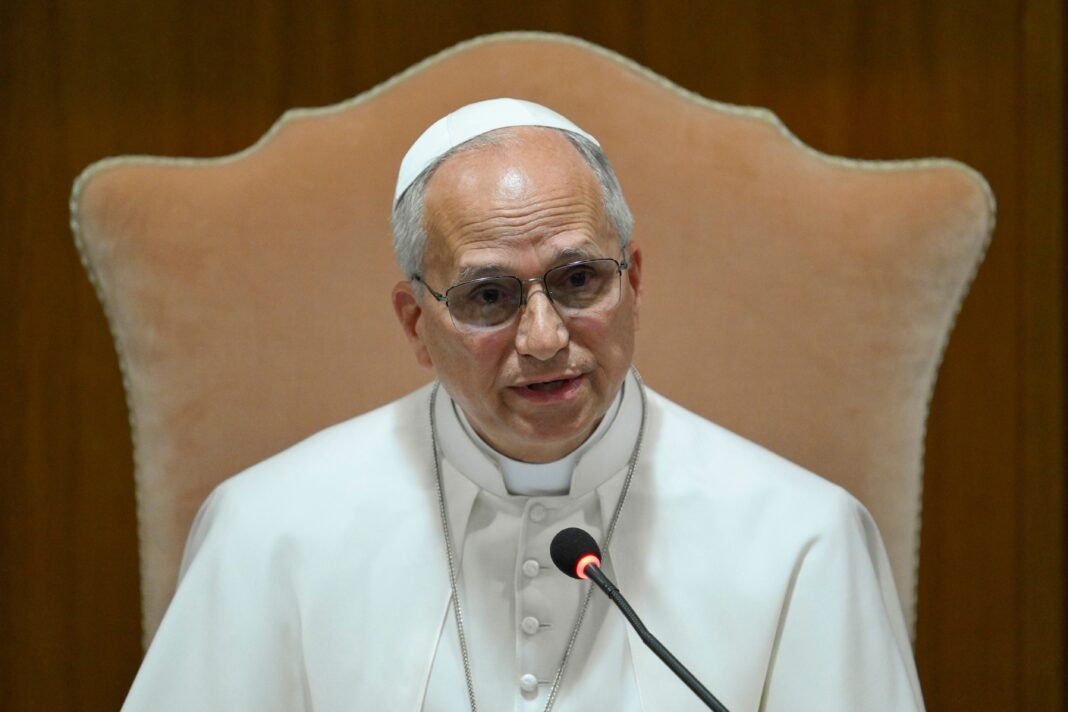
The Growing Partnership Between the Vatican and AI Innovators
In a groundbreaking moment, Pope Leo XIV introduced his first encyclical on artificial intelligence at the Vatican, featuring Christopher Olah, cofounder of Anthropic, as a keynote speaker. this event symbolized an unprecedented collaboration between the catholic Church and leading figures in Silicon Valley’s AI sector. To understand this alliance fully, it is vital to examine Anthropic’s foundation and guiding principles.
Anthropic’s Commitment: Prioritizing Ethical AI Development
Founded in 2021 by former OpenAI researchers including Dario and Daniela Amodei, Anthropic was born out of concerns that rapid advancements driven by competition risked surpassing safe operational limits. The organization emphasizes that progress in artificial intelligence must be balanced with rigorous ethical oversight and controllability rather than mere speed or market dominance.
Central to Anthropic’s mission is AI safety, which focuses on building systems aligned with human values while maintaining robustness.Thier innovative method called Constitutional AI trains models using explicit guiding principles instead of relying solely on manual interventions to correct harmful outputs.
The Vatican’s Evolving Role in Technology Discourse
The invitation extended to Christopher Olah reflects years of deliberate engagement between religious leaders and technology experts. Initially centered around bioethics, the Holy See has expanded its involvement into direct discussions about artificial intelligence amid accelerating global technological shifts.
A landmark initiative was launched in 2020-the Rome Call for AI Ethics-led by the Pontifical Academy for Life alongside major tech companies such as Microsoft and IBM. This effort aimed to establish universal ethical standards emphasizing transparency, inclusivity, and accountability within AI development processes.
The surge of generative models like ChatGPT combined with geopolitical tensions over technological leadership prompted Vatican officials to recognize that artificial intelligence is no longer just an ethical topic but a critical force shaping humanity’s future path.
An Ethical ally: Why Anthropic Stands Out
The Vatican regards Anthropic as a distinctive partner due to its steadfast dedication to ensuring advanced AI systems remain aligned with human-centered values rather than focusing solely on growth metrics or commercial success. This approach resonates strongly amid ongoing debates about making complex algorithms interpretable and controllable for society’s benefit.
Christopher Olah: Connecting Technical Expertise With Moral Reflection

A pivotal contributor to this dialog is Christopher Olah himself-celebrated for his deep theoretical work aimed at unraveling how neural networks function internally. His research aligns closely with Pope Leo XIV’s concerns expressed in the encyclical about technologies becoming increasingly opaque or uncontrollable without proper understanding.
The Inherent Values Embedded Within Technology
Pope Leo XIV’s document repeatedly underscores that technology inherently carries embedded worldviews shaped by those who design algorithms. Through Constitutional AI, Anthropic seeks precisely this integration-embedding explicit ethical values into model behavior rather than allowing outcomes dictated purely by data patterns or economic incentives alone.
Navigating Global Competition While Upholding Ethics
This partnership also highlights shared worries regarding powerful technologies being driven primarily by competitive pressures among nations or corporations-a dynamic especially visible today amid U.S.-China rivalries over technological supremacy. Both parties caution against unchecked forces steering artificial intelligence toward harmful societal consequences.
Cultivating Public Trust Through Responsible Innovation Practices

Anthropic reinforces its reputation as an “ethical AI company” through products like Claude-a conversational agent explicitly built upon their constitutional framework promoting safety and duty. In today’s habitat where concerns range from labor market disruption to surveillance risks and national security implications related to artificial intelligence deployment-the company offers distinct credibility within public debates surrounding emerging technologies worldwide (with internet users now exceeding 5 billion globally).
“Magnificent Humanity”: Balancing Promise With Caution Against Dehumanization Risks
Pope leo XIV titled his encyclical Magnifica Humanitas, capturing humanity’s dual potential: capable of remarkable creativity yet vulnerable to alienation through misuse of technology. Artificial intelligence itself is portrayed neither as inherently virtuous nor malevolent but rather reflecting those who create it-acting like a digital mirror held up before society itself.
“The danger lies not within machines themselves but when our creations’ purposes are governed solely by efficiency metrics devoid of human dignity.”
A Cautionary Tale Against Becoming “Digital Babylon”
The document warns against evolving into what it calls “digital Babylon,” where interpersonal relationships reduce merely to transactional data points stripped from genuine meaning; truth becomes malleable under algorithmic influence; individuals are quantified only as performance indicators-all threatening essential aspects defining our shared humanity amidst rapid digitization trends worldwide (now encompassing more than two-thirds of Earth’s population).
tackling Concentrated Control Over Transformative Technologies
- Who holds authority over these powerful tools?
- What standards govern their training objectives?
- Who owns critical infrastructure underpinning future digital ecosystems?
Limits Of Industry Self-Regulation Acknowledged Openly
< p >During his remarks accompanying the encyclical release , Christopher olah acknowledged candidly that even companies most committed ethically operate under conflicting economic , geopolitical ,and competitive pressures . He stressed : addressing challenges posed by advanced artificial intelligence cannot rely exclusively upon voluntary industry self-regulation . This frank admission signals growing consensus across sectors regarding need for broader multi-stakeholder governance frameworks .Facing The “21st Century Hiroshima”: Charting A Responsible Path Forward
Comparisons between modern-day risks from uncontrolled technology frequently enough invoke nuclear weapons-but unlike atomic power once monopolized largely by nation-states , today ‘s cutting-edge ais develop predominantly within private enterprises . This shift introduces unprecedented complexities concerning accountability , transparency ,and societal impact management . As emphasized throughout magnifica Humanitas :
“Technological power now wears primarily private faces.”
This shared concern manifests differently among ethicists versus technologists-but converges around fears unchecked incentives might dangerously distort system behaviors away from collective well-being.
Might we face not one sudden catastrophe akin Hiroshima-but rather gradual social automation eroding autonomy? Delegating thought processes , decision-making,and interpersonal connections increasingly onto opaque machines risks transforming magnificent humanity into something far more troubling.