Understanding New York City’s pied-à-Terre Tax: A Transformative Approach to Luxury Property Taxation
The Emergence of a Targeted Tax on Secondary Residences
New York City has enacted a significant tax policy aimed at owners of upscale secondary homes,poised to substantially increase property tax obligations for many affluent apartment owners. This pied-à-terre tax specifically targets non-primary residences valued at $1 million or more, with the goal of generating roughly $500 million annually to help alleviate the city’s fiscal challenges.
Initial rollout adn Tiered Tax Rates Explained
The implementation will occur in two phases. The first phase, covering fiscal years 2026-2027 and 2027-2028, applies this surcharge to condominiums and co-op units assessed by the city’s Department of Finance above $1 million. Properties valued between $1 million and $3 million will face a 4% annual tax; those priced from $3 million up to $5 million are subject to a 5.25% rate; while homes exceeding $5 million incur a 6.5% levy.
Although these rates appear steep, it is significant to note that New York City’s current property assessment system often undervalues real estate assets-sometimes assessing them at approximately 10% or less of their true market value-thereby softening the immediate financial impact on homeowners.
Transitioning Toward Market-Based Valuations Starting in Fiscal Year 2028
Beginning with the fiscal year 2028-2029, property assessments will shift toward reflecting actual market sales data rather than relying on outdated valuation formulas. This change is expected to considerably increase assessed values-and consequently taxable amounts-for affected properties.
To offset this rise in valuations, adjusted lower tax rates will be introduced:
- $5 million-$15 million properties: taxed at 0.8%
- $15 million-$25 million properties: taxed at 1.05%
- Properties exceeding $25 million: taxed at 1.3%
A Spotlight on Ken Griffin’s Manhattan Penthouse as an Illustrative Exmaple
Billionaire hedge fund manager Ken Griffin has become emblematic of this new taxation framework after city officials highlighted his ownership of an ultra-luxury penthouse during public discussions promoting the measure.
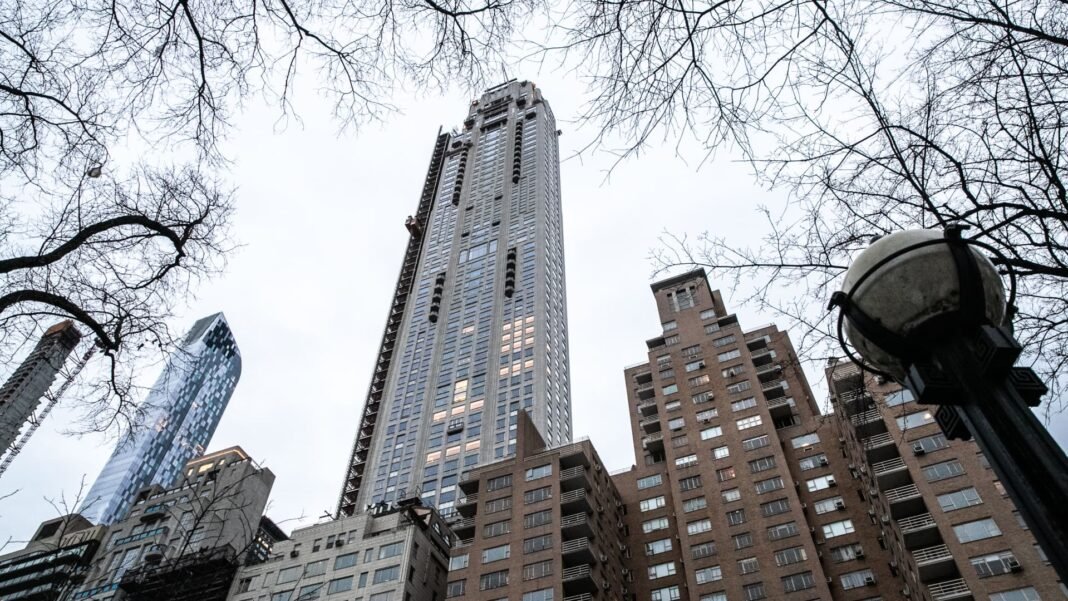
Griffin acquired his expansive penthouse spanning nearly 24,000 square feet at 220 Central Park South, paying an unprecedented price tag of approximately $238 million in 2019-a record-breaking sale within Manhattan’s luxury residential market.
The Effect on Griffin’s Annual Property taxes Under New Rules
The official city valuation currently places this residence around $15.5 million, resulting in an annual property tax bill close to $858,000. With pied-à-terre taxes applied during its initial phase starting july 2026, Griffin’s yearly taxes would climb beyond $1.87 million. Once market-based assessments take hold from mid-2028 onward alongside revised rates, his annual liability could near $4 million.
Total Financial exposure Including Additional Properties Owned by Griffin
Apart from his Central Park South penthouse, Griffin owns two other apartments within 740 park Avenue, purchased collectively for about $83 million.The combined pied-à-terre taxes for these units alone are projected to exceed one-million dollars annually starting with fiscal year ’28-’29-bringing his total estimated Manhattan property taxes across all holdings above $5 million per year.
Diverse Perspectives From Real Estate professionals and Stakeholders
- Brokers and legal experts caution: The sharp increase represents “sticker shock” even among wealthy clients who already feel burdened by existing levies tied to high-end real estate ownership.
- An experienced NYC real estate attorney observed: “Regardless of wealth status, these new figures represent substantial financial commitments.”
- Civic advocates maintain: Affluent residents can absorb higher contributions without undermining economic growth or job creation within New York City limits.
- A growing trend among billionaires like Griffin involves relocating business operations or personal residences outside NYC-in some cases favoring cities such as Miami-to reduce escalating costs linked directly or indirectly with local taxation policies.
“This legislation stands as one of New York City’s most enterprising efforts yet focused squarely on taxing luxury second-home ownership,” remarked a municipal finance expert familiar with recent reforms.
– Real Estate analyst Commentary
The Broader Meaning Amid Rising Wealth Disparities and Housing Costs Nationwide
This initiative emerges against a backdrop marked by increasing scrutiny over wealth inequality intensified by soaring housing prices across major urban centers-including cities like San Francisco where similar proposals have been debated-and reflects wider global trends among metropolitan areas seeking enduring revenue sources without deterring investment appeal entirely.