Nvidia’s Strategic Growth in AI Hardware and Talent Acquisition
Strengthening AI Infrastructure Through enfabrica Acquisition
Nvidia recently finalized a important deal valued at over $900 million to acquire Enfabrica’s CEO, Rochan Sankar, along with several key engineers from the AI hardware startup. This agreement also includes licensing Enfabrica’s innovative technology, marking a pivotal step toward enhancing Nvidia’s AI hardware integration capabilities.
Mirroring talent acquisition trends seen at tech giants like Meta and Google, Nvidia combined cash payments with stock incentives to secure this strategic partnership. Sankar has now officially joined Nvidia’s executive team following the completion of the transaction last week.
Transforming GPU Clusters for Next-Generation AI Workloads
Since OpenAI introduced ChatGPT in late 2022, Nvidia GPUs have become indispensable for powering large-scale artificial intelligence models. These processors are widely deployed by cloud providers to train expansive language models and deliver refined AI services worldwide.
Founded in 2019, Enfabrica developed technology that enables interconnection of more than 100,000 GPUs into unified clusters. This breakthrough allows massive arrays of GPUs to operate as single supercomputers-perfectly aligning with Nvidia’s vision of integrated systems built around its chip architecture.
The Shift from Individual GPUs to Massive Multi-GPU Racks
Earlier GPU generations such as the A100 were designed primarily as standalone units within servers.Today, Nvidia offers configurations featuring racks containing up to 72 interconnected GPUs collaborating seamlessly. These advanced setups power major data centers like Microsoft’s $4 billion facility in Wisconsin that supports scalable AI workloads on an unprecedented scale.
Rapid Funding Growth Fuels Innovation Trajectory
Nvidia had previously participated in Enfabrica’s $125 million Series B funding round led by Atreides Management during 2023-a milestone that increased the company valuation fivefold compared to its Series A stage. Later that year,additional investments totaling $115 million came from firms including Spark Capital and Samsung; these rounds pushed Enfabrica’s valuation close to $600 million according to market analysts.
The Fierce Competition for elite AI Talent Among Tech Leaders
The battle for premier artificial intelligence expertise has driven companies such as Meta, Google, Microsoft, and Amazon toward acquihire deals-strategic hires focused on securing top engineers without full company acquisitions or regulatory hurdles.
- Meta: In June alone invested over $14 billion acquiring Scale AI founder Alexandr Wang alongside other key personnel while taking a substantial stake in Scale itself.
- Google: Followed closely with a $2.4 billion acquisition bringing Windsurf CEO Varun Mohan plus research teams onboard while licensing proprietary technologies shortly after Meta’s move.
- Microsoft & Amazon: Both companies absorbed startups Inflection and Adept respectively through targeted hires paired with technology licenses within the past year.
Nvidia’s Focused Approach Toward Acquisitions
Diverging from peers who often pursue broad buyouts or acquihires en masse, Nvidia emphasizes selective investments rather than sweeping acquisitions. Its largest purchase remains Mellanox Technologies-a networking chip designer acquired for nearly $7 billion in 2019-which underpins much of today’s Blackwell product line networking features.
An attempted acquisition of Arm was halted due to regulatory challenges during 2022; however recent smaller deals include Run:ai-a company specializing in optimizing software infrastructure for artificial intelligence-with an estimated price near $700 million completed last year.
A Landmark Partnership: Intel and Nvidia Join Forces on future AI Chips
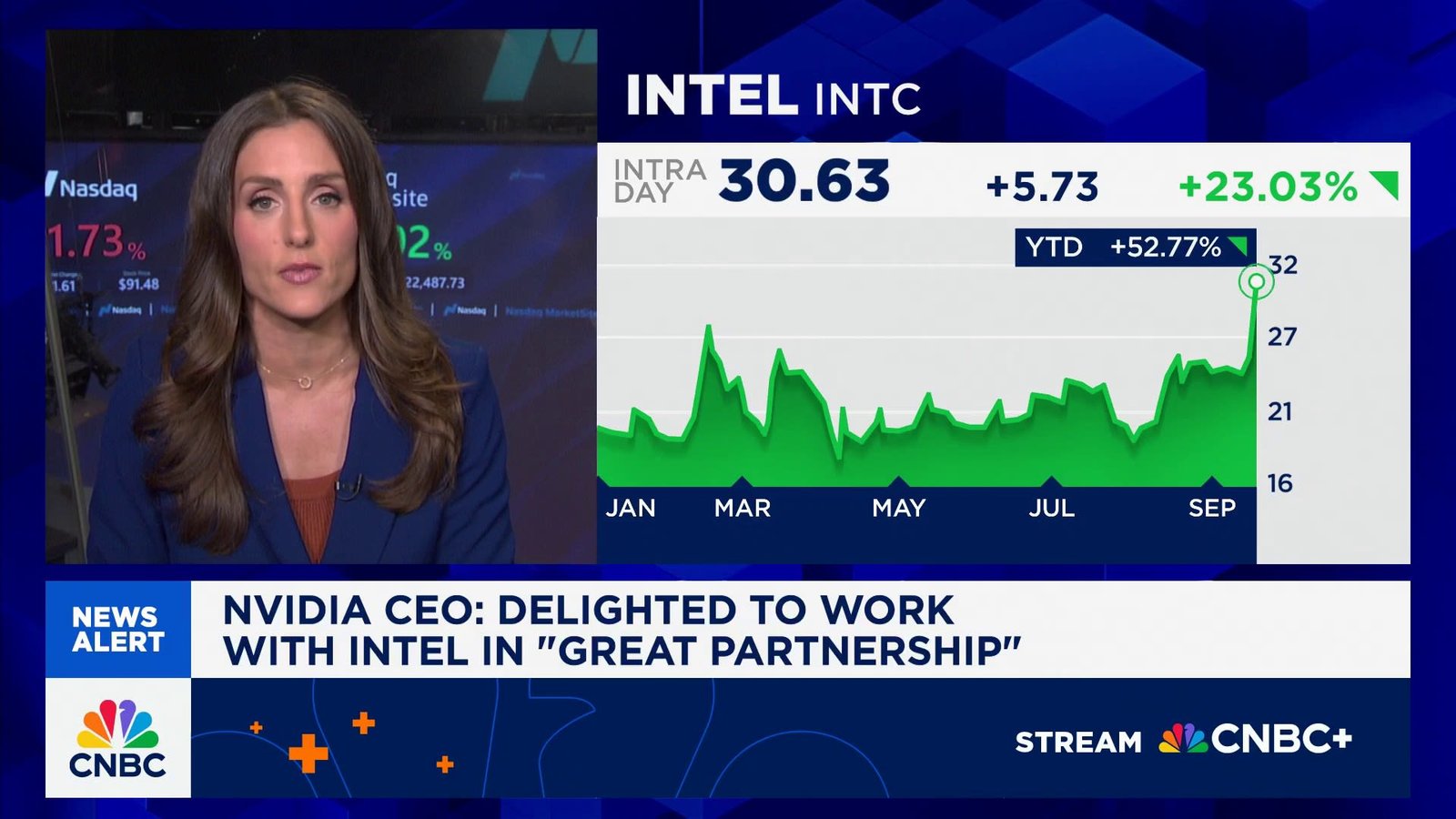
This week marks one of Nvidia’s most ambitious commitments yet: investing roughly $5 billion into Intel alongside announcing joint progress initiatives targeting next-generation processors optimized specifically for artificial intelligence workloads. This collaboration between two semiconductor titans aims at accelerating innovation across computing platforms tailored for emerging generative AI demands worldwide (which have surged usage rates by over 300% since early 2024).
additionally close-to-$700-million funding was allocated toward UK-based data center startup Nscale-highlighting sustained interest not only within chip design but also infrastructure supporting rapid growth fueled by generative AI applications globally today.
“Combining Intel’s manufacturing scale with our GPU expertise will set new performance standards,” stated Jensen Huang regarding their alliance.”
The Future Outlook: Merging Talent Acquisition With Technological Breakthroughs
This wave of strategic talent recruitment coupled with licensing agreements exemplifies how leading tech firms are reshaping competitive advantages amid rapid advancements across global artificial intelligence sectors-where demand continues skyrocketing across industries ranging from healthcare diagnostics powered by deep learning algorithms up through autonomous vehicle navigation systems running massive neural networks interconnected via solutions similar to those pioneered by enfabrica.