



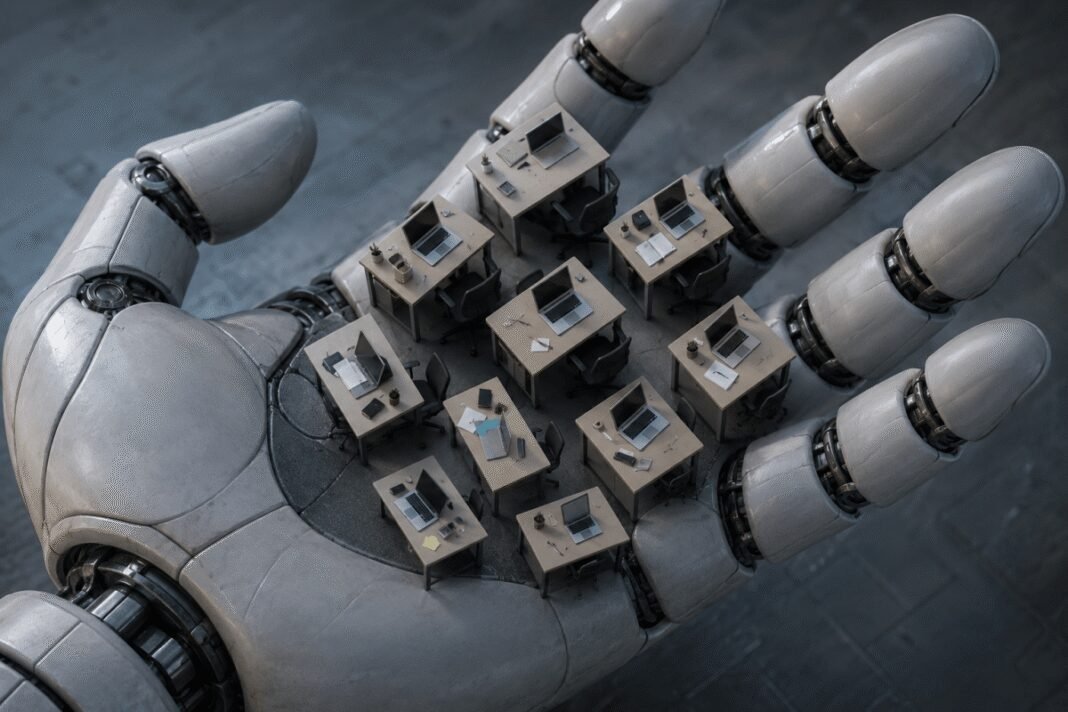
How Artificial Intelligence is Revolutionizing Employment in the Tech Industry: An In-Depth Look at 2026 Layoffs
In 2026,the technology sector presents a striking paradox: record-breaking profits coexist with widespread job cuts. This trend is largely fueled by the rapid integration of artificial intelligence (AI), which is reshaping operational models and workforce strategies across major companies. For example, Oracle reduced its global headcount by nearly 21,000 employees-about 13% of its staff-demonstrating how AI adoption directly influences employment patterns.
The Role of AI in Driving Workforce Evolution
Top tech corporations are attributing recent layoffs too gains in efficiency brought about by AI and strategic shifts aimed at future-proofing thier businesses. Despite posting unprecedented financial results, these firms are streamlining their teams by eliminating roles that have become redundant or less essential due to automation and intelligent systems.
This phenomenon reflects a broader industry-wide transformation where productivity surges thanks to automation but also triggers reassessment of human resource needs. notably, May 2026 recorded one of the highest monthly layoff rates within tech companies over recent years, with AI cited as a key driver behind many workforce reductions.
Leading Companies Steering Workforce Adjustments
Oracle’s Bold Restructuring Amidst Financial Growth
Oracle’s notable layoffs occurred even as it reported $3.7 billion in quarterly net income-a remarkable 27% increase year-over-year-and maintained an order backlog exceeding $550 billion. The company redirected funds saved from personnel cuts into expanding its AI data center capabilities while withdrawing from select international markets and flattening management hierarchies to prepare for exponential growth driven by autonomous workloads.
GitLab’s Platform Revamp Spurs Staff Reductions
in June 2026, GitLab trimmed approximately 14% of its workforce-around 350 jobs-to focus on scaling infrastructure capable of handling surging AI demands. CEO Bill Staples described this move as a “generational rebuild,” aiming to support up to a hundredfold increase in agent-scale applications-a strategic pivot reflecting intense pressure across the sector to adapt swiftly.
Google’s Subtle Reorganization Focused on Cloud Expansion and Security
Alphabet’s Google quietly implemented cuts within its Cloud division-including cybersecurity teams-even as cloud revenue soared over 60%, surpassing $20 billion annually with an expanding project pipeline nearing half a trillion dollars. The company notably reduced managerial positions by more than one-third through performance evaluations and voluntary buyouts rather than public announcements, signaling discreet yet impactful restructuring aligned with growing investments in advanced AI technologies.
Cisco Redirects Talent Toward Emerging Innovations
Cisco announced nearly 4,000 job eliminations-roughly five percent of its workforce-despite reporting strong quarterly earnings. The firm emphasized reallocating resources toward silicon chip development, optical networking advancements, security improvements, and artificial intelligence initiatives rather than focusing solely on cost-cutting measures; highlighting strategic prioritization over simple downsizing.
Diverse Impacts Across Various Technology Sectors
- Meta: Around ten percent reduction in staff occurred alongside redeployment efforts moving thousands into new roles centered on artificial intelligence projects; however internal feedback indicates mixed morale among those reassigned.
- SAP:A prominent player outside silicon Valley increased investments significantly into generative AI tools tailored for enterprise resource planning without announcing major layoffs so far.
- dell Technologies:The company experienced roughly eleven thousand job cuts (about ten percent) during fiscal year ’26 but expects server revenues optimized for machine learning workloads to double next year.
- AWS & Amazon:Together they have eliminated more than thirty thousand corporate positions since late ’25 amid efforts to streamline bureaucracy while rapidly deploying generative agents across business units.
- SaaS Providers like Atlassian & Salesforce:Both underwent substantial restructuring – Atlassian cut about ten percent focusing on shifting enterprise sales toward AI-enabled products; Salesforce reduced customer support roles partly due to efficiencies gained via their Agentforce platform powered by smart automation.
- cryptocurrency Exchange Coinbase:Laying off fourteen percent while experimenting with “one-person teams” blending multiple engineering disciplines highlights innovative organizational models emerging under market volatility combined with accelerated machine learning adoption.
The Changing Composition of Roles Within Organizations
The bulk of layoffs targeted middle management layers such as finance controllers or legal auditors whose responsibilities are increasingly automated through refined analytics platforms powered by natural language processing models or robotic process automation bots.
“Most individuals impacted were those focused primarily on measurement functions,” remarked Cloudflare CEO Matthew Prince regarding his company’s decision affecting over twenty percent of their staff despite record-high revenues driven partly through enhanced operational efficiencies enabled via automation technologies.
Evolving Recruitment Patterns: Entry-Level Hiring Grows Amid Overall Cuts
An interesting countertrend appears at IBM where thousands lost jobs mainly among HR personnel replaced partially by virtual assistants; together IBM plans tripling entry-level hiring focused explicitly on hybrid-cloud engineering skills deeply intertwined with artificial intelligence competencies – illustrating how demand shifts rather than disappears entirely within ecosystems shaped around emerging technologies.
A shift Toward Leaner Teams Empowered By Intelligent Systems
The cryptocurrency exchange Coinbase exemplifies this evolution vividly: engineers now utilize generative models enabling them to complete weeks’ worth work within days – prompting structural changes such as collapsing hierarchical layers into compact cross-functional squads combining design thinking alongside product development under unified leadership empowered directly through real-time data insights generated autonomously via embedded machine learning algorithms throughout workflows.
An Agile Future Driven By Artificial Intelligence Innovation
This wave represents not just contraction but reinvention across industries traditionally dependent upon large human capital pools performing repetitive tasks now ripe for enhancement or replacement through automation – creating opportunities for reskilling workers toward higher-value activities centered around creativity supervision strategy formulation leveraging augmented intelligence systems rather purely manual labor execution roles previously dominant before widespread adoption began accelerating post-pandemic hiring surges plateaued then reversed sharply starting late ’25 continuing well into mid-’26 timeframe analyzed here .
- If history offers lessons-from mechanization during industrial revolutions through digital computing-the current era dominated increasingly by sophisticated artificial intelligence will profoundly reshape labor markets yet also unlock possibilities previously unimaginable when innovation balances thoughtfully alongside social responsibility considerations essential amid rapid change impacting millions worldwide daily beyond technology sectors alone .

