Spotify Advances AI Music Transparency and Strengthens Anti-Spam Policies
Establishing Clear Standards for AI Involvement in Music
Spotify has introduced enhanced guidelines to increase clarity about the role of artificial intelligence in music creation. At the heart of this effort is the adoption of a new industry framework called DDEX,which standardizes how labels,distributors,and partners report AI contributions. This protocol requires detailed disclosures indicating whether AI was used in vocals, instrumentation, or post-production stages.
This system recognizes that AI’s influence on music exists along a spectrum rather than as a simple binary factor. Spotify’s Global Marketing and Policy led highlighted that these refined disclosures will enable listeners to gain deeper insight into how artists integrate technology into their creative processes without forcing tracks into inflexible categories.
Combating Unauthorized Voice Replication and Deepfake Audio
In addition to transparency measures, Spotify has intensified efforts against unauthorized voice cloning and deepfake audio generated by artificial intelligence. Any content employing these techniques without explicit permission will be swiftly removed from the platform to protect artists’ intellectual property and preserve authenticity.
Preventing Artist Identity Fraud Across Platforms
The company is also working closely with distributors to address “profile mismatches,” where malicious users upload music under another artist’s name across multiple streaming services. By detecting such fraudulent activity early on, Spotify aims to prevent deceptive uploads from reaching audiences.
Tackling Spam Proliferation Fueled by Advanced AI Tools
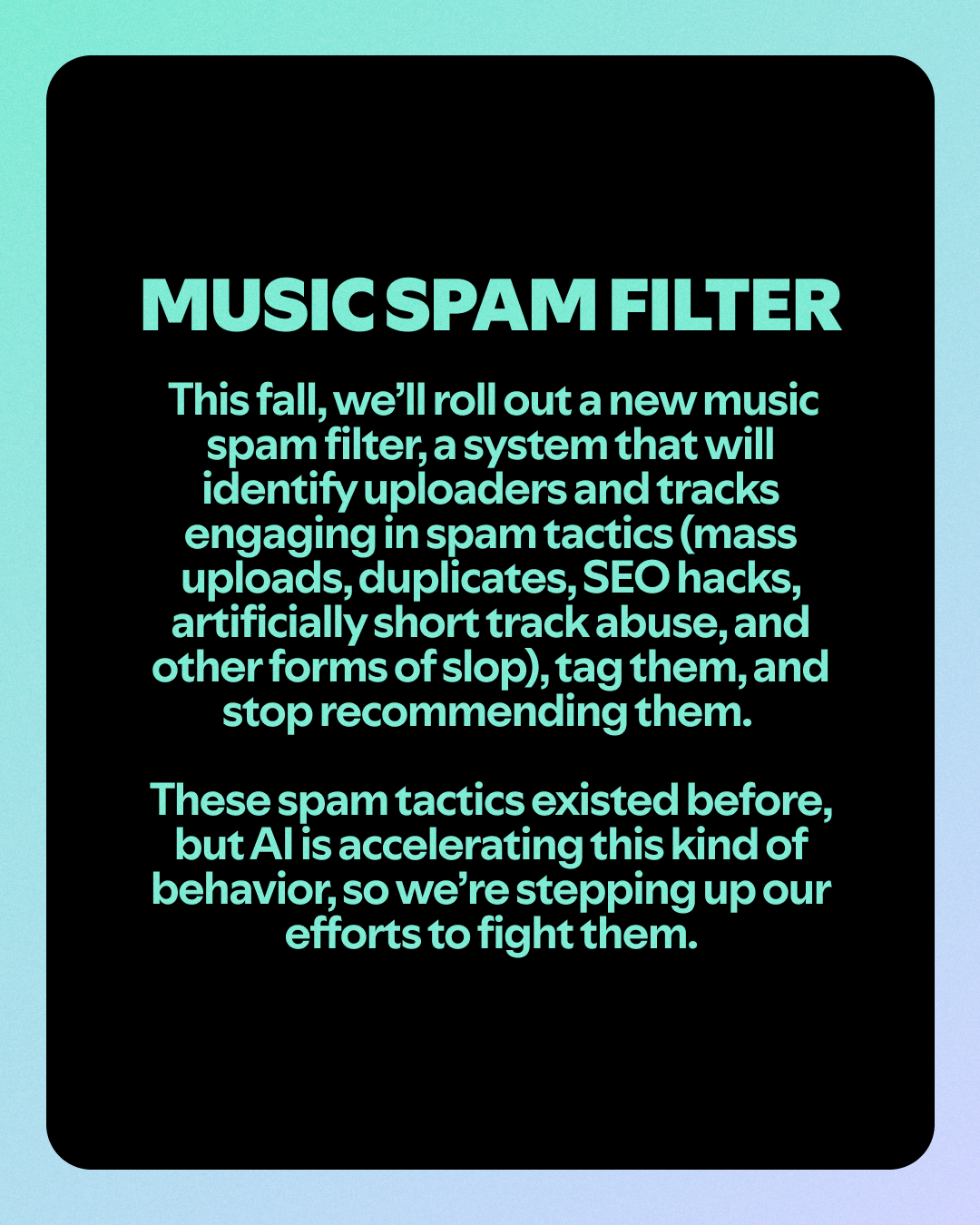
The widespread availability of complex AI tools has led to an influx of low-quality or duplicate tracks designed primarily to manipulate streaming algorithms. To counter this growing issue, Spotify plans to deploy an advanced spam detection system later this year that identifies suspicious patterns and blocks those tracks from being recommended.
“modern AI enables bad actors to mass-produce repetitive content aimed at gaming search algorithms,” explained a senior executive at Spotify. “While we have long fought such tactics, today’s technological complexity demands more innovative defenses.”
This filtering mechanism will be rolled out gradually so it can accurately distinguish problematic signals while evolving alongside emerging spam techniques.
The Expanding Role of AI-Generated Music in Streaming Libraries
The presence of fully or partially AI-created songs is rapidly increasing within digital catalogs worldwide. For example,one competing platform recently revealed that nearly 18%-over 20,000 daily uploads-are entirely produced using artificial intelligence tools alone. Although Spotify has not released specific data for its own service, insiders confirm similar trends across major streaming providers due to shared distribution networks.
This development underscores how musicians are blending human creativity with machine assistance at varying levels instead of relying solely on either approach exclusively.
A Thoughtful Approach: Supporting Innovation While preventing Exploitation
Spotify continues encouraging authentic artistic experimentation involving artificial intelligence but draws clear boundaries against manipulative practices that erode trust within the ecosystem.Company leadership emphasizes their dedication not only toward fostering innovation but also ensuring fairness by curbing abuses enabled through technological advancements.