Thailand and Cambodia Agree to Ceasefire, Ending Border Hostilities
New Pact Stops Military Engagements and Airspace Violations
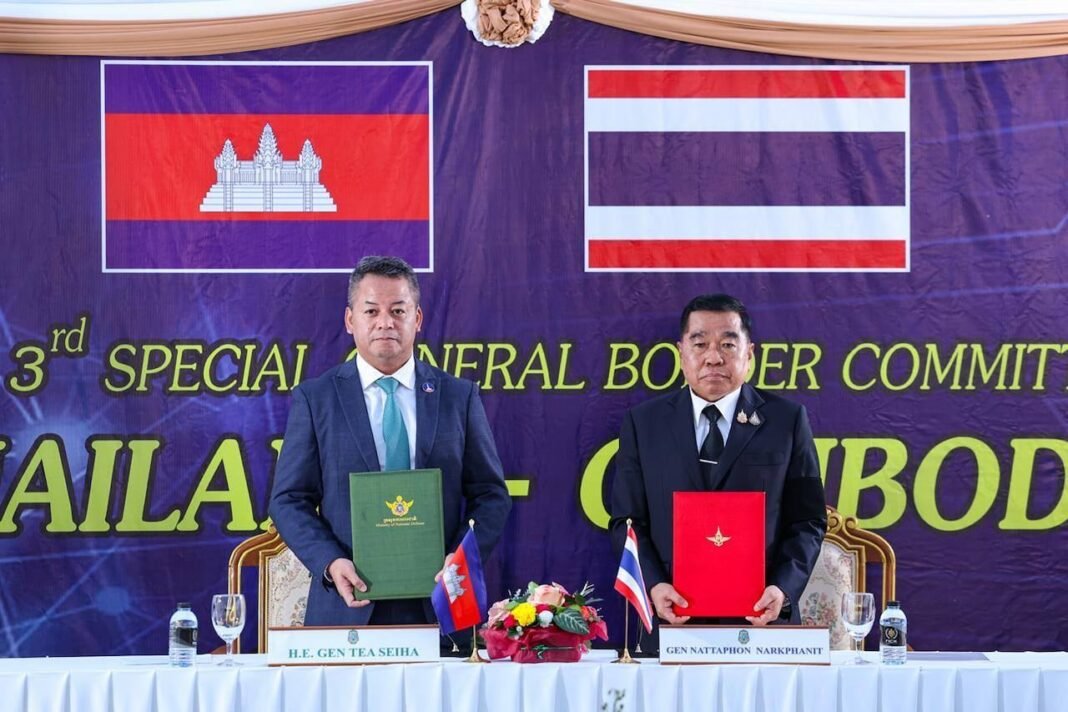
following several weeks of fierce confrontations over contested border territories, Thailand and Cambodia have reached a formal ceasefire agreement that commenced at noon local time on saturday. This arrangement not only halts all active combat but also bans any further troop deployments or incursions into each other’s airspace.
During the recent clashes, Cambodian defense officials reported that Thailand was solely responsible for conducting airstrikes, with attacks occurring as late as Saturday morning within Cambodian territory.
Prisoner Release conditioned on Ceasefire Stability
A pivotal clause in the agreement mandates Thailand to free 18 Cambodian soldiers detained since hostilities erupted in July. This release is dependent upon maintaining an uninterrupted ceasefire for 72 hours. The repatriation of these prisoners has been a key demand from Cambodia throughout the negotiation process.
The accord also reiterates commitments made during an earlier truce that ended five days of fighting in July, alongside subsequent measures aimed at reducing tensions along the border.
Cambodian and Thai Diaspora Rally for Peace Amid Lingering Trauma
The conflict has deeply affected expatriate communities worldwide.For instance, individuals with roots in both countries residing in Sydney recently organized peaceful demonstrations advocating for reconciliation amid ongoing unrest near their homelands. Manny participants shared how decades-old disputes continue to impact their families’ emotional well-being and cultural identity.
China’s Role as Mediator Strengthens Diplomatic Channels
The Chinese government welcomed this latest ceasefire proclamation and revealed plans for its foreign minister to convene with officials from both nations in Yunnan province over the weekend. These discussions will include military representatives focused on fostering detailed dialog toward enduring peace.
China highlighted dialogue as a vital mechanism for resolving complex territorial disagreements and pledged continued support by providing platforms facilitating communication between Thailand and Cambodia.
“Our commitment is to assist both countries in rebuilding trust, resuming exchanges, enhancing bilateral relations, and ensuring regional stability,” stated representatives from China’s Foreign Affairs Ministry.
Global influence Shaped Earlier Peace Efforts
The initial ceasefire reached last July was largely brokered by Malaysia under diplomatic pressure influenced by then-U.S. leadership threatening economic sanctions if hostilities persisted-a strategy credited with advancing negotiations during a regional summit held later that year in Kuala Lumpur.
Despite these diplomatic efforts, intermittent skirmishes continued alongside intensified propaganda campaigns until December when fighting escalated sharply once more along disputed border zones.
The Larger picture: Border Disputes Impact Regional Security
- The territorial disagreement between Thailand and Cambodia revolves around longstanding claims involving sacred sites and resource-rich lands-issues comparable to maritime disputes between Vietnam and China over South China Sea territories.
- This recent ceasefire represents one among multiple ASEAN-led initiatives supported by international actors aiming to resolve conflicts through diplomacy rather than prolonged warfare-an approach increasingly critical amid a documented 18% rise globally in cross-border conflicts as 2020 according to security analysts monitoring geopolitical trends worldwide.

Navigating Future Challenges Toward Lasting Peace
- Building Mutual Confidence: Beyond stopping violence temporarily, both nations need transparency regarding military activities along borders to foster genuine trust moving forward.
- Sustained Diplomatic Mediation: Continued engagement by neutral parties such as China can help prevent future flare-ups while promoting cross-border economic collaboration benefiting all stakeholders involved across southeast Asia’s interconnected markets.
- Civil Society Contributions: Grassroots reconciliation programs encouraging dialogue among affected populations could diminish long-term resentments historically fueled by nationalist rhetoric-a strategy successfully employed following post-conflict recovery efforts after East Timor’s independence struggle offers valuable lessons here too).
This progress brings cautious hope but highlights how fragile peace remains without complete political solutions addressing deep-rooted causes behind rivalry between neighboring states sharing intertwined histories yet competing national interests today.