Supreme Court Decision Redefines Presidential Authority Over Trade Tariffs
Repercussions of the Supreme Court’s Ruling on U.S.Trade Regulations
The Supreme Court has recently delivered a landmark ruling that significantly narrows the president’s power to unilaterally impose tariffs on imported goods. This judgment limits executive authority under the International Emergency Economic Powers Act (IEEPA), possibly affecting billions in tariff-generated revenue for the united States.
Legal Nuances Behind the Verdict
In his majority opinion, Chief Justice John Roberts clarified that key phrases within Section 1702(a)(1)(B) of IEEPA-specifically “regulate” and “importation”-do not authorize sweeping tariff impositions across all nations and products indefinitely. This interpretation serves as a safeguard against unchecked presidential control over trade policy.
Divergent Judicial Views and Political Responses
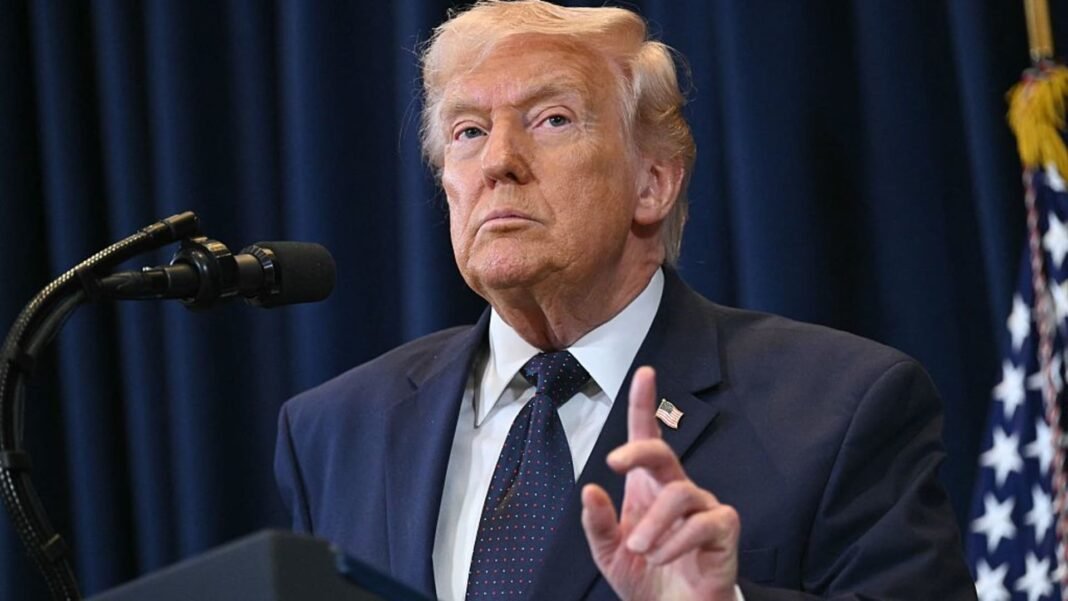
The decision was met with dissent from justices Brett Kavanaugh, samuel Alito, and Clarence Thomas, who advocated for broader executive discretion in trade matters. Politically, former President Donald Trump criticized Justices Neil Gorsuch and Amy Coney Barrett for their roles in limiting presidential power, arguing that such constraints undermine national economic interests.
Adapting Tariff enforcement post-Ruling
In response to this judicial limitation, government officials have turned to Section 122 of the Trade Act to enact a temporary global tariff of 10% on imports. These tariffs are set to last only 150 days unless Congress authorizes an extension-highlighting legislative checks on trade policy decisions.
Intensified Scrutiny of International Trade Practices
The office of the U.S. Trade Representative has initiated investigations under Section 301 of the Trade Act of 1974 targeting nearly eighty countries-including major economies such as China, India, Japan, Mexico, and members of the European Union-to uncover unfair trading behaviors warranting retaliatory measures like tariffs or sanctions.
The Strategic Importance of Section 301 Enforcement
This statute empowers U.S. authorities to counteract foreign practices deemed injurious or discriminatory toward American industries. Given that global supply chains now represent trillions in annual commerce worldwide-with disruptions exacerbated by geopolitical conflicts-Section 301 remains vital for preserving equitable competition.
Economic Implications Amid Global Market Volatility
This judicial intervention arrives during a period marked by significant instability in international supply networks; recent figures indicate global merchandise exports hit $24 trillion last year but where subject to sharp fluctuations due to ongoing geopolitical tensions and lingering pandemic effects.
“Maintaining equilibrium between executive initiative and congressional oversight is essential for consistent economic governance,” emphasized an economist specializing in international trade trends.
A practical example can be found within semiconductor imports: abrupt changes in tariff policies can cascade through industries reliant on these critical components-from automotive manufacturing centers across Germany’s industrial regions to technology companies based throughout South Korea-underscoring how carefully balanced legal frameworks are necessary when crafting effective tariff strategies.