President Trump Announces Halt too Hostilities with Iran Amid Ceasefire Extension
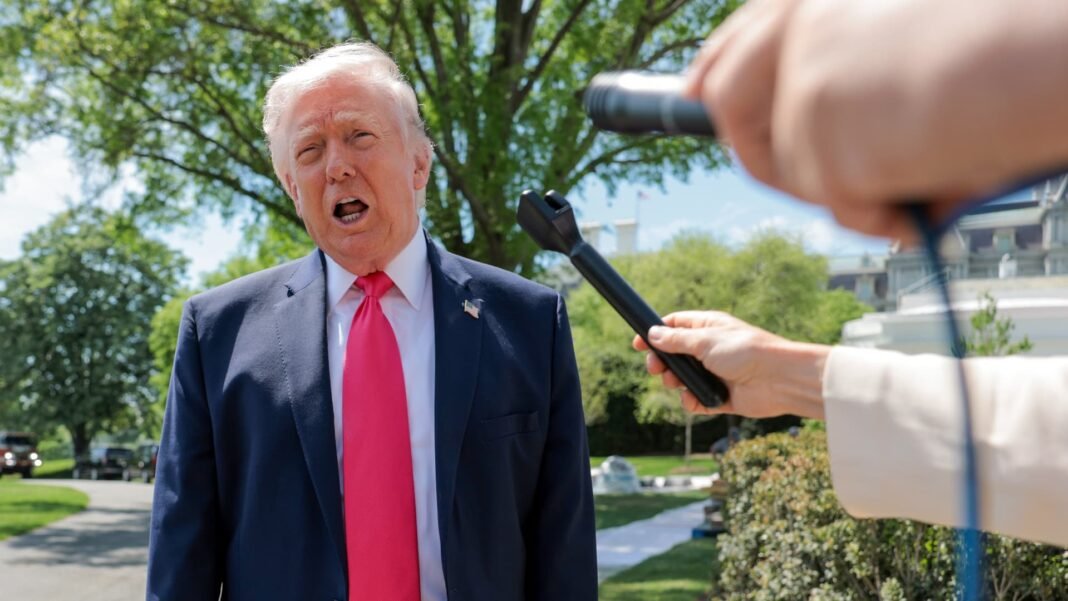
On April 7,2026,President Donald Trump declared a two-week ceasefire with Iran,which has since been extended. Speaking to reporters on teh South Lawn of the White House before boarding Marine One, he confirmed that active combat between U.S. forces and Iranian troops had come to an end.
War Powers Resolution: Legal deadlines and Presidential Decisions
This declaration coincided with a pivotal moment under the War Powers Resolution of 1973, which mandates that a president must obtain congressional approval for military engagements within 60 days of their commencement. Since hostilities began in late February 2026, this past Friday marked exactly sixty days without formal congressional authorization for continued operations against Iran.
Despite this legal requirement,President Trump stated he would not seek Congress’s consent for further military action. He cited historical precedent where previous presidents refrained from requesting such approval and questioned the constitutionality of the War Powers Resolution itself.
Official Statements and government Reactions
In letters sent to House Speaker Mike Johnson and Senate President Chuck Grassley, Trump wrote: “There has been no exchange of fire between United States Forces and Iran as April 7, 2026.” He underscored that “the hostilities initiated on February 28,2026 have officially ended.”
This viewpoint was supported by Defense Secretary Pete Hegseth during testimony before the Senate Armed Services Committee. Hegseth argued that a ceasefire effectively suspends or resets the War Powers countdown clock.
However, Senator Tim Kaine challenged this interpretation directly during questioning: “I do not believe the statute supports such an understanding.”
Divergent opinions Within Congress
The president’s position faced strong opposition from Senate Minority Leader Chuck Schumer (D-N.Y.), who dismissed Trump’s claims as inaccurate and labeled ongoing U.S. involvement as unlawful warfare.
“This is an illegal war,” Schumer stated on social media.
“every day Republicans enable chaos to worsen while Americans suffer both human losses and rising costs.”
The Congressional oversight Debate
When asked why he refuses to pursue congressional approval despite legal obligations under War Powers legislation, president Trump responded:
“Many presidents have chosen not to ask because it is widely viewed as unconstitutional; why should we be any different?”
Iran’s Peace Proposal Amid Internal Political Struggles
A recent peace offer from Iranian officials was communicated through Pakistani intermediaries engaged in talks between Washington and Tehran. Islamabad confirmed receipt of an updated proposal aimed at ending hostilities.
While acknowledging some progress in negotiations at a White House briefing, President trump expressed doubts about finalizing any agreement due to internal divisions within Iranian leadership:
- tensions among competing factions: Reports indicate two to four rival groups vie for control within Iran’s government structure.
- Lack of cohesive decision-making: This fragmentation complicates consistent negotiation stances or binding commitments.
- A shared aspiration for peace but conflicting priorities: Despite internal discord all factions reportedly desire resolution but are hindered by their disunity.
Skepticism Regarding Tehran’s Terms
The president voiced dissatisfaction with certain conditions included in Iran’s latest offer.
He remarked:
“iran seeks a deal because its military strength is diminished; however they demand terms I cannot accept.”
The Wider Impact: Global Stability and Economic Consequences
this conflict has reverberated far beyond diplomatic circles-global oil markets experienced volatility as Brent crude prices surged over 15% amid fears about prolonged instability near critical shipping routes like the Strait of hormuz.
Domestically, inflationary pressures have intensified partly due to geopolitical uncertainty linked with Middle East tensions.
Analysts estimate thes disruptions could cost American consumers billions annually through higher fuel expenses alone-a factor fueling debates over foreign policy strategies related to engagement with Iran.
Cautious Optimism Amid Lingering Uncertainty
The current ceasefire provides tentative hope but remains fragile given unresolved political fractures inside Iran alongside divided opinions within U.S. leadership regarding war powers authority.
As negotiations continue behind closed doors facilitated by regional mediators such as Pakistan,
whether durable peace can be secured remains uncertain amid complex domestic politics affecting both sides involved in this protracted conflict.