FIFA Introduces Controversial Peace Prize During 2026 World Cup Draw
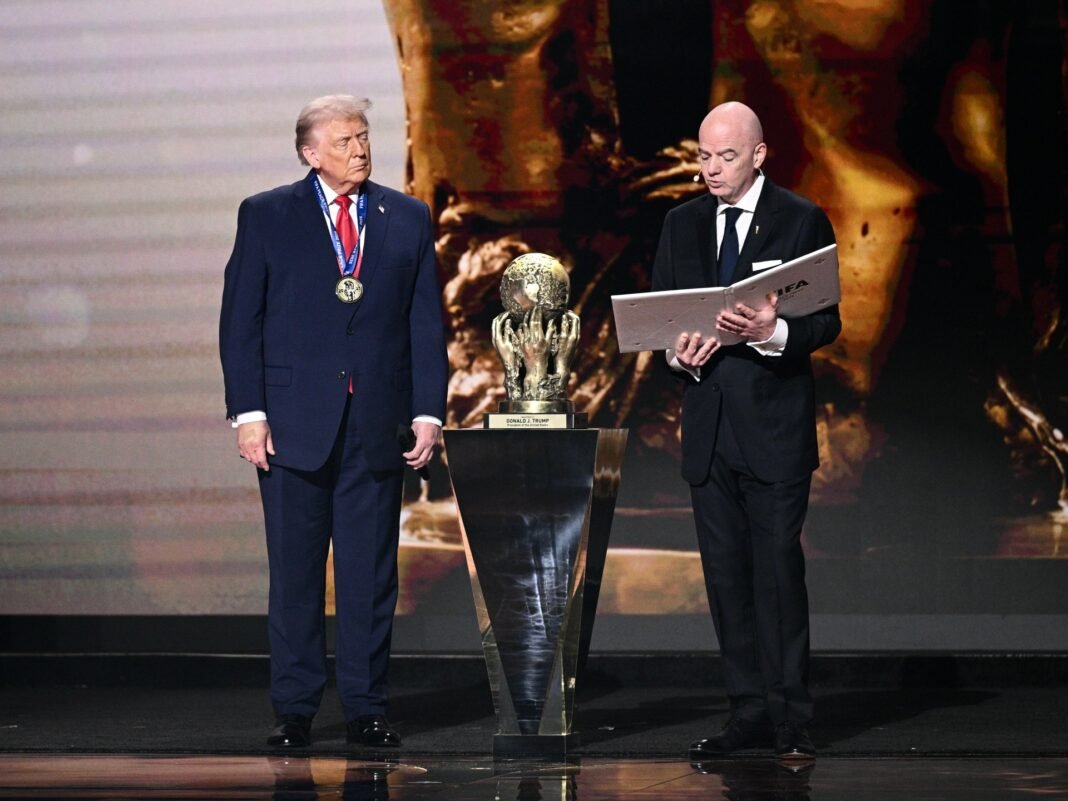
During the recent draw event for the 2026 men’s football World Cup,FIFA unveiled its first-ever peace prize,awarding it to United States President Donald Trump. The ceremony was held at Washington’s Kennedy Center and attracted a high-profile audience.
A Divisive Award Amid Global football Festivities
President Trump accepted the honor, calling it “one of the greatest recognitions” he has ever received. Although he has previously minimized the significance of awards, he highlighted that his main focus was on saving lives rather than accumulating honors. Trump asserted that his administration successfully ended several conflicts-a claim met with widespread international doubt and criticism.
The trophy presented-a gold-plated globe supported by sculpted hands-was notably more elaborate than customary peace accolades such as the nobel Prize medal. Alongside this grand trophy, Trump also received a commemorative medal during an event where FIFA president Gianni Infantino commended him for promoting global harmony and unity.
Hosts Collaborate in Anticipation of Historic Tournament
The 2026 World Cup will be jointly hosted by Canada, Mexico, and the United States from June 11 to July 19. This edition is set to break records with an unprecedented total of 104 matches spread across sixteen cities. The opening game will take place at Mexico City’s legendary Azteca Stadium featuring Mexico against South Africa.
Reflecting President Trump’s penchant for spectacle, Infantino staged a lively game-show style team draw involving leaders from all three host countries standing behind vibrant podiums. The segment concluded with a group selfie symbolizing cooperation ahead of next year’s global sporting event.
From Football to Political Recognition?
While FIFA traditionally focuses on advancing football advancement and competition worldwide, launching an annual peace prize marks a significant shift toward political acknowledgment.Infantino has long promoted football as a bridge across cultural divides; however critics question whether honoring political figures aligns with FIFA’s essential mission centered on sport.
Controversy Surrounding Selection process and Criteria
the award was announced just months before its presentation as intended to recognize individuals who have made extraordinary contributions toward global peacebuilding efforts. A promotional video emphasized Trump’s involvement in ceasefire attempts in Gaza and diplomatic efforts related to Russia’s conflict in Ukraine-claims that remain highly disputed among experts and human rights organizations alike.
“Awarding FIFA’s so-called peace prize amid ongoing violent detentions of immigrants and national guard deployments within US cities undermines its credibility,” stated Minky Worden from Human Rights Watch (HRW), who also criticized FIFA for halting anti-racism campaigns during this period.
HRW has publicly called for transparency regarding nominee identities, selection committees involved, and evaluation standards used but reports no response from FIFA thus far.
Tensions Between Recipient Actions and Peace Ideals
- The award coincides with President Trump’s contentious policies including military escalations near Venezuela;
- A series of deadly airstrikes targeting suspected drug trafficking vessels;
- A strict immigration crackdown impacting asylum seekers from multiple countries connected to or participating in World Cup events;
- An inflammatory comment disparaging Somali immigrants sparked widespread backlash both domestically and internationally shortly before the ceremony;
- this contrast raises serious questions about consistency between recipients’ actions versus values promoted through such honors.
Navigating sport Diplomacy Amid Complex Global Realities
The upcoming tournament offers not only world-class athletic competition but also serves as a platform for cultural exchange among diverse nations facing heightened geopolitical tensions-including ongoing conflicts affecting millions directly or indirectly through migration or diaspora communities attending matches worldwide.
This new initiative places considerable pressure on governing bodies like FIFA to uphold their integrity while managing delicate intersections between sports diplomacy efforts such as their newly established peace prize. Public opinion remains deeply divided due to current events surrounding recipients’ broader political legacies impacting perceptions globally.