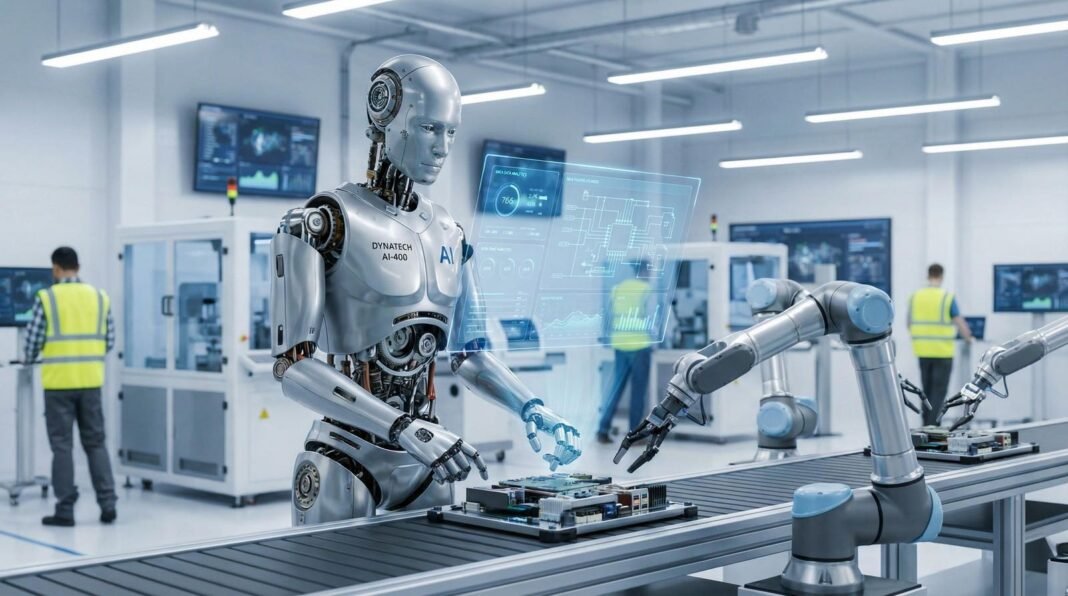
Exploring the Basic Framework of AI Systems
The term “the backbone of AI” often surfaces in discussions, but what does it truly encompass? At its core, it represents the essential architecture that empowers artificial intelligence systems to operate efficiently and deliver meaningful results.
Core Neural Architectures: The Engine Behind AI Perception
In modern artificial intelligence,the “backbone” typically refers to a principal neural network structure tasked with processing raw inputs and extracting critical features.This is especially evident in fields like computer vision, where pre-trained Convolutional Neural Networks (CNNs) serve as foundational feature extractors for complex tasks such as facial recognition, scene understanding, or automated image captioning.
This central network functions much like an AI’s sensory system-enabling machines to interpret and analyze their environment. While CNNs are widely regarded as pivotal for enabling machine vision capabilities, some experts caution that labeling them as the sole backbone oversimplifies the multifaceted nature of AI architectures today.
Infrastructure Beyond Algorithms: The Pillars Supporting AI Growth
The success of artificial intelligence extends beyond complex algorithms; it relies heavily on powerful infrastructure. Massive data centers worldwide provide indispensable computational resources and storage capacity necessary for training expansive models and deploying them at scale.
By 2024,over 95% of enterprises globally have incorporated some form of AI into their workflows. Furthermore, more than half anticipate full-scale integration within two years-a clear indicator of how deeply embedded this technology has become across industries ranging from finance to manufacturing. however,expanding these infrastructures introduces notable challenges related to energy consumption and resource allocation.
Tackling Energy Consumption in Expanding Data Centers
The rapid proliferation of AI applications has led to a steep increase in electricity demand by computing facilities worldwide. Currently, data centers account for roughly 4.4% of total U.S. electricity usage-a figure projected to climb sharply if current growth trajectories persist through this decade.
If left unaddressed, data centers could consume up to 20% of national electricity demand in countries like the United States by 2030. This surge places considerable strain on power grids while escalating operational costs and carbon emissions unless enduring energy solutions are adopted promptly.
A Case Study: Project Helios in Nevada
An illustrative example is Project Helios near Reno-a $60 billion initiative focused on constructing next-generation computing hubs powered primarily by solar farms combined with advanced battery storage systems designed explicitly for sustainability goals within high-performance computing environments.
Pioneering Green Computing Initiatives at Stanford University
Anticipating these challenges early on-in fact since the early 2000s-researchers at Stanford have been innovating adaptable data center designs capable of evolving alongside emerging technologies such as tensor processing units (TPUs). One notable effort involved retrofitting decommissioned industrial sites adjacent to geothermal plants; integrating renewable energy sources with cutting-edge hardware offers promising avenues toward environmentally responsible AI operations.
The Mathematical Foundations Driving Supercomputing Advances
Beneath decades-long progress visible externally lies a surprisingly stable mathematical core centered around matrix multiplication techniques refined continuously since their inception nearly half a century ago. These operations underpin both traditional high-performance computing workloads and contemporary artificial intelligence processes alike.
Mathematics: The Universal Language Fueling Innovation
“Investors aiming at breakthrough technologies should prioritize advancements in mathematical methods over linguistic complexity,” experts suggest; after all, math serves as a universal language , comprehended intrinsically by AIs far better than any human dialect including Mandarin or spanish.”
Navigating Complex Project Management Amid Accelerated Timelines
The push toward rapid deployment has compelled teams managing large-scale projects like Reno’s facility construction into inventive problem-solving regarding supply chain bottlenecks:
- Main Power Conversion Units (MPCUs), vital components transforming medium voltage power into usable low voltage streams required lead times exceeding two years from multiple vendors;
- This delay conflicted directly with aggressive schedules targeting completion within eighteen months;
- An innovative solution emerged through developing internal manufacturing capabilities that cut production time drastically down to just six months;
This case highlights how agility paired with technical expertise can surmount logistical obstacles inherent in building tomorrow’s digital infrastructure today.
Sustainable Growth: Charting responsible Paths Forward for AI Infrastructure
As artificial intelligence continues its swift expansion across sectors-from enhancing medical diagnostics improving patient care outcomes daily-to autonomous drones navigating complex airspaces-the foundational “backbone” supporting these innovations must evolve responsibly alongside technological advances.
Sustainable infrastructure growth combined with ongoing research into efficient algorithms will be decisive factors determining whether society can fully leverage AI’s potential without overwhelming environmental resources or economic stability.
This delicate balance between innovation momentum and practical implementation not only powers today’s bright machines but also shapes humanity’s ability to benefit from them sustainably well into the future.