Teh Physics Behind Curving a Soccer Ball
How Soccer balls Move: The Basics of Flight
during World Cup 2026, spectators will marvel at shots were the soccer ball bends dramatically in midair, eluding defenders and goalkeepers alike. This captivating motion is not magic but a result of complex fluid dynamics-the study of how objects move through air. To fully appreciate this, we first need to understand the essential forces acting on a kicked ball.
imagining Soccer Without Air Resistance or Gravity
Envision kicking a soccer ball in an environment devoid of atmosphere and gravity, such as outer space. When your foot strikes the ball, it compresses momentarily before launching at speeds typical for professionals-around 80 miles per hour (129 km/h). In this frictionless void, no external forces act on the ball after contact ends; thus, by Newton’s first law, it would continue moving straight indefinitely at constant velocity.
This thought experiment highlights pure inertia but doesn’t reflect real-world conditions where gravity and air resistance play crucial roles.
The Influence of Gravity: Parabolic Trajectories Explained
Back on Earth but still ignoring air resistance for a moment, gravity exerts a constant downward pull on the soccer ball equal to its mass multiplied by gravitational acceleration (Fg=m×g, with g=9.8 m/s²). Although heavier balls experience stronger gravitational force numerically, all objects fall at the same rate because mass cancels out during acceleration calculations-a principle famously demonstrated by dropping different weights simultaneously from height.
Kicking upward causes vertical speed to slow until zero before reversing direction as the ball descends.Horizontally though, without drag slowing it down, forward velocity remains steady after launch. this results in an elegant parabolic arc known as ballistic motion-the same path followed by projectiles like basketballs or cannonballs when only gravity acts upon them.
The Effect of Air Resistance: Drag Slows and Shapes Flight Paths
the presence of Earth’s atmosphere drastically alters this idealized flight pattern since countless air molecules collide with the moving soccer ball continuously.These collisions create drag-a force opposing motion-that intensifies with both object size and speed.For instance, doubling kick velocity roughly quadruples drag due to aerodynamic principles governing turbulent airflow around spheres.
This explains why casual passes feel effortless while powerful shots lose momentum faster than expected; without atmospheric drag in reality goalkeepers could theoretically send balls flying across entire stadiums!
A Contemporary Outlook:
- A recent analysis reveals that average shot speeds during international tournaments have climbed from approximately 60 mph (97 km/h) several decades ago to nearly 75 mph (121 km/h) today-making aerodynamic effects increasingly critical for player performance and equipment design.
- Refined modern soccer balls now incorporate textured surfaces engineered specifically to optimize airflow patterns around them and minimize erratic drag fluctuations throughout flight trajectories.
The Role of Spin: how Rotation Alters Ball Movement
A spinning soccer ball interacts uniquely with surrounding air compared to one traveling without rotation. As it spins about an axis perpendicular or parallel to its direction of travel,friction between surface textures drags adjacent air molecules along specific paths over its surface-creating pressure differences that push the sphere sideways or upwards depending on spin orientation.
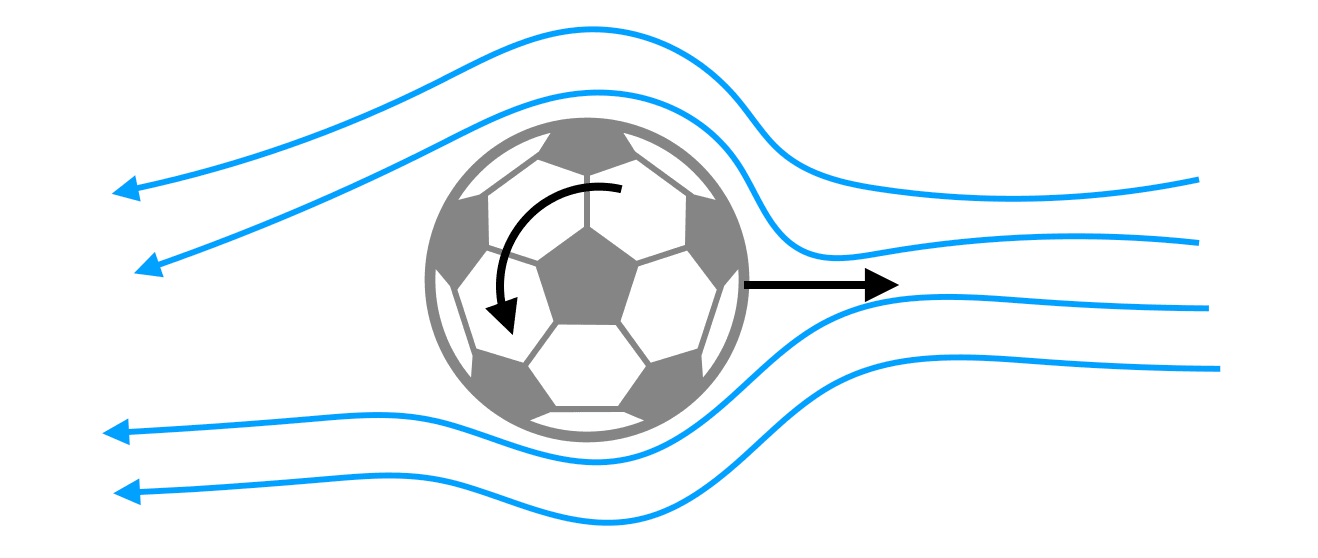
This lateral force is known as the Magnus effect-a phenomenon influenced by factors such as spin rate, velocity magnitude, panel texture roughness-and produces curved trajectories familiar from free kicks executed by elite players worldwide today.
An Everyday Analogy:
- If you’ve ever observed table tennis players deliver spinning serves causing unpredictable bounces or baseball pitchers throwing curveballs sharply breaking mid-flight-that same physical principle applies here but scaled up for larger spheres moving through denser media like Earth’s atmosphere.
Tactics Behind Bending Shots Like Professionals:
- Kicking slightly off-center imparts spin around a vertical axis producing lateral curves (“banana shots”) frequently enough used for curling free kicks around defensive walls toward goal corners;
- Kicks involving horizontal-axis backspin generate lift counteracting gravity somewhat so balls travel farther before descending;
- Tweaking these spins allows skilled strikers competing at World Cup 2026-host cities across North America-to “bend” shots unpredictably past keepers’ fingertips every matchday!
“Mastering physics-not just power-is key to bending footballs effectively.”
A Visual Comparison: Forces Shaping Kicked Balls’ Paths
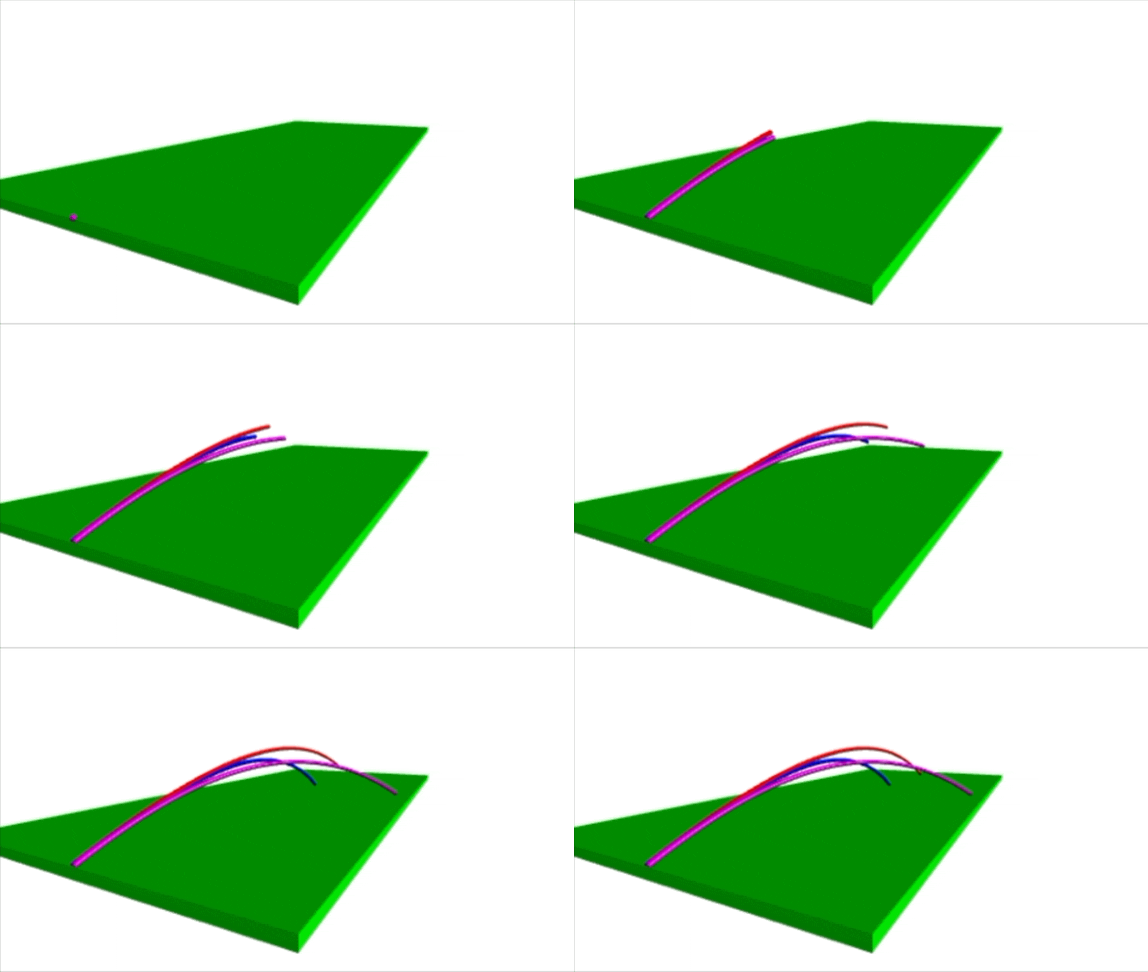
This simulation illustrates three identical kicks launched under equal angles:
- The red trajectory represents pure ballistic flight influenced solely by gravity;
- The blue path adds realistic atmospheric drag slowing horizontal progress;
- The magenta curve combines both drag plus spin-induced Magnus forces causing lateral deviation-the classic “bend” seen during spectacular goals worldwide today!
Merging science With Skill For Football Excellence
Aspiring players aiming for curving shots like those witnessed at World Cup 2026,benefit immensely from understanding these underlying physical laws beyond raw talent alone.
By precisely controlling impact points relative to center-of-mass zones they manipulate rotational axes generating desired Magnus effects.
Coaches also consider environmental factors such as wind patterns influencing projectile stability.
Ultimately science enriches sport enabling breathtaking displays where human skill harmonizes seamlessly with natural laws within every game-winning strike!