



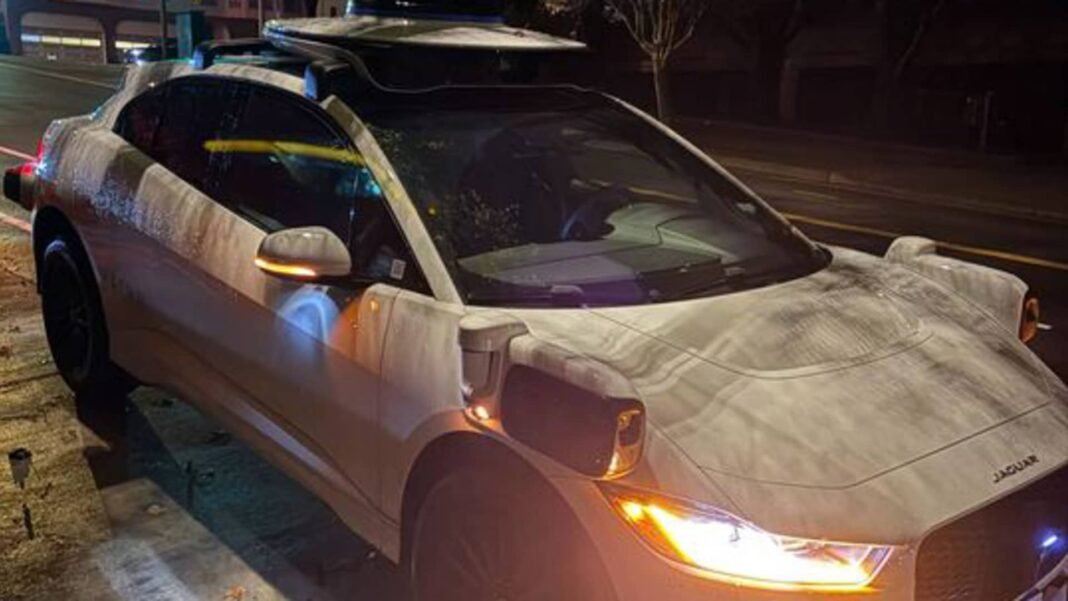
San Francisco Blackout Forces Temporary Halt to Waymo’s Autonomous Ride-Hailing
Widespread Power Failure Disrupts Driverless Services
Waymo, Alphabet’s autonomous vehicle division, paused its driverless ride-hailing operations throughout the San Francisco Bay Area after a meaningful power outage struck the city on Saturday afternoon.
The blackout began at approximately 1:09 p.m., affecting nearly 130,000 customers of Pacific Gas and Electric (PG&E). By Sunday morning, around 21,000 residents in neighborhoods such as Presidio, Richmond District, Golden Gate Park surroundings, and parts of downtown San Francisco were still without electricity.
Autonomous Vehicles Immobilized Amid Citywide Outage
During peak blackout hours, numerous Waymo vehicles were observed stranded at intersections across the city. Local resident Jamie Chen reported seeing four driverless cars halted near Mission street around 8:30 p.m., capturing images of one stopped between valencia and Guerrero streets.
“They just came to a stop right in the middle of traffic,” Chen recounted.
Root Cause and Official Response
The outage was traced back to a fire damaging a key PG&E substation. The utility company has not yet announced when full power restoration will be completed.
San Francisco’s mayor deployed emergency personnel including police officers and firefighters throughout affected zones while public transit services gradually resumed. He also confirmed that “Waymo suspended its autonomous ride-hailing during this disruption.”
Tesla’s Robotaxi Fleet Unaffected but Limited by Regulations
Tesla CEO Elon Musk stated that Tesla’s robotaxi operations remained functional despite the blackout; however, Tesla does not currently provide fully driverless rideshare services within San Francisco.
Tesla’s local ride-hailing relies on vehicles equipped with their Full Self-Driving (FSD) technology operating under human supervision-drivers remain behind the wheel ready to take control if necessary. california DMV regulations mandate human safety operators for all autonomous testing or commercial use within state boundaries.
A Snapshot of Autonomous Ride-Hailing Competitors
- Waymo: Pioneers fully driverless robotaxi deployments in select U.S. cities without onboard safety drivers during operation.
- Tesla: Developing robotaxi ambitions but currently offers only supervised FSD rideshares requiring human monitoring at all times.
- Baidu Apollo Go:A leading chinese player expanding international autonomous taxi services alongside Waymo’s growth trajectory.
Navigating Challenges in Urban Integration of Driverless Cars
this incident underscores difficulties cities encounter when incorporating highly automated vehicles into complex urban environments vulnerable to infrastructure failures like blackouts or extreme weather events. While self-driving taxis hold promise for reducing congestion and emissions-according to recent studies showing potential CO₂ reductions up to 30%-the technology remains susceptible under unpredictable real-world conditions beyond controlled test settings.
“Current system designs overlook critical scenarios such as prolonged power outages,” explained transportation analyst Dr. Maya Patel from Stanford University.
She stressed that hybrid approaches combining AI with human oversight are essential until AV technologies mature further.
patel advocates for regulatory frameworks ensuring fully automated vehicles operate only where robust contingency plans exist.”
User Perspectives Reveal lingering Wariness Toward Autonomous Vehicles
- A recent survey by AAA found nearly 65% of American drivers express concerns about riding in self-driving cars due to safety fears and unfamiliarity with emerging technologies.
- This skepticism highlights why gradual deployment paired with transparent communication is vital for gaining consumer trust and regulatory approval alike.
The Path Forward: Harmonizing Innovation With Real-World Constraints
No reports have emerged regarding accidents involving Waymo vehicles during Saturday’s outage nor any timeline from either Waymo or regulatory agencies like NHTSA concerning service resumption.
The event serves as an crucial reminder that despite rapid progress toward autonomy-such as over two million miles driven autonomously by major fleets-the complexities inherent in real-world urban settings require cautious integration strategies prioritizing public safety above all else.


