Major Takeaways from the Recent U.S.-China Summit on Trade and Technology
China’s Expanded commitment to U.S. Agricultural Imports
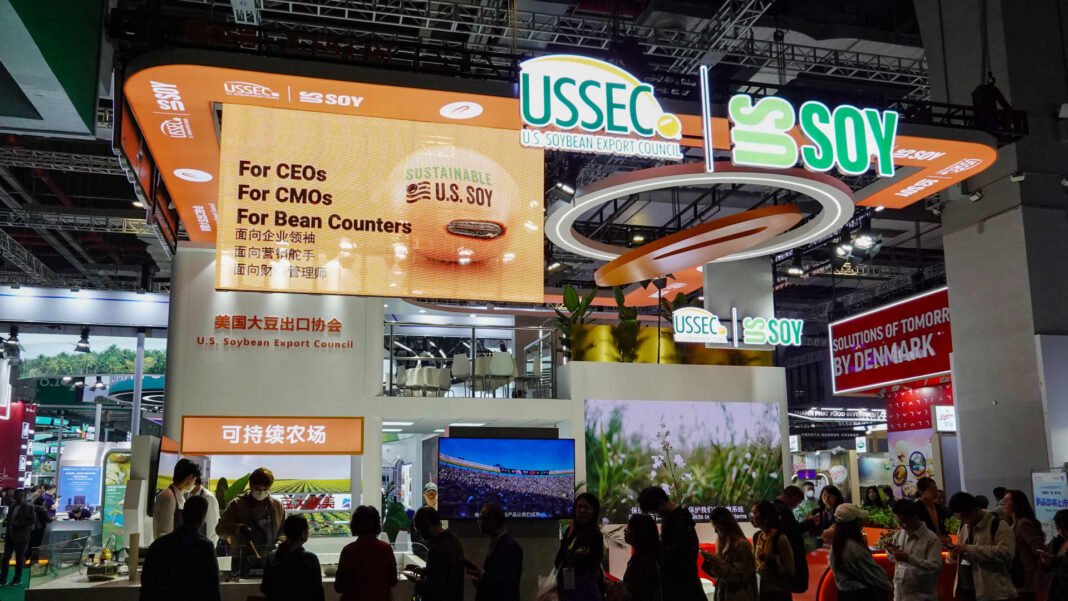
at a high-profile summit held in Beijing, China reaffirmed its intention to significantly increase purchases of American agricultural commodities, including soybeans. The agreement outlines that China will procure at least $17 billion worth of U.S. farm products annually through 2028, building on prior commitments made in late 2025.
This follows an earlier pact where China agreed to import no less than 25 million metric tons of U.S. soybeans each year for three years after talks conducted in South Korea last autumn. Although the latest proclamation did not specify exact soybean volumes, it reinforced China’s goal to deepen agricultural trade ties with the United States.
Reopening Chinese Markets for American Beef and Poultry
The dialogue also resulted in China’s decision to lift restrictions on imports of American beef and poultry products, signaling a positive shift after previous trade barriers had limited access.While official statements from China did not detail specific quantities or mention soybeans explicitly this time, both countries committed to enhancing collaboration within their agricultural sectors.
Tackling Rare Earth Mineral Supply Chain Concerns
A pivotal subject during discussions was the supply challenges surrounding rare earth elements-critical minerals essential for electronics manufacturing, automotive industries, and defense applications. The United States expressed concerns about shortages involving key materials such as yttrium, scandium, neodymium, and indium.
Given that China controls over 60% of global rare earth production as of 2024 and dominates related supply chains worldwide, it pledged to ease access constraints impacting American industries reliant on these resources. Even though official Chinese communications avoided direct mention of rare earths publicly, this issue was acknowledged as part of bilateral negotiations.
The Growing Strategic Role of Rare Earth Elements
The importance of rare earth minerals has surged amid accelerating demand for electric vehicles (EVs) and cutting-edge consumer electronics-markets projected by industry analysts to expand at an annual rate exceeding 20% through 2030. For instance, neodymium is indispensable for manufacturing powerful magnets used in EV motors , while indium plays a crucial role in touchscreen technology found on smartphones and tablets.
Establishment of Bilateral Trade Councils for Sustained Engagement
The two governments agreed upon creating dedicated trade boards focused on investment issues designed to maintain ongoing dialogue channels between economic stakeholders from both nations.
this institutional framework aims at streamlining future negotiations concerning tariffs alongside regulatory standards affecting cross-border commerce moving forward.
Divergent Priorities: Tariff Reductions Versus Market Access Expansion
While Beijing indicated intentions toward reducing tariffs as part of long-term plans facilitating smoother trade flows, statements from Washington notably omitted any explicit reference to tariff adjustments. Rather,the emphasis centered more broadly on expanding market access opportunities across diverse sectors including agriculture and aerospace manufacturing.
Aviation Sector Agreements Amid Intensifying Competition
A meaningful commercial highlight involved China’s reported plan to purchase approximately 200 Boeing aircraft-a ample boost reflecting Asia’s rapidly growing aviation market demand.This arrangement also includes assurances from the United States regarding consistent supplies of engines and spare parts necessary for fleet upkeep.
This advancement occurs even as china continues advancing its own passenger jet programs which still depend heavily on imported components due primarily to domestic technological limitations-a dynamic illustrating both cooperation potential alongside competitive tensions between these two aerospace powerhouses.
An Incremental Path Forward Despite Mixed Reactions
“The summit achieved modest progress but stopped short of groundbreaking breakthroughs,” commented geopolitical analysts following the event.
“Relations are expected only gradual improvement under current leadership,” one expert observed regarding prospects beyond President Trump’s tenure.
“Beijing appears strategically positioned-to maintain cordial ties temporarily while preparing responses tailored toward future administrations likely adopting tougher policies.”
Navigating Complex Bilateral Relations: Key Considerations Ahead
- Sustaining Dialogue: Continued engagement via newly formed councils aims at preventing sudden escalations by addressing disputes early;
- Diversifying Supply Chains: Both nations face mounting internal & external pressures encouraging reduction in dependencies especially concerning critical materials;
- Evolving Geopolitical Landscape: Upcoming political transitions may reshape priorities influencing long-term agreements reached today;
Taken together these developments highlight how deeply intertwined economic interests remain despite underlying strategic competition shaping one of today’s moast consequential international relationships-the ongoing interplay between cooperation and rivalry defining modern sino-American interactions across agriculture,aerospace technology,& rare earth mineral markets alike .