Spirit Airlines’ Final Flight: The End of budget Air Travel’s Bold Experiment
Quiet Terminals Mark the Close of Spirit Airlines
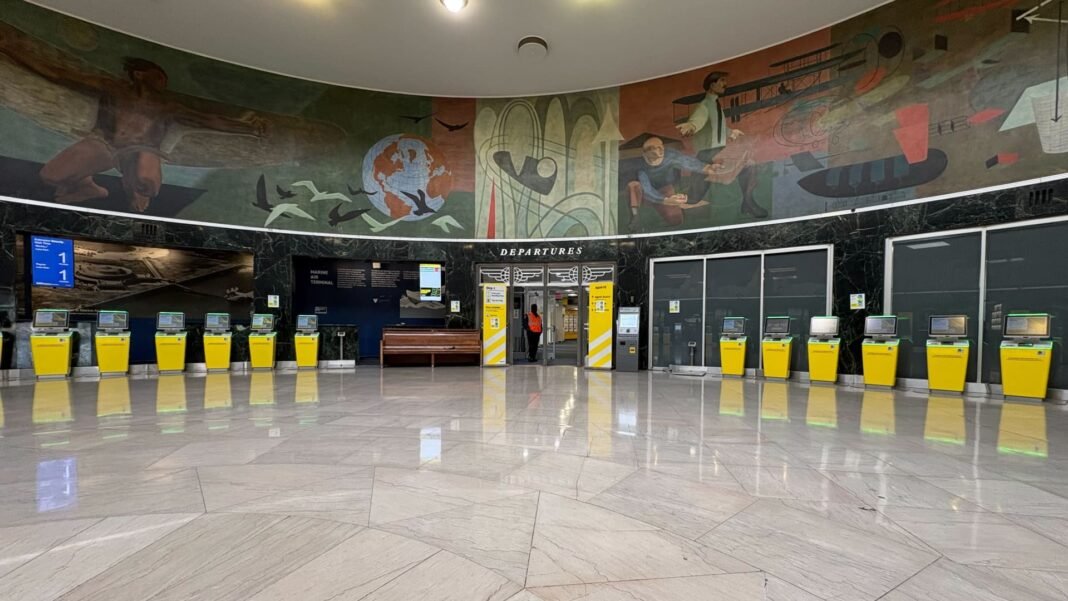
In the early hours of a recent Saturday, Spirit airlines abruptly ended all flight operations, leaving many major airports unusually still. At LaGuardia Airport in New York, where luminous yellow kiosks once buzzed with activity, digital displays now showed messages announcing the airline’s closure. The Marine Air Terminal-an iconic Art Deco landmark that served as Spirit’s New York hub-stood nearly empty as shops shuttered early and airport personnel were sent home.
A similar scene unfolded at Luis Muñoz Marín International Airport in Puerto Rico.Self-service check-in stations displayed alerts about Spirit’s sudden shutdown after unsuccessful attempts to secure a $500 million government bailout. All flights were canceled instantly and customer support lines went silent.
The human Toll: Passengers and Crew Left Stranded
Jeremiah Burton, a 45-year-old HVAC technician from Baltimore, was preparing for his first-ever trip on Spirit when news broke of the airline’s collapse. He had booked an affordable flight to New Orleans to visit his daughter and newborn twins but found his return journey canceled without warning along with thousands of other passengers’ bookings.
Pilots faced unexpected disruptions too. Jon Jackson planned to mark his retirement with one last flight on Spirit but instead boarded a Southwest Airlines plane home from Fort Lauderdale.In an extraordinary show of solidarity during turbulent times for aviation workers, Southwest crew members greeted him with applause and even performed a water cannon salute upon landing-a rare tribute reflecting deep camaraderie within the industry.
The Gradual Decline Behind the Sudden Shutdown
spirit Airlines’ demise was not instantaneous; it resulted from years of mounting difficulties. During its peak in the 2010s, rapid expansion fueled by budget-conscious travelers brought profitability through packed flights and ultra-low fares. However, after reporting profits last in 2019, it struggled against dominant competitors like Delta Air Lines, United Airlines, and American Airlines who increasingly encroached on its market share.
The ultra-low-cost carrier battled rising fuel expenses driven by geopolitical instability affecting global oil prices while also facing technical setbacks such as engine malfunctions grounding key aircraft during critical periods. Regulatory barriers further intricate matters when JetBlue Airways’ proposed acquisition was blocked by antitrust authorities-a deal that might have saved Spirit but ultimately fell through.
Having filed for bankruptcy protection twice within twelve months-the second filing occurring just months before closure-Spirit failed to restructure effectively or curb escalating costs amid volatile jet fuel markets influenced by ongoing conflicts near Iran.
The Workforce Impact: Thousands Left Without Jobs
The airline’s shutdown directly affected approximately 17,000 employees including pilots, cabin crew members, mechanics, dispatchers, ground staff-and their families nationwide who depend on these incomes for livelihood stability. labor unions representing these workers urged federal agencies to ensure timely payment of owed wages alongside enhanced unemployment benefits during this difficult transition period.
A Polarizing Presence in U.S Aviation
although holding only about 4% market share within U.S air travel according to recent Cirium data from early 2026,Spirit Airlines wielded significant influence over public opinion due largely to its no-frills approach combined with frequent customer service controversies that made it both notorious and unforgettable among American flyers.
“Spirit revolutionized ultra-low-cost travel,” noted aviation analysts familiar with legacy carriers’ strategies; “yet it earned nicknames like ‘the airline America loved to hate’ because of cramped seating layouts and inconsistent reliability.”
This reputation permeated popular culture as well: late-night comedians frequently enough lampooned Spirit’s barebones service model-for example jokingly comparing their planes humorously stripped down like “budget buses” soaring through skies-highlighting how deeply embedded they became symbols in conversations about balancing affordability against comfort compromises in air travel today.
Loyalty Amid Limitations: Budget Flyers Speak Out
Kara Snyder exemplifies travelers loyal to budget airlines such as Frontier Airlines (a competitor) or Spirit , especially for short-haul trips where amenities are less vital than cost savings.“For flights under two hours,” she shared,”I’m willing to accept tighter legroom if it means paying significantly less.” Yet she admitted switching back exclusively to major carriers like Delta when flying internationally due mainly to comfort preferences over longer journeys.”
An Industry responds: Support Efforts Following Closure
- Larger airlines mobilize: United quickly accommodated around 14,000 former Spirit customers shortly after shutdown; southwest took onboard more than 20,000 stranded passengers;
- JetBlue expands network:Additions included new routes out of Fort Lauderdale connecting cities such as Cali (Colombia) and Nashville (Tennessee), aiming partly at capturing displaced travelers;
“The final hours felt bittersweet,” recalled Wes Egan,a veteran dispatcher coordinating last-minute flights until official cessation notices arrived just before midnight Friday.”We exchanged informal farewells – ‘GODSPEED MY FRIEND’ – fully aware this chapter closes forever.”
Bigger Picture: Lessons From an Ultra-Low-Cost Carrier’s Fall
This collapse highlights broader shifts reshaping commercial aviation today: legacy carriers increasingly rely on premium cabins for revenue generation leaving little financial space for ultra-low-cost models struggling amid fluctuating fuel prices plus complex regulatory environments worldwide.
It also underscores evolving consumer preferences favoring hybrid experiences blending affordability with improved service quality following post-pandemic recovery trends shaping mid-2020s travel landscapes.
As airports adjust schedules following Spirit airlines’s exit,the gap left behind will challenge competitors logistically & strategically navigating an ever-more competitive marketplace driven by innovation yet constrained by economic realities beyond any single company’s control.