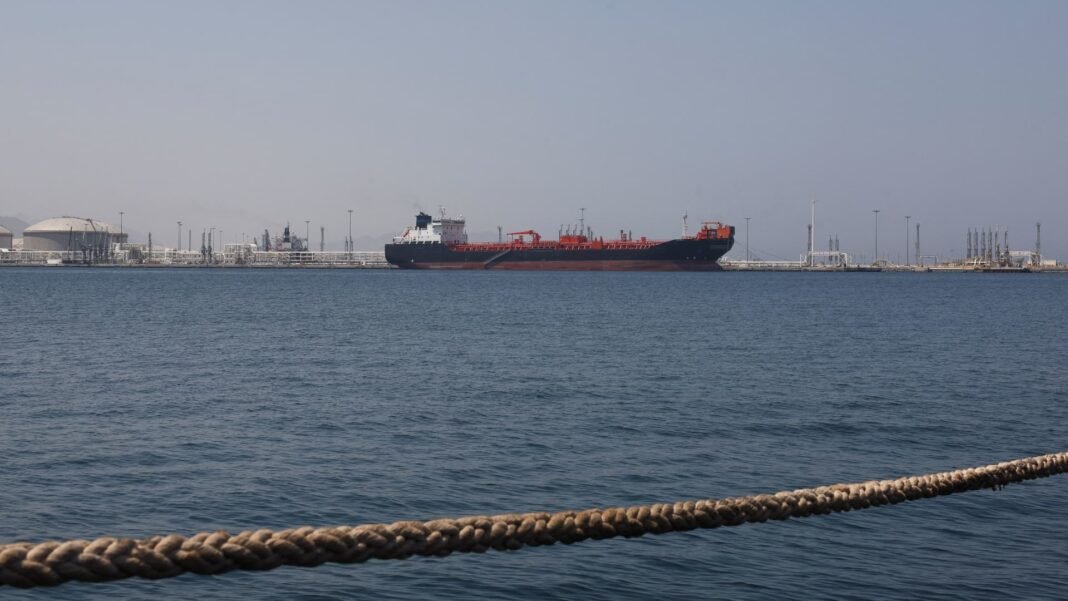
Rising Oil Prices Amid Heightened Middle East Tensions and Strait of Hormuz Uncertainty
Market Volatility Driven by U.S.-Iran Hostilities
The global oil market witnessed important price swings as geopolitical tensions in the middle East escalated. Renewed clashes between Iran and the United States have injected fresh uncertainty, causing traders to react swiftly to potential supply disruptions.
Brent crude futures for July delivery surged by 0.91%,reaching $102.19 per barrel, while U.S. West Texas intermediate (WTI) crude for June settlement rose 1.23% to close at $96.25 a barrel, reflecting growing concerns over energy security.
The strait of Hormuz: A Vital Energy Artery Under Threat
The Strait of Hormuz remains one of the world’s most crucial maritime passages, channeling nearly 20% of daily global oil shipments-over 21 million barrels according to recent 2024 shipping data. Its strategic significance means any disruption could ripple through international energy markets with severe consequences.
A U.S.-led naval presence around Iranian ports in the Gulf of Oman aims to safeguard free navigation through this narrow corridor; however, rising tensions risk destabilizing this fragile equilibrium and threatening uninterrupted flow.
Global Energy Security at a Crossroads
The stakes extend beyond regional conflict as uninterrupted access through Hormuz is essential for maintaining stable oil supplies worldwide amid tightening markets influenced by post-pandemic demand surges and evolving renewable energy transitions.
“Guaranteeing free passage without interference or tolls from Iranian Revolutionary Guard forces is critical so that tankers can transit safely,” emphasized Marc Sievers, former U.S. Ambassador to oman.
Diplomatic Developments Clouded by Mixed Signals
Reports suggest tentative progress toward de-escalation between Washington and Tehran; however, recent statements from former President Donald Trump have cast doubt on these prospects. Trump warned that failure by Iran to accept peace terms would led to intensified military operations far exceeding previous levels.
“If Iran consents fully-which may be an optimistic assumption-the military campaign will cease,” Trump declared via social media regarding Operation Epic Fury.
If compliance is achieved, he indicated plans to reopen the Strait “to all parties including Iran,” but refusal would trigger escalated bombing campaigns targeting Iranian infrastructure.
Iran’s Measured Response Amid Negotiation Talks
An official spokesperson from Iran’s Foreign ministry conveyed cautious optimism while underscoring adherence to international legal frameworks during ongoing discussions facilitated through Pakistani intermediaries:
“True negotiations require sincere intent toward resolution rather than coercion or deception,” stated Esmaeil Baqaei, referencing principles established in a 2011 International Court of Justice ruling.
Broad Economic Consequences From Prolonged Conflict
- Sustained elevated oil prices: Continued hostilities could keep crude prices above $100 per barrel longer than expected;
- Diplomatic fragility: Peace talks remain delicate yet vital for regional stability;
- Inflationary pressures: Higher fuel costs threaten global economies by increasing transportation and manufacturing expenses;
Citi’s equity strategist highlighted how extended conflict duration will heavily influence economic growth forecasts across sectors while shaping Federal Reserve policy decisions on interest rates moving forward.
A Contemporary Parallel: Lessons From Global trade Disruptions
This scenario mirrors past incidents such as the March 2021 blockage of egypt’s Suez Canal caused by the Ever Given container ship-a critical trade route responsible for roughly 12% of worldwide commerce-which resulted in billions lost daily due to halted shipments and supply chain interruptions.
Similarly,any prolonged closure or restriction at Hormuz could severely disrupt global energy flows amid already strained markets adjusting post-pandemic consumption patterns alongside shifting investments into renewables.
Navigating Future Risks Amid Geopolitical Uncertainty
- Sustained vigilance: Market participants must closely monitor developments affecting supply routes;
- Evolving diplomacy: Fragile negotiations hold potential but require genuine commitment;
- economic balancing act: Policymakers face challenges managing inflation without stifling growth amid volatile fuel costs;
The coming weeks are set to be decisive as governments and industries weigh strategic interests against economic stability concerns on a global scale amidst ongoing Middle East tensions impacting key energy corridors like the Strait of Hormuz.