Artistic Defiance and Political Resonance in Modern Russia
The current socio-political climate in Russia increasingly echoes the final decades of the Soviet era, revealing persistent parallels between past and contemporary realities. From military engagements-once Afghanistan, now Ukraine-to economic instability, intensified censorship, digital isolation, and a growing wave of dissent despite severe crackdowns, these recurring themes are unmistakable. For the frist time in many years, open criticism of Kremlin policies is gaining traction across Russian social media platforms.
Revolutionary Voices: Vitaly Komar and Marat Guelman’s Enduring Impact
Vitaly Komar and Marat Guelman stand as emblematic figures whose artistic endeavors continue to challenge authoritarianism. Their solo exhibitions currently grace Manhattan’s 17th and 19th streets respectively,spotlighting their influential roles within russia’s cultural resistance.
Marat Guelman began his journey as a curator deeply involved with Moscow’s dissident Sots-Art movement-a bold collective that orchestrated the infamous “Bulldozer Show” in 1974. This unauthorized outdoor exhibition was violently dismantled by Soviet authorities using bulldozers during one of the Cold War’s most tense moments; footage from this event circulated globally as a symbol of artistic rebellion.
Meanwhile, Vitaly Komar initially partnered with Alexander Melamid before relocating to the united States in 1978. Their provocative debut at New York’s Ronald Feldman Gallery cemented their reputation for politically charged art. Even though their collaboration ended nearly twenty years ago, Komar persists solo with works like “Three Day Weekend: Tomorrow Is Not Guaranteed”, which reflects contemporary anxieties about an unpredictable future.
The Evolution from Curator to Exiled Artist: Marat Guelman’s Story
Guelman’s emergence during post-Soviet Moscow’s chaotic 1990s saw him championing artistic freedom amid political upheaval. Between 2009 and 2013 he led a contemporary art museum near Perm that embraced politically sensitive exhibitions but soon faced state censorship after showcasing critiques related to Russia’s Winter Olympics preparations.
The annexation of Crimea in 2014 marked a turning point; escalating harassment forced Guelman to relocate to Berlin where he continues his work under police protection due to threats from Russian security services who branded him an extremist terrorist by 2024.
Mushroom Clouds reimagined: Art Confronting Nuclear menace
A striking feature of Guelman’s latest show is an AI-generated series depicting mushroom clouds rendered thru diverse styles-from classical old Masters techniques reminiscent of Caravaggio to abstract expressionism echoing Helen Frankenthaler-each image hauntingly lovely yet unsettling. This collection directly responds to President Putin’s nuclear threats amid ongoing conflict in Ukraine:
“Putin intended his nuclear warnings as instruments of fear meant to silence voices like mine,” says Guelman. “My response is defiance expressed through aesthetic power.”
komar’s Philosophical Critique Through Symbolic Imagery
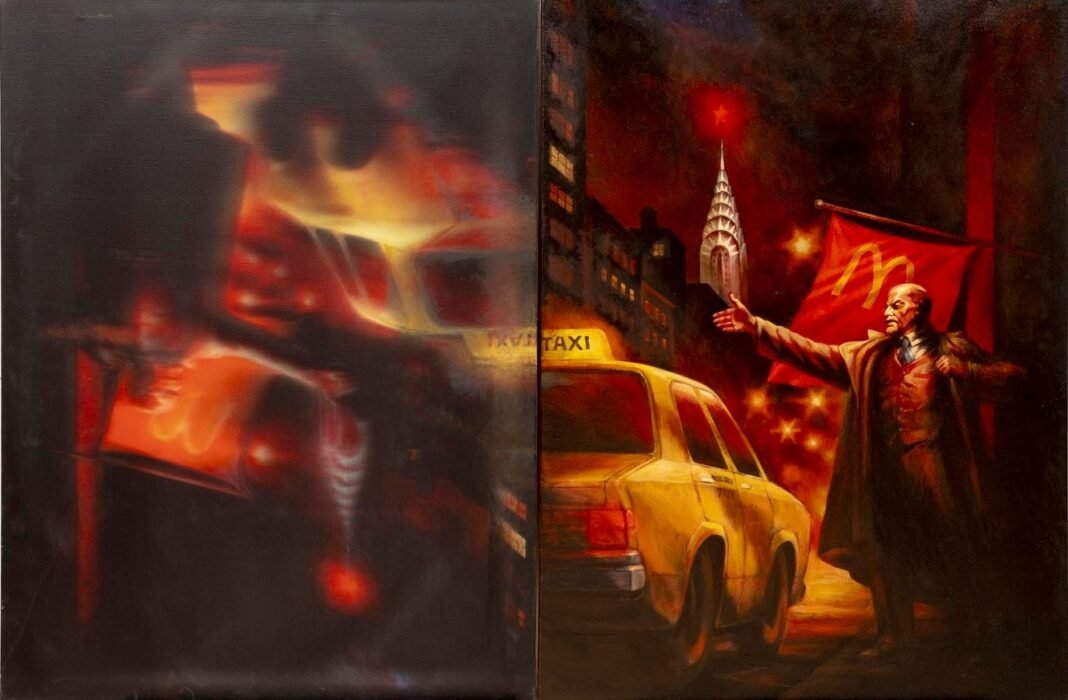
Keenly aware how symbols have historically been manipulated for control-from religious icons repurposed into Soviet propaganda-Komar has long used his art as a platform against authoritarian narratives dating back before perestroika expanded free speech opportunities. His current exhibition distills decades-long reflections on power structures into compelling visual critiques still urgent today.
The end of his partnership with Melamid did not diminish Komar’s resolve; rather it sharpened his focus on corrupted iconography within modern politics-portraying leaders such as Putin alongside Trump and Xi Jinping reimagined within historic frameworks like “The New Yalta”. This piece subverts iconic World War II diplomatic imagery into commentary on today’s geopolitical tensions.
Cultural Resistance Amidst Growing Authoritarianism
Komar’s body of work functions both as resistance against propaganda-driven disinformation campaigns and cautionary tales warning against blind idolization-a phenomenon increasingly visible worldwide but deeply rooted within Russia’s totalitarian legacy where imagery was tightly controlled by state power.
This revival underscores how vital artistic freedom remains-not onyl for creative expression but also for defending democratic principles threatened by creeping authoritarianism-a struggle vividly embodied by these artists’ enduring legacies amid renewed political turmoil at home.
- Mushroom cloud Image: Represents both menace and resilience through innovative AI artistry blending historical painting styles with cutting-edge technology;
- Sots-Art Movement: Early underground resistance challenging Soviet orthodoxy via provocative visual language;
- “Bulldozer Show”: Iconic moment when state violence failed spectacularly at suppressing creative dissent;
- “The People’s Choice” Project: Data-driven critique exposing manipulation behind official statistics used for control;
- Censorship & Exile: Reflect broader patterns affecting dissident voices under tightening regimes worldwide today;
A Modern Perspective Rooted in Historical Struggle
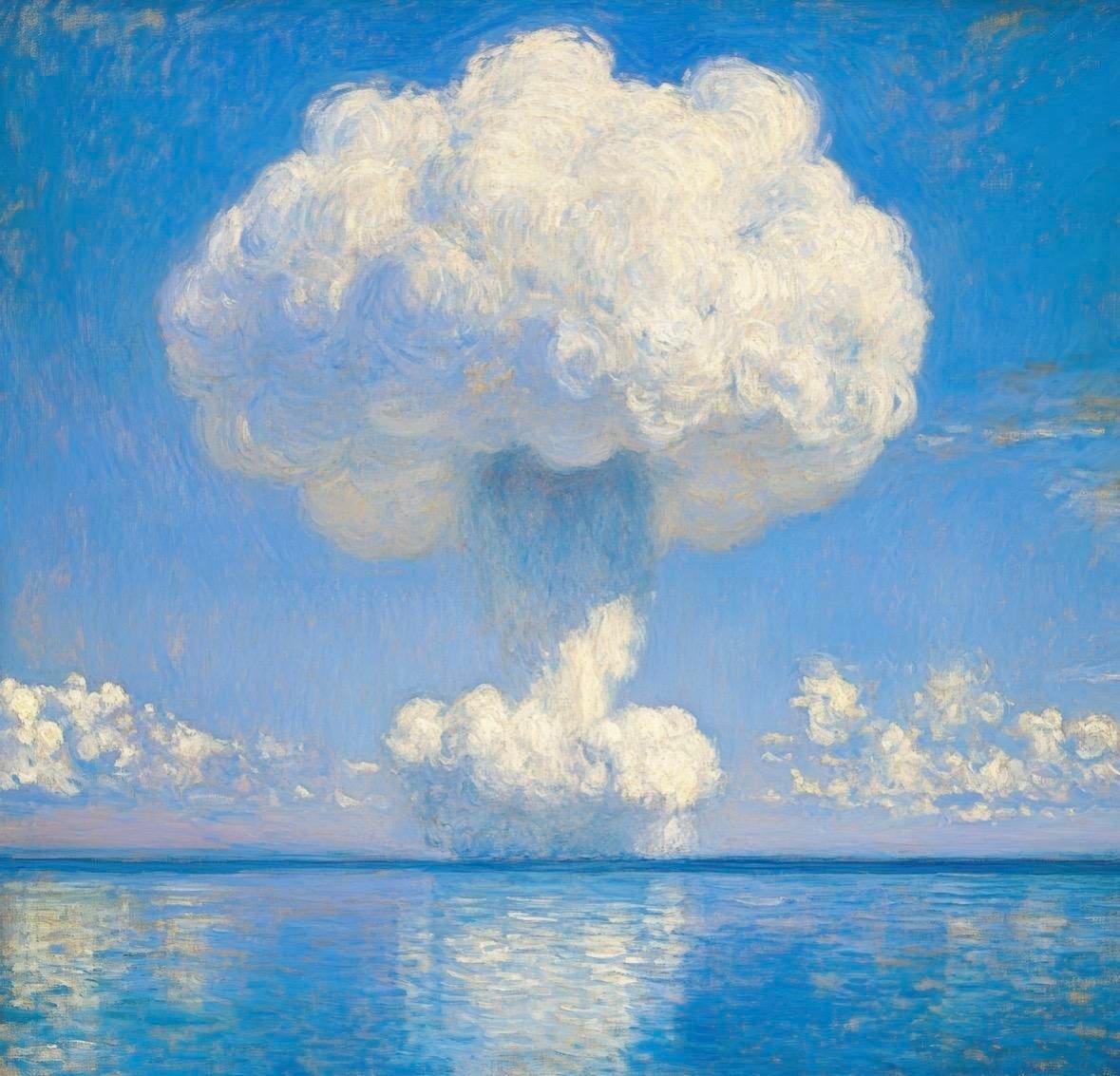
This mushroom cloud artwork exemplifies how beauty can confront fear amidst geopolitical crises while honoring legacies born from defiant creativity spanning over fifty years.