Decoding the Escalating Danger of Solar Superflares
Understanding the Surge in Extreme Solar Eruptions
Extensive analysis of nearly fifty years of solar observations reveals a rising probability of colossal solar explosions known as “superflares.” These immense bursts have the potential to severely disrupt satellite functionality, power grids, interaction networks, adn pose significant hazards to astronauts operating beyond Earth’s atmosphere.
Recent advancements include a predictive framework targeting “S-class” solar flares-those surpassing X10 intensity on the conventional scale. This innovative system aims to enhance global readiness for these infrequent yet devastating phenomena.
The Sun’s Current Cycle and Anticipated Superflare Activity
The sun is currently transitioning past its recent peak phase called the “solar maximum,” which occurs approximately every eleven years and signals heightened magnetic turbulence. According to space weather monitoring agencies, this peak was reached around October 2024. Historically, intense magnetic disturbances continue intermittently for up to two years following such maxima.
A thorough review spanning satellite data from 1975 through early 2025 identified thirty-seven S-class superflares across previous cycles-all except for Solar Cycle 25 have produced at least one Earth-directed superflare as records began in the late 1970s. This pattern suggests that an impactful eruption may be imminent during this cycle.
Revealing Hidden Cycles Behind Superflare Occurrences
- Researchers uncovered two dominant cyclical patterns lasting roughly 1.7 years and seven years respectively,both linked to magneto-Rossby waves-large-scale plasma oscillations deep within the sun’s interior layers.
- The alignment of positive phases in these cycles substantially elevates superflare probabilities during specific windows within each solar cycle.
- This approach employs machine learning algorithms trained on decades-old datasets to forecast likely periods rather than exact timings or locations for eruptions.
This model predicts two primary intervals during Solar Cycle 25 when S-class superflares are most probable: from mid-2025 through mid-2026 (mainly impacting southern hemispheric regions) followed by early-to-mid-2027 (shifting focus toward northern latitudes).
Recent Intense Solar Events and Their Effects on Earth
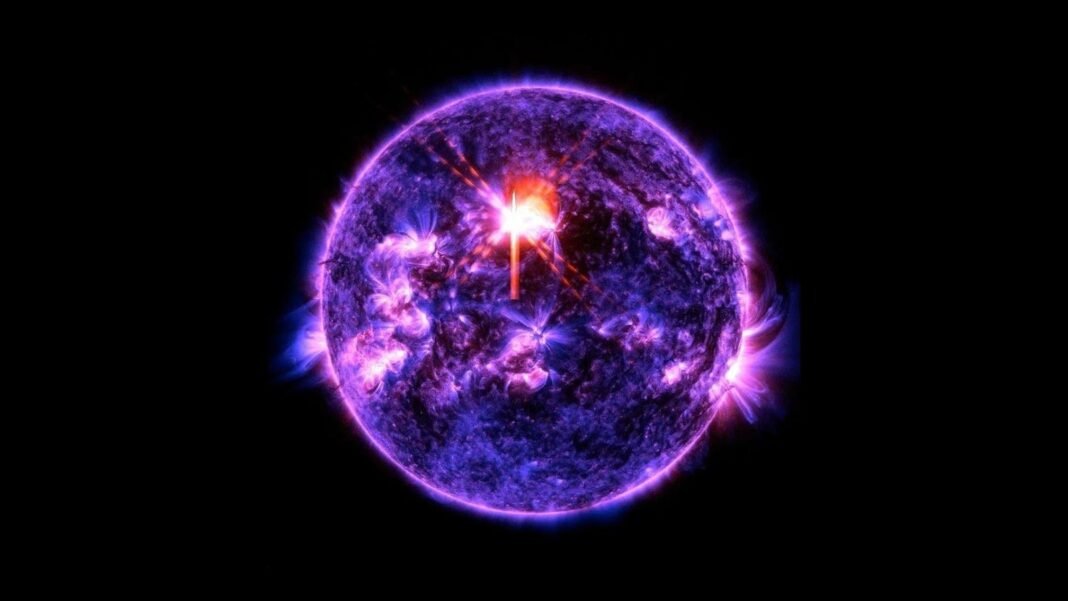
The strongest flare recorded so far in 2026 was an X8.3-class event occurring on February 1st. Such powerful flares can trigger geomagnetic storms that disrupt technological systems worldwide while producing spectacular auroras visible much farther south than usual.

A vivid geomagnetic storm lit up Utah’s desert skies on May 10, 2024; unusually strong auroras were also observed as far south as Georgia and Oregon due to this intense space weather event.
Mysterious Flares Beyond Earth’s Line of Sight
Dramatic superflares erupted from regions hidden behind the sun’s visible face in May 2024-events estimated at X11.1 and X16.5 levels well above typical S-class thresholds but initially undetectable until those areas rotated into view days later. Fortunately, their orientation spared Earth from immediate impacts at those times.
The Growing Need for Advanced Warning Systems Against Space Weather Threats
This probabilistic forecasting method offers critical lead times ranging from one to two years before heightened risk periods arrive-empowering satellite operators, power grid managers, and mission planners with valuable opportunities to implement protective strategies against sudden disruptive flares that currently provide only seconds’ notice before eruption.
A Historic Period Marked by Unprecedented Space Weather Activity
May 2024 also witnessed a G5-category geomagnetic storm-the strongest as November 2003-that generated widespread auroras visible across unusually low latitudes globally but caught forecasters off guard due to limited predictive tools available then.
This highlights how much untapped energy remains stored within Solar Cycle 25’s magnetic fields capable of unleashing even more powerful outbursts despite passing its nominal maximum phase now.
.
SOLAR SUPERFLARES: IMPLICATIONS FOR EARTH AND HUMAN SPACE EXPLORATION OPERATIONS
SOLAR SUPERFLARES POSE ONE OF THE MOST SEVERE SPACE WEATHER HAZARDS TODAY:
- SATELLITE SYSTEM FAILURES DUE TO INTENSE RADIATION EXPOSURE;
- DISTURBANCES IN GLOBAL POSITIONING SYSTEM ACCURACY;
- BROAD INTERRUPTIONS TO RADIO COMMUNICATION CHANNELS;
- LARGE-SCALE POWER GRID BLACKOUTS AROUND THE WORLD;
BESIDES THESE EARTHLY IMPACTS,SOLAR ACTIVITY INCREASE PRESENTS SIGNIFICANT CHALLENGES FOR FUTURE CREWED MISSIONS BEYOND LOW EARTH ORBIT:
Nasa’s Artemis II mission successfully orbited four astronauts around the moon earlier this year without incident – temporarily reducing immediate risks.
Though,TOWARD ARTEMIS III AND IV MISSIONS PLANNED BETWEEN LATE 2027 AND NEARLY 2030,MISSION DESIGNERS MUST ACCOUNT FOR PERHAPS INTENSE SOLAR FLARE ACTIVITY DURING THESE CRUCIAL EXPLORATION PHASES TO ENSURE CREW SAFETY AND MISSION SUCCESS.*