



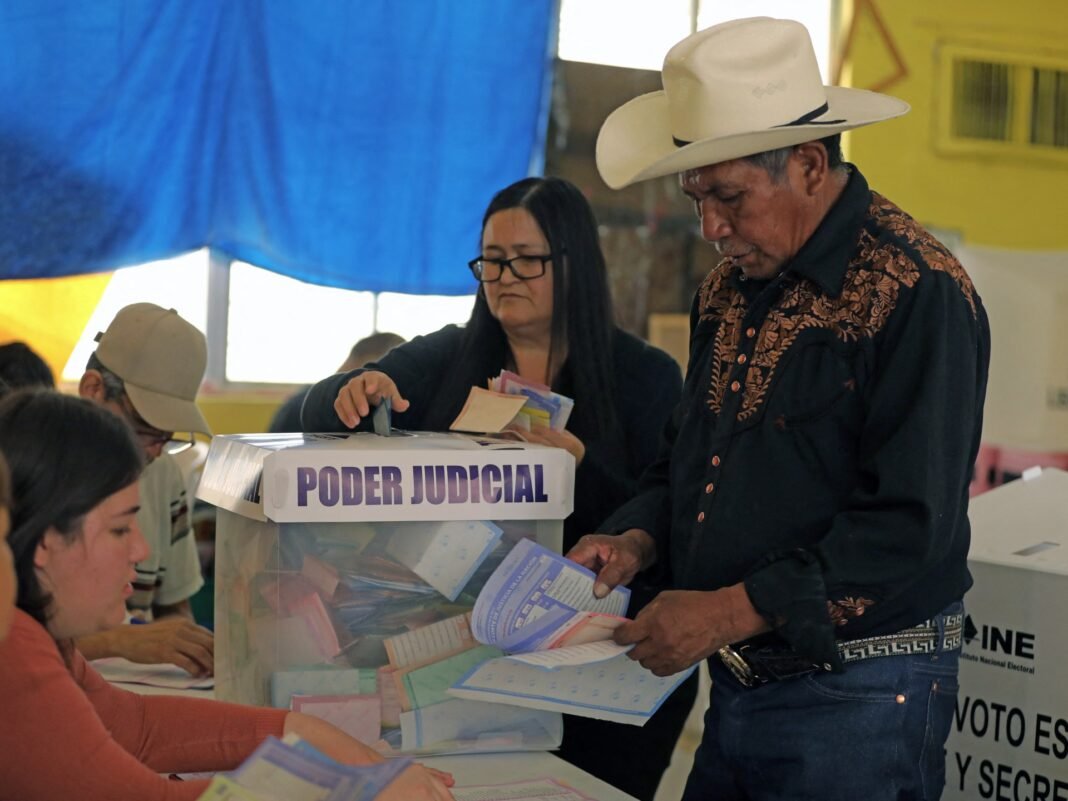
mexico’s Judicial Elections: A Landmark Event Amid Controversy
President Claudia sheinbaum has hailed the recent judicial elections in Mexico as a significant achievement, despite the notably low voter participation and widespread public uncertainty.this election aimed too appoint nearly 880 federal judges-including members of the supreme Court-and numerous local magistrates, marking an unprecedented effort to democratize the nation’s judiciary system.
Low Voter Turnout Reflects Public Confusion
The election saw only around 13 percent of eligible voters casting ballots, highlighting a clear disengagement among citizens. Many found it challenging to navigate the ballot due to an overwhelming number of candidates who were barred from disclosing party affiliations or running extensive campaigns. This lack of clarity left many feeling ill-equipped to make well-informed choices.
A professor from Mexico City observed that polling stations were “largely empty,” with most Mexicans opting out of what was intended as a historic democratic milestone.Nevertheless, President Sheinbaum praised this process as a groundbreaking move toward enhancing freedom and justice within Mexico.
Origins and Goals Behind Judicial Reform
The push for this electoral reform began under former president Andres Manuel Lopez Obrador and has been carried forward by Sheinbaum as part of their shared vision to revamp a judiciary long plagued by corruption and inefficiency. Advocates believe that directly electing judges will increase accountability and rebuild public confidence in legal institutions.
Navigating Complexity: Why Voters Struggled
experts predicted low engagement due to voters’ unfamiliarity with judicial elections combined with an overwhelming number of candidates competing for office. Political science expert David Shirk from the University of San Diego noted that thoroughly evaluating each candidate’s qualifications would require extensive research-something most voters are unlikely or unable to perform.
This frustration was echoed by many at polling locations who lamented insufficient information about candidates’ backgrounds and platforms. One retired educator described selecting among so many contenders as “an exhausting ordeal,” emphasizing how foreign this type of election is for everyday citizens.
Concerns Over Criminal Influence in Judiciary Positions
Beyond logistical challenges lies a more troubling issue raised by human rights advocates: organized crime groups might exploit thes elections as gateways into judicial roles previously shielded from direct public selection methods. Margaret Satterthwaite, UN special rapporteur on judicial independence, cautioned that such electoral systems could be more susceptible than traditional appointment processes when it comes to infiltration by illicit actors.
Although all nominees had to prove legal experience without criminal records and maintain good reputations officially, investigations revealed connections between some candidates and organized crime networks or corruption scandals. For instance, one candidate had previously served as legal counsel for Joaquin “el Chapo” Guzmán; another had been imprisoned in the U.S. on drug trafficking charges before seeking office in Durango state.
The Path Forward: Election Results and Future Prospects
The official results from this initial round are expected soon while preparations continue for another phase scheduled in 2027 aimed at filling additional judicial vacancies nationwide. Observers remain cautious about whether these reforms will genuinely fortify Mexico’s rule of law or unintentionally empower harmful influences within its courts.


