Post-Conflict Syria: Navigating Disarmament and Security Sector Reform
Fragmented Armed Groups Shaping Syria’s Post-War Reality
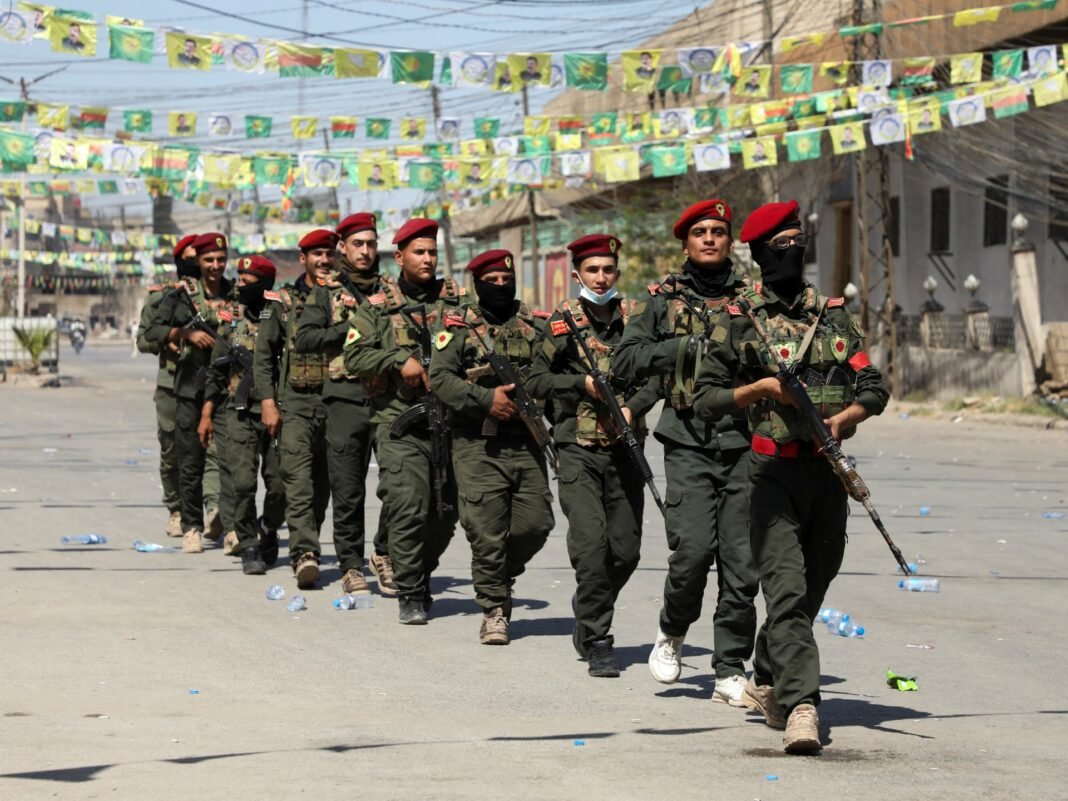
After the Syrian civil war ended in late 2024 with the downfall of Bashar al-Assad’s regime, a large segment of the population remained heavily armed. over nearly 14 years, a complex mosaic of armed factions took root across various regions: opposition forces held sway in northwest Syria; regime loyalists and allied militias controlled central and western zones; the Syrian Democratic Forces (SDF) dominated northeastern territories; while numerous militias operated throughout southern provinces. Extremist groups such as ISIS and Hayat Tahrir al-Sham continued to exert influence, further complicating efforts to stabilize security.
The Challenge of Demilitarization Amid divided Loyalties
The transitional government faced an enormous challenge in disarming combatants and unifying a deeply fractured nation. Central to this mission was the process of disarmament, demobilization, and reintegration (DDR) alongside establishing new national security institutions. Persistent clashes-such as those between government troops and SDF units near aleppo-highlight ongoing difficulties integrating former fighters into unified structures.
In December 2024, authorities moved quickly to dissolve Assad-era military formations. Former soldiers-from officers to conscripts-were invited to register using their national identification cards for either civilian reintegration or enlistment into newly created security forces.Thousands nationwide engaged with this process seeking fresh opportunities or official clearance from past affiliations.
Diverse Reactions Among Ex-Combatants
While many embraced these reforms, resistance persisted especially within alawite-majority coastal areas marked by deep mistrust toward new authorities. Some who refused registration retreated into remote rural enclaves; others formed anti-government factions launching sporadic attacks on state forces. This tension culminated on March 6 when coordinated assaults killed over 100 government personnel-a violent episode that sparked widespread unrest resulting in more then 1,000 deaths during an intense week-long conflict.
Reconstructing Security Institutions: Distinct Roles for MOD and MOI
The Ministry of Defense (MOD) has been tasked with rebuilding conventional military branches including army,navy,and air force components by retraining thousands of ex-regime fighters before integrating them into restructured units deployed across provinces. Despite these efforts, ongoing hostilities persist partly fueled by financial support from Assad loyalists exiled in Lebanon and Russia-factors straining damascus’ regional diplomatic relations.
Meanwhile, the Ministry of Interior (MOI) oversees provincial public safety directorates along with specialized counterterrorism squads, counternarcotics teams, and cybercrime units focused on internal law enforcement duties nationwide.
Difficulties Within MOD integration Efforts
The MOD absorbed numerous former opposition groups following their formal dissolution-transforming them into roughly twenty divisions under its command structure. notably, factions linked closely with Turkey-based entities like northern Aleppo’s syrian National Army (SNA) have received comparatively greater military aid than counterparts formerly active around Idlib province.
Several commanders carry controversial reputations due to international sanctions related to corruption or human rights abuses.
- A notorious clash erupted along Syria’s coast in March 2025;
- bloody confrontations between Druze communities and Bedouin tribes occurred near Suwayda governorate by July;
- This exposed critical weaknesses undermining effective peacekeeping roles assigned during early post-conflict phases.
The MOI’s growing Role in Domestic Stability
toward late 2025,the MOI increasingly assumed primary obligation for internal law enforcement across Syria. Unlike many MOD recruits tied historically to factional loyalties,MOI personnel largely lacked prior combatant affiliations which contributed significantly toward improved stability levels nationwide.
This restructuring notably transformed Syria’s coastal region-from one previously among its deadliest zones-to becoming one of its most secure areas by year-end despite persistent low-level insurgency activity.
This progress owes much credit to sustained community engagement initiatives led by MOI public security forces aimed at rebuilding local trust through dialog-oriented policing strategies.
Kurdish Autonomy Disputes & Druze Tensions Fuel Regional Instability
SDF integration Deadlock Risks Renewed Conflict
A major unresolved issue remains territorial disputes involving Kurdish-led SDF control over northeastern territories alongside simmering tensions within Suwayda governorate dominated by Druze populations.
Despite intensive U.S.-facilitated negotiations aimed at incorporating SDF elements into national frameworks,a series of missed deadlines has sharply increased friction over recent months leading toward renewed violence risks.
“A drone strike targeting government checkpoints near eastern Aleppo on January 5 escalated clashes culminating five days later with expulsion of SDF-affiliated militias from northwestern city districts.”
this escalation disrupted fragile talks while exposing dangers that hostilities could spread eastward – perhaps derailing any future political settlement entirely.
Druze Militias’ Emergence & Cross-Border Implications Near Suwayda
The southern province remains volatile after July violence claimed more than 1,400 lives.
Druze paramilitary groups united under a “National guard” banner reportedly receive Israeli support-a development complicating regional geopolitics profoundly.
Former Assad officers hold influential positions within this formation coinciding with an alarming fourfold surge in drug trafficking towards Jordanian borders during late-2025 alone;a trend provoking retaliatory Jordanian airstrikes shortly thereafter.
Internal power struggles among National Guard factions combined with extrajudicial reprisals against dissenters reveal fragile governance incapable yet providing lasting order here.
The Political Dimensions Underpinning Armed Group Resolution Efforts
Syria’s path toward stabilizing armed groups is inherently political – deeply intertwined both with legacies left behind by civil war conflicts themselves as well as emerging challenges arising from transitional governance attempts.
An international consensus broadly supports Damascus’ new administration granting vital space needed for gradual disarmament processes nationwide;
however,sustained geopolitical rivalries continue obstructing full integration progress thereby perpetuating pockets prone to violence across multiple fronts even today.