Armed Confrontation at White House Correspondents’ Dinner: Comprehensive Analysis
Suspect Detained Following Armed Attempt at Security Barrier
Cole Tomas Allen, aged 31 and residing in Torrance, California, was taken into custody after an armed incident near a security checkpoint during the White House Correspondents’ Dinner. The event unfolded late Saturday night when Allen allegedly tried to force his way past security while carrying multiple weapons.
Legal Charges and Court Proceedings Overview
The magistrate judge ordered that Allen remain detained pending a detention hearing set for Thursday. He faces three notable federal charges: attempted assassination of the president, interstate transportation of firearms, and discharging a firearm during the commission of a violent crime. At this initial hearing, he was not required to enter any plea.
Profile of the Individual Involved
Allen holds a mechanical engineering degree from Caltech and recently completed a master’s program in computer science at California State University, Dominguez Hills. Professionally,he worked part-time as an educational tutor specializing in test preparation while independently creating video games. Despite his academic background and technical expertise, his digital presence is notably sparse.
The Incident Details: Weapons Carried and immediate Response
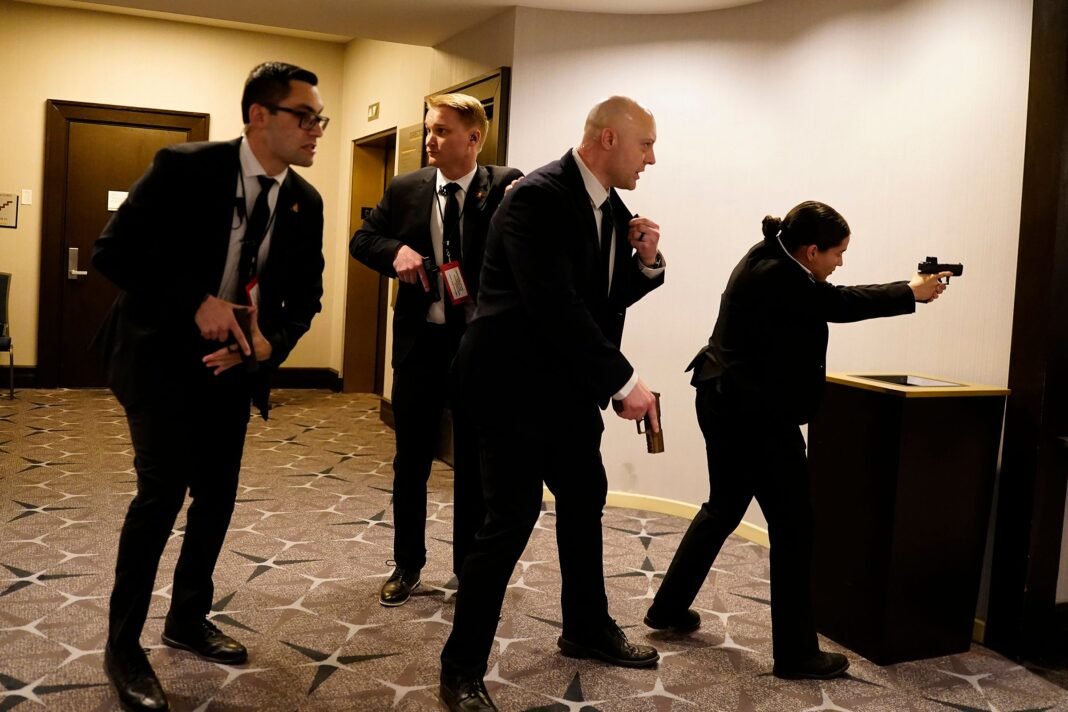
The Metropolitan Police Department reported that Allen approached the Secret Service checkpoint near the Hilton Hotel armed with both a shotgun and handgun along with several knives.Security agents intercepted him before he could enter the ballroom where President Donald Trump was scheduled to speak.
Witnesses heard multiple gunshots outside the venue as law enforcement quickly evacuated President Trump and Vice President JD Vance from the stage area. One officer sustained minor injuries but was protected by body armor; officials confirmed no serious harm resulted from the confrontation.
Lone Actor Assessment and Medical Examination
Interim MPD Chief Jeffery Carroll stated that Allen acted independently without any known accomplices or connections to larger conspiracies. After arresting him, authorities conducted medical evaluations to assess both his physical condition and mental health status.
Motive Disclosed Through Pre-Attack Manifesto
An email sent roughly ten minutes before shots were fired contained what has been described as an anti-Trump manifesto addressed to family members. In this message, Allen expressed intense hostility toward then-President Trump using harsh accusations including claims of criminal conduct such as pedophilia and treason-allegations reflecting personal animus rather than substantiated evidence.
The manifesto also revealed that buckshot ammunition had been selected intentionally “to reduce casualties,” though it warned more severe actions woudl be taken if necessary against attendees deemed “complicit” by their presence at the event. Moreover,it criticized hotel security for failing to detect visible weapons carried by Allen into restricted zones despite existing protocols.
Security Lessons Drawn From Breach Incident
This attack exposed critical weaknesses within protective measures for high-profile political events amid ongoing national security concerns in Washington D.C., highlighting persistent challenges faced by law enforcement agencies responsible for safeguarding public officials under complex threat landscapes.
Political Fallout Centers on White House Ballroom Construction Controversy
Following reports about this shooting attempt, former President Trump alongside several Republican lawmakers emphasized accelerating construction on an extensive $400 million ballroom project inside what was formerly part of The east Wing of The White House-a development currently embroiled in legal disputes over alleged historic preservation violations during its planning phase.
“Had our Militarily Top Secret Ballroom already been finished,” Trump claimed early Sunday morning via social media platforms,
“this incident could have been avoided.”
The Autonomous Role of The White House Correspondents’ Association Explained
The institution hosting this annual dinner operates independently from government bodies; it represents journalists covering presidential affairs rather than official executive branch interests. There is no indication future dinners will be relocated inside private government spaces such as newly constructed ballrooms within The White House itself-venues traditionally reserved for formal state functions instead of press gatherings emphasizing freedom of speech nationwide rights.