Canada’s Economy Faces Back-to-Back Monthly Declines Amid Ongoing Trade Challenges
Recent data from Statistics canada reveals a 0.1 per cent contraction in the nation’s economic output for April, with early indicators pointing to a similar downturn in May.This marks two successive months of economic shrinkage,underscoring persistent difficulties across several vital industries.
Manufacturing Suffers Largest Drop Since Early 2021
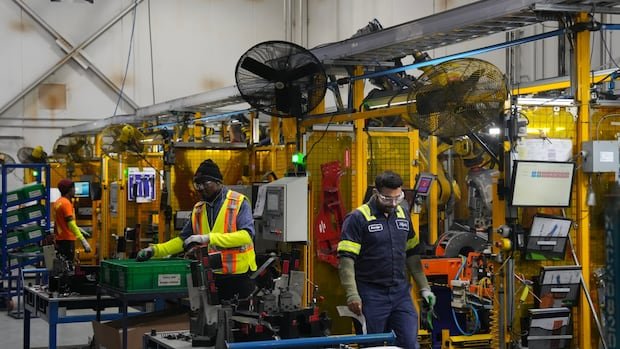
the manufacturing sector bore the brunt of this decline, experiencing a meaningful 1.9 per cent decrease in April-the steepest fall since April 2021. This slump was largely driven by diminished production within goods-producing industries, particularly transportation equipment manufacturing. Heightened trade uncertainties have led automakers to reduce thier operations considerably.
this downturn is closely linked to the impact of U.S.-imposed tariffs on vehicle exports, which have disrupted supply chains and hindered cross-border commerce. Wholesale trade also contracted during this period, especially segments connected to automotive parts and vehicles, as both imports and exports saw declines.
Trade Disputes Continue to Undermine Economic Growth
Preliminary estimates for May suggest another 0.1 per cent drop in economic activity,indicating that tariff-related obstacles remain a drag on growth into the second quarter of the year.
The Bank of Canada Governor has noted that while first-quarter expansion surpassed expectations-largely due to businesses stockpiling inventory ahead of tariff enforcement-the full consequences of these trade barriers are expected to become more evident later this year.
“Throughout spring, the economy faced an unprecedented level of uncertainty surrounding international trade,” remarked Douglas Porter, chief economist at Bank of Montreal. “Early figures even showed growth in April despite widespread pessimism.”
Porter further emphasized that although concerns about a recession-defined as two consecutive quarters of GDP decline-persist, he does not foresee a severe or prolonged downturn imminently. Instead, he anticipates mild contractions over several quarters without escalating into a full recessionary phase.
Diverse Economic Contributors: Investment Gains and Public Sector Activity
The finance and insurance sector posted gains with a 0.7 per cent rise in April fueled by increased financial investment services and fund management activities amid heightened market volatility following U.S tariff announcements earlier that month.
This uptick included an intense four-day surge on the toronto Stock Exchange instantly after tariffs were announced on April 2nd-a key factor identified by Statistics Canada as central to elevated economic activity during this timeframe.
Meanwhile, public sector output grew due partly to federal election preparations; arts and entertainment sectors also benefited from Canadian NHL playoff runs which boosted related spending by nearly three per cent (2.8%) throughout April.
The Bank of Canada’s Dual Scenario Forecast Amid Trade Uncertainty
The central bank previously outlined two potential paths: one involving severe repercussions if tariffs escalated into an all-out trade conflict; another assuming rapid easing or removal resulting in less damaging effects on growth prospects.
the current habitat seems balanced between these extremes-with ongoing challenges but no collapse-leading economists like Porter to anticipate further interest rate reductions aimed at bolstering fragile economic momentum:
- “The economy is contending with tariff pressures yet avoiding total breakdown,”
- “Monetary policy adjustments are likely forthcoming as part of efforts to maintain steady growth.”
Ahead: Critical Monetary Policy Updates Expected Soon
The Bank of Canada is set to release its next interest rate decision alongside its quarterly monetary policy report scheduled for July 30th-a pivotal update closely monitored amid shifting global trade conditions influencing Canada’s future economic path.