Global Markets Respond to Middle East Conflict and Energy Supply Challenges
Rising Regional Tensions Following Attacks on Energy Infrastructure
The recent strike by Iranian forces on Qatar’s premier liquefied natural gas (LNG) plant has heightened apprehensions about energy security across the asia-Pacific region. This retaliation, triggered by Israeli operations targeting Iran’s south Pars gas field, is expected to curtail Qatar’s LNG export capacity by nearly 17% over the next three to five years, according to statements from QatarEnergy executives.
This cycle of retaliatory damage inflicted on vital oil and gas facilities throughout the Middle East has sparked sharp surges in global energy prices, reflecting widespread anxiety over potential long-term supply disruptions amid escalating geopolitical instability.
Volatility in Oil and Gas Markets Amid Uncertain Outlooks
Natural gas futures in the U.S. climbed approximately 1.5%, reaching $3.11 per million british thermal units as traders reacted swiftly to tightening supply prospects. Simultaneously, NYMEX RBOB gasoline contracts for April delivery jumped close to 1%, hitting $3.13 per gallon-levels unseen since early 2019.
in contrast, crude oil benchmarks showed mixed movements: Brent crude futures declined around 2% closing near $106.45 per barrel while west Texas Intermediate (WTI) slipped roughly 1.56% ending at about $94.64 per barrel-signaling investor caution amid fluctuating market sentiment.
Saudi Arabia has cautioned that if these disruptions persist into late April, oil prices could soar beyond $180 a barrel-a scenario with profound implications for global inflation rates and economic growth forecasts worldwide.
Precious Metals Face Sharp Price Swings Amid Market turmoil
The ripple effects of regional conflict extended into precious metals markets as gold prices plunged nearly 5%, with silver experiencing an even steeper drop close to 10%, before partially rebounding within the same trading session.
“The significant sell-off in gold accompanied by heavy trading volume suggests panic-driven liquidation,” observed market experts anticipating a stabilization phase following this correction.”
Diverse Market Reactions Across Asia-Pacific Exchanges
- Australia: The S&P/ASX 200 index closed down approximately 0.4%, pressured primarily by concerns over commodity exports linked to ongoing Middle Eastern tensions affecting demand outlooks.
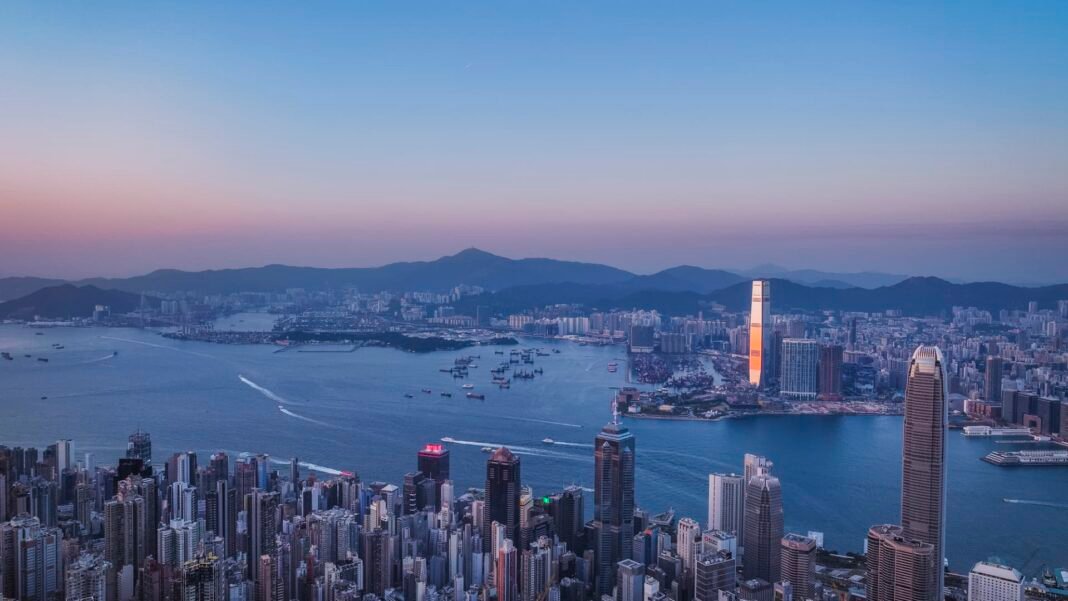
- Hong Kong: The Hang Seng index fell around 0.61%, with technology shares bearing the brunt; notably, Tencent Holdings dropped nearly 6%.This decline followed their recent unveiling of a new cloud computing platform alongside ambitious plans exceeding $10 billion investment into AI development over five years-highlighting how innovation sectors remain vulnerable during geopolitical shocks.
- Mainland China: The CSI 300 index edged up modestly by about +0.41%,buoyed partly by steady monetary policy after China’s central bank held benchmark lending rates steady for an eleventh consecutive month (five-year loan prime rate at a stable 3.5%).
- Korea: South Korea’s Kospi gained roughly +0.64%, while smaller-cap Kosdaq surged +1 .68%. Japan’s markets remained closed due to a national holiday during this period marked by volatility elsewhere across asia-Pacific exchanges.
Navigating Geopolitical Risks: Global Responses and Future Market Perspectives
The United States adopted a cautious stance with leadership confirming no immediate plans for ground troop deployment; meanwhile Israeli officials committed not to repeat strikes against Iranian energy infrastructure-efforts aimed at de-escalation amid rising tensions in the region.
A coalition comprising Britain,Canada,France,Germany,and Japan jointly expressed readiness “to support initiatives ensuring secure navigation through critical maritime chokepoints such as the Strait of Hormuz,” underscoring international resolve toward stabilizing essential trade routes vital for uninterrupted global energy flows.
Turbulence on Wall street Mirrors Worldwide Unease
The previous session saw U.S equity indices retreat under pressure from geopolitical uncertainties: Dow Jones Industrial Average dipped roughly -0 .44% closing near 34 ,021 points; S&P500 decreased -0.27%; Nasdaq Composite fell -0 .28%.However,futures contracts suggested tentative recovery momentum with Dow futures up +111 points (+0.24%), S&P500 futures gaining around +0 .3 %,and Nasdaq-100 futures rising approximately +0 .2 % following these declines.
Cautious Federal Reserve Approach Amid Economic Ambiguity
This week,the Federal Reserve opted to maintain interest rates unchanged amidst persistent uncertainty largely driven by ongoing conflicts overseas impacting commodity markets and investor confidence globally.
Chair Jerome Powell emphasized prudence regarding economic forecasts given unpredictable developments stemming from conflicts disrupting key resource supplies worldwide.
This measured approach reflects broader challenges policymakers face balancing inflation control against risks posed by external shocks destabilizing trade flows and financial markets alike.