Accelerating Fusion Energy progress: Inertia Enterprises Collaborates with Lawrence Livermore National Laboratory
Inertia Enterprises, an emerging leader in fusion energy innovation, has recently entered into three strategic agreements with the Lawrence Livermore National Laboratory (LLNL) to fast-track the commercialization of laser-driven fusion technologies pioneered at LLNL.
Harnessing Laser-Driven Fusion for Future Energy Needs
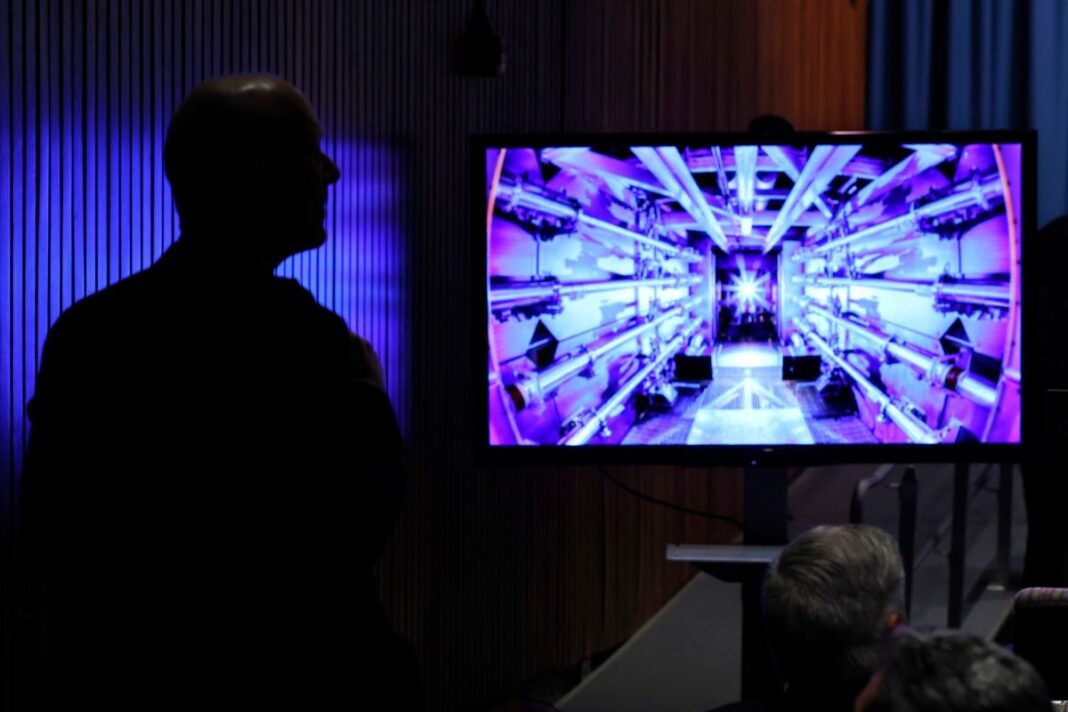
This partnership builds upon the groundbreaking achievements at LLNL’s National Ignition Facility (NIF), which remains unique as the only experimental platform to demonstrate controlled fusion reactions producing more energy output than input-a milestone known as ignition. This breakthrough marks a pivotal advancement toward realizing practical fusion power.
Founded in early 2026, Inertia Enterprises quickly secured $450 million in Series A funding, ranking it among the top-funded startups within the competitive fusion sector. The company’s mission is to enhance NIF’s foundational work by engineering next-generation lasers and fuel targets designed to enable commercially viable inertial confinement fusion reactors.
The Science Behind Inertial Confinement Fusion
Diverging from magnetic confinement techniques that use intense magnetic fields to contain plasma until nuclei fuse, inertial confinement employs rapid compression of microscopic fuel pellets through powerful external forces.At NIF, this process involves firing 192 precisely synchronized laser beams into a vacuum chamber aimed at a gold cylinder called a hohlraum.
The hohlraum houses a diamond-coated pellet filled with deuterium-tritium fuel. When struck by lasers,the gold vaporizes and emits X-rays that swiftly heat and compress the pellet. Simultaneously, the diamond coating transforms into plasma that implodes inwardly, exerting extreme pressure and temperature conditions necessary for nuclear fusion.
Engineering Continuous fusion Reactions
A key challenge lies in repeating this entire sequence multiple times per second to generate steady electricity suitable for power grids-an engineering feat demanding significant advancements beyond current capabilities.
From Cold War Origins to clean Energy Frontiers
The concept of laser-driven inertial confinement originated during nuclear weapons research in the 1960s but has since evolved into one of several promising avenues toward sustainable energy production free from greenhouse gas emissions or long-lived radioactive waste typical of fission reactors.
NIF construction began in 1997 and culminated nearly 25 years later with achieving “scientific breakeven,” where output energy surpassed input ignition energy-a landmark event signaling potential commercial feasibility for laser-based fusion power plants.
Pioneering Innovations Enhancing Commercial prospects
- Next-Generation Laser Technologies: While current NIF lasers rely on legacy designs developed decades ago, companies like Inertia are innovating more efficient systems requiring less input power per pulse while delivering higher precision compression essential for scalable reactors.
- Refined Fuel Pellet Fabrication: Advances in manufacturing uniformity and durability of fuel targets will improve reaction consistency critical for continuous operation at commercial scale.
- Access to Extensive Intellectual Property: By licensing nearly 200 patents from LLNL’s extensive portfolio, Inertia leverages decades of scientific breakthroughs-accelerating its development timeline compared with competitors relying solely on proprietary inventions.
A Synergistic Collaboration Model
This alliance encompasses two focused projects aimed at enhancing laser performance and target fabrication alongside a cooperative research agreement fostering joint innovation between former LLNL scientists now working at Inertia and laboratory researchers. Such collaboration is expected to expedite overcoming technical barriers involved in scaling inertial confinement systems from experimental setups toward reliable grid-integrated power plants within this decade.
“Transitioning from laboratory demonstrations towards commercially viable reactors requires not only technological breakthroughs but also close partnerships between national laboratories and private industry,” an industry expert noted regarding these developments.
The Competitive Landscape Driving Fusion Innovation
- Xcimer Energy:: Developing compact high-repetition-rate lasers optimized for rapid pellet compression cycles targeting continuous operation;
- Copenhagen-based Focused Energy:: Innovating advanced target designs utilizing cutting-edge materials science;
- Bristol’s First Light fusion:: Exploring projectile-driven compression methods complementing traditional laser approaches;
- Inertia enterprises:: Integrating state-of-the-art photonics licensed from LLNL combined with proprietary engineering solutions focused on cost-effective mass production models;
towards Global clean Energy Transformation
If successfully scaled up, these technologies could deliver abundant clean electricity without carbon emissions or dependence on limited natural resources-possibly revolutionizing global energy markets amid intensifying climate change challenges worldwide. Recent data indicates global investments exceeding $12 billion annually across clean hydrogen initiatives-including green-fusion-related projects-as governments worldwide strengthen commitments under net-zero emission goals spanning major economies such as China, European Union members, Japan, South Korea, and the United States alike.