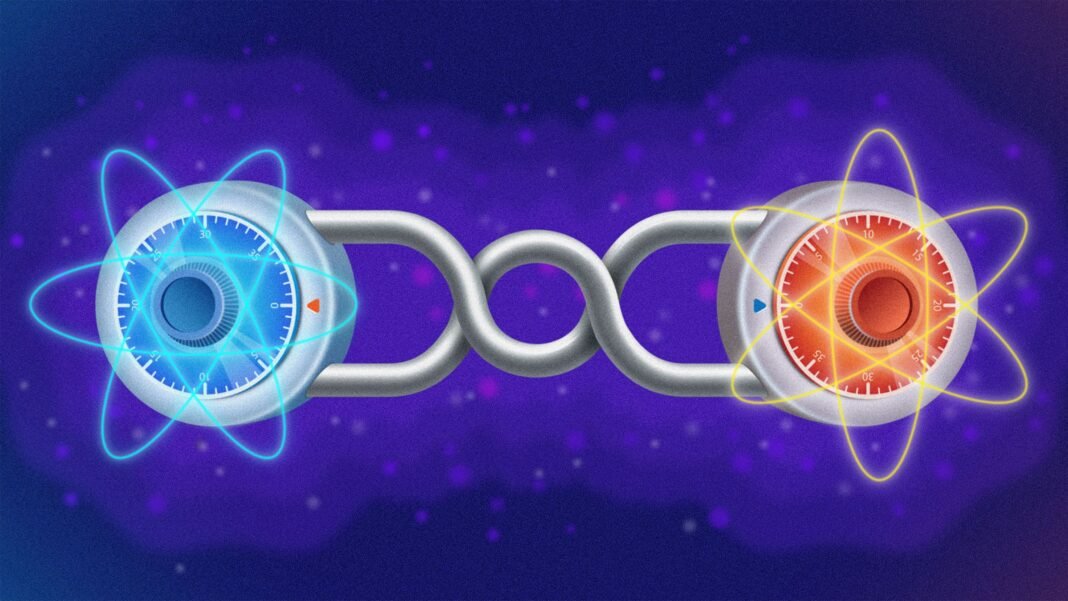
Unveiling the Core Principles of Quantum Cryptography and the Puzzle of Quantum Jamming
The advent of quantum computing promises to dramatically transform digital security by potentially compromising many encryption techniques that currently safeguard critical data worldwide. In anticipation, researchers have devoted important effort to developing cryptographic methods resilient against attacks from these emerging quantum technologies.
Beyond creating new codes, scientists are also exploiting the unique properties of quantum mechanics itself to establish secure communication channels. Yet, as quantum mechanics remains a theoretical framework subject to future refinement-much like how Newtonian physics was superseded over a century ago-there is an open question: will these quantum-based security protocols remain trustworthy if deeper physical laws come to light?
Rethinking Security: Preparing for Physics Beyond quantum theory
Experts in quantum information theory stress prudence when designing cryptographic systems. They recommend limiting assumptions about nature’s fundamental laws because it is plausible that forthcoming scientific breakthroughs could reveal that our current understanding of quantum mechanics is incomplete or even incorrect.
This caution is underscored by ongoing challenges such as reconciling gravity with quantum theory-a puzzle hinting at undiscovered physics beyond today’s models.To address this uncertainty, some cryptographers are exploring principles more foundational than those in standard quantum mechanics, investigating concepts as elemental as causality itself.
The Mechanics and Fragility of Quantum Key distribution
Quantum key distribution (QKD) stands out as a pivotal application within this domain. It utilizes entanglement-a phenomenon where two particles become intrinsically linked so their states correlate regardless of distance-to securely exchange encryption keys.The principle known as “monogamy of entanglement” guarantees that any eavesdropping attempt disturbs this fragile connection, thereby exposing unauthorized interference.
However, what if this monogamy principle were compromised? In situations where users cannot fully trust their devices or environment, an adversary might subtly manipulate entanglement correlations without detection through a process called quantum jamming. This covert disruption threatens communication integrity while leaving no immediate evidence behind.
The Emerging Challenge: Decoding Quantum Jamming
The notion of jamming captivates physicists because it questions established ideas about cause and effect within physical theories. Researchers investigate whether fundamental laws categorically forbid such phenomena or if they could arise under yet-to-be-discovered conditions in nature.
A modern Parable: The Tale of Sam the Saboteur’s color Switch
- Imagine Sam hands two friends each a sealed box containing colored marbles-one red and one green-that represent entangled particles with opposite colors (if one marble is red, the other must be green).
- The friends seperate rapidly across vast distances before opening their boxes simultaneously.
- Unknown to them initially, Sam secretly alters the marbles during transit so both boxes reveal identical colors instead of complementary ones upon opening later on Earth.
This analogy illustrates how jamming can stealthily modify correlations between distant particles without immediate detection but becomes apparent when results are compared afterward. While simplified here for clarity,actual quantum jamming involves intricate mathematical frameworks far beyond classical intuition.
No-Signaling Principle: Nature’s Speed Limit on Information Flow
A foundational concept underpinning these paradoxical effects is the no-signaling principle,which enforces einstein’s speed-of-light limit on information transfer despite allowing nonlocal correlations inherent in entanglement. This principle preserves causality by preventing faster-than-light communication even when distant particles exhibit correlated behavior.
Pioneering work proposed hypothetical “jammers” capable of manipulating remote particle correlations without breaching no-signaling constraints yet still disrupting expected outcomes-a notion both engaging and perplexing within fundamental physics research today.
Evolving Insights Over Recent Decades
This idea initially attracted limited attention but has resurged amid technological advances enabling practical implementations like device-independent QKD protocols reliant on monogamy properties now threatened by potential jamming effects uncovered through revisiting earlier theoretical studies.
causality Under Examination: New Directions Inspired by Jamming phenomena
- Causal framework reassessment:
Collaborations among leading researchers aim to classify causal relationships across diverse physical theories using jamming scenarios as critical test cases challenging traditional definitions. - Pursuit for deeper governing principles:
The objective includes identifying constraints analogous to no-signaling that explain why certain correlation disruptions occur physically while others do not.
A United scientific Endeavor Toward Fundamental Understanding
Lately several research groups have intensified efforts toward clarifying terminology around these phenomena while probing underlying principles shaping them-all pointing toward uncovering novel physics potentially hidden beneath current paradigms.
“Could there be undiscovered physics behind these effects? Is it possible for natural laws to accommodate such forms of correlation disruption?” – This central question drives ongoing investigations into whether reality permits phenomena akin to those suggested by theoretical models involving quantum jamming.