China’s Bold Climate Ambitions Amid global Environmental Challenges
China’s Targeted Emission Cuts by 2035
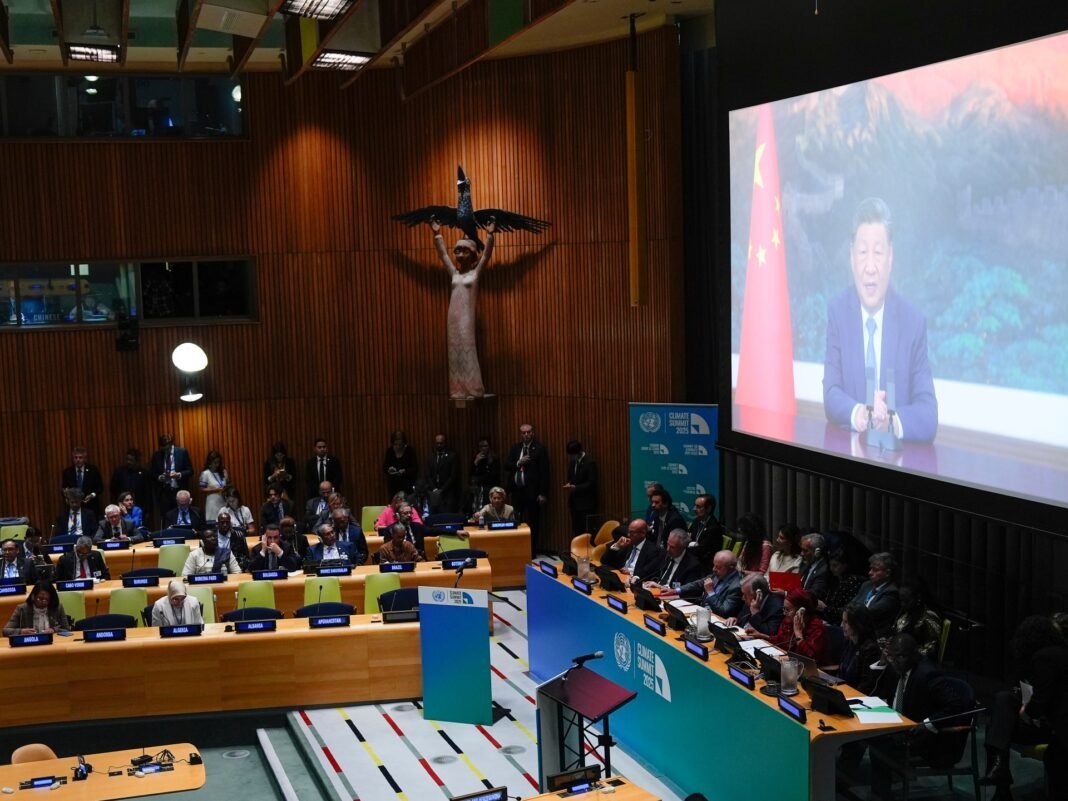
During a recent international climate forum, President Xi Jinping declared China’s intention to slash its carbon emissions by 7 to 10 percent over the next ten years. This commitment is especially notable given that China currently contributes more than 31 percent of worldwide carbon dioxide emissions, making it the largest emitter on the planet.
Beyond this overarching goal, China aims to amplify its wind and solar energy capacity to over six times what it was in 2020. The nation also plans for non-fossil fuels to constitute more than 30 percent of its total energy consumption by the year 2035, signaling a decisive shift toward cleaner energy sources.
Accelerating Clean Energy Adoption and Climate Resilience
President Xi highlighted the critical role of transitioning to zero-emission vehicles as part of building a “climate-resilient society.” This strategy involves embracing innovative green technologies capable of adapting to increasingly unpredictable environmental conditions caused by climate change.
The Responsibility of Developed Countries in Climate Action
While outlining China’s roadmap, Xi called on developed nations-implicitly pointing at the United States-to intensify their climate efforts. He criticized countries that have withdrawn from global accords like the Paris Agreement and emphasized that overcoming climate change requires unified international cooperation despite some nations’ reluctance.
Divergent Global Perspectives on Climate Policy
The divide in approaches toward climate change was evident at recent global summits. For example, former US President Donald Trump dismissed concerns about climate change as misleading and reproached both China and European Union members for their investments in renewable energy infrastructure. During his governance, he formally withdrew from the Paris Agreement twice-a pact designed to keep global temperature rise below 1.5 degrees Celsius compared with pre-industrial levels.
The United States remains historically accountable for emitting more greenhouse gases cumulatively than any other country while ranking second only behind China in current annual emissions output.
The European Union’s Progress toward Emissions Reduction Goals
The European Commission reports nearly a 40 percent decrease in greenhouse gas emissions since 1990. This achievement stems largely from robust investments into renewable energy projects combined with stringent carbon pricing policies-demonstrating how effective governance can reduce pollution without hindering economic growth.
A Unified Call From Global Leaders on Climate Vulnerability
Brazilian President Luiz Inácio Lula da Silva stressed that no country is exempt from facing severe climatic impacts such as droughts or extreme storms; geopolitical borders offer no protection against these threats. Similarly, Pakistani Prime Minister Muhammad Shehbaz Sharif recounted his nation’s catastrophic floods last year which affected millions-highlighting how vulnerable populations are already enduring harsh consequences directly linked to shifting weather patterns worldwide.
“Borders cannot prevent droughts or storms,” stated Lula da Silva.
“We continue grappling with disasters after suffering losses exceeding $30 billion due to floods last year,” added Sharif.
The Critical Need for Updated National Climate Strategies
Nations participating under frameworks like the Paris Agreement must submit progressively ambitious plans every five years detailing enhanced measures aimed at reducing greenhouse gas emissions further. Experts emphasize timely submissions are vital so scientists can refine projections regarding future temperature increases based on current commitments made globally.
Although progress has been achieved-with projected warming reduced from an initial estimate near four degrees Celsius before Paris negotiations down closer to approximately 2.6 degrees Celsius-the ultimate objective remains limiting global temperature rise below 1.5 degrees Celsius above pre-industrial levels; Earth has already warmed roughly 1.3 degrees Celsius so far according to recent data trends.
Evolving Scientific Evidence Demands Swift Global Response
The UN Secretary-General underscored multiple compelling reasons driving urgent action: scientific findings mandate accelerated intervention; legal obligations require compliance; economic incentives favor lasting advancement; and public demand worldwide grows louder for meaningful solutions addressing escalating risks posed by extreme weather events such as wildfires, hurricanes, heatwaves, and flooding-all intensified through human influence disrupting Earth’s fragile ecosystems affecting billions annually across continents.